Berkley Center Knowledge Resources Home Berkley Center Home Berkley Center on iTunes U Berkley Center's YouTube Channel Berkley Center's Vimeo Channel Berkley Center's YouTube Channel Berkley Center's iTunes Page Berkley Center's Twitter Page Berkley Center's Facebook Page Berkley Center's Vimeo Channel Berkley Center's YouTube Channel Berkley Center's iTunes Page WFDD's Twitter Page WFDD's Facebook Page Doyle Undergraduate Initiatives Undergraduate Learning and Interreligious Understanding Survey Junior Year Abroad Network Undergraduate Fellows Knowledge Resources KR Classroom Resources KR Countries KR Traditions KR Topics Berkley Center Home Berkley Center Knowledge Resources Berkley Center Home Berkley Center Forum Back to the Berkley Center World Faiths Development Dialogue Back to the Berkley Center Religious Freedom Project
May 18, 2013  |  About the Berkley Center  |  Directions to the Center  |  Subscribe
 
Programs People Publications Events For Students Resources Religious Freedom Project WFDD

BLOGGER

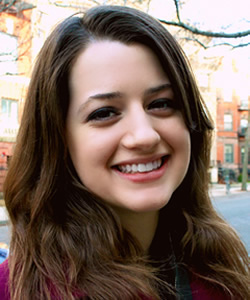
Abigail Clauhs Originally from South Carolina, Abigail Clauhs has already firmly established her presence at Boston University as a junior majoring in Religion and minoring in English and Anthropology. She leads...
Where do young people come down on questions of faith, values, and public life? How do they relate their values to public policy issues including education, economic inequality, and the environment? These questions, critically important for the 2012 election, are at the center of a campus conversation being organized by the Berkley Center and Georgetown University. This blog features an ongoing conversation about these issues between students selected as Millennial Values Fellows through a national competition. You can read and comment on their blogs here.

To learn more about the project, visit the Campus Conversation on Values page.

OTHER POSTS

Millennials on Social Media and Politics

November 15, 2012

Millennials on Social Issues and Diversity

November 12, 2012

Hira Baig (Rice) on Why the Presidential Election Matters to Millennials

November 7, 2012

Millennials on Religion and Interfaith Work

November 7, 2012

Ryan Price (Drake) on E Pluribus Duo

November 6, 2012

Mohammad Usman (DePauw) on Unpredictable Millennials

November 5, 2012

Millennials on Affirmative Action Policy

November 3, 2012

Seth Warner (Vassar) on What Happens as the "God Gap" Widens

November 2, 2012

Josina De Raadt (Dordt) on How Social Media Is Like Wii Bowling

October 31, 2012

Zachary Yentzer (Arizona State) on the Next Greatest Generation

October 29, 2012

Brice Ezell (George Fox) on Post-Racial America? Race, Millennials, and the 2012 Election

October 25, 2012

Tyler Bishop (Vanderbilt) on a Future of Hashtags #whatitmeansforus

October 23, 2012

Brice Ezell (George Fox) on How the People Can Heal a “Divided,” Partisan Nation

October 4, 2012

Hira Baig (Rice) on Religion and American Democracy

October 4, 2012

Tyler Bishop (Vanderbilt) on How It’s All About Relatability: Voter Turnout

October 3, 2012

Josina De Raadt (Dordt) on Mistaking Politics for a Hollywood Blockbuster

October 2, 2012

Mohammad Usman (DePauw) on the Internet Solution

October 1, 2012


>> more

Abigail Clauhs (Boston University) on Peacemaking in Class Warfare: Part I

August 8, 2012

Heard of "Rich Kids of Instagram"? It's a Tumblr account recently featured in an article from the New York Times about how some New Yorkers—in a city with higher unemployment rates than Atlanta, Boston, Houston, or Chicago—can hardly afford to buy groceries. The author of the article compared these struggling city-dwellers with the stars of "Rich Kids of Instagram," which recently went viral.
"Rich Kids of Instagram" features photos shared on the social media app Instagram, which allows users to snap pictures with their smartphones and, after adding a retro photo filter, upload them to the internet. Usually on Instagram you see plates of food, artsy sunset photos, hipsters with flannel shirts.

The photos you see on "Rich Kids of Instagram," however, are of a different breed. Teenagers taking baths with champagne and money. Driving Aston Martins. Riding helicopters to private islands. That kind of thing. Which these teenagers have uploaded with captions like "Sent from one of my three iPads #hightec" and "$4000 bottle of champagne [!@#@]. Our table is boss."

As I sat and scrolled through photo after photo of these young people spending their parents' money, I couldn't help but remember scrolling through a different Tumblr blog, with totally different kind of pictures, this past fall. Then, it was an account called We Are the 99 Percent and it was a part of the Occupy Movement.

Since last September, when the Occupy Movement first sprouted up at Wall Street and quickly spread to other cities (including Boston, where I go to college), there has been mention of "class warfare." Talking heads in the media, politic analysts, and the protesters themselves used the phrase. In a sea of "We are the 99%" declarations, it was inevitable that the clash between classes would be brought up.

Now that election time is full upon us, the phrase has been getting even more usage. From liberals saying it's an advantage to Obama, to conservatives decrying it as a ridiculous tactic from the left, the use of the "class warfare" argument about wealth and poverty has been in countless headlines lately (just try searching the phrase on any major news website).

And it's with good reason. With the upcoming release of the 2011 Census results, poverty rates are predicted to be at their highest in fifty years. Meanwhile, the taxes on the very rich are at their lowest in eighty years. It's a recipe for tension, for anger, for calls for equality. For people defensive about what they do have in life, and for people who frankly don't have enough to even get by.

Looking through "Rich Kids on Instagram," I was disturbed on many levels. I wasn't even sure what bothered me most—the conspicuous consumption in the photos, the twinges of both jealousy and disgust I felt at seeing it, or the seething anger of the people who commented.

In a society with such divides between the haves and have-nots, how do we wade through the mess of envy and indignation that such chasms create? How do we make peace in a class system where the tiers are so high and precipitous? There will always be upper classes and lower classes, no matter how hard we strive for equality. Yet somehow, we are going to have to find a way to create, as a quote from Martin Luther King Jr. inscribed in granite on his memorial puts it, "a society at peace with itself, a society that can live with its conscience."