Berkley Center Knowledge Resources Home Berkley Center Home Berkley Center on iTunes U Berkley Center's YouTube Channel Berkley Center's Vimeo Channel Berkley Center's YouTube Channel Berkley Center's iTunes Page Berkley Center's Twitter Page Berkley Center's Facebook Page Berkley Center's Vimeo Channel Berkley Center's YouTube Channel Berkley Center's iTunes Page WFDD's Twitter Page WFDD's Facebook Page Doyle Undergraduate Initiatives Undergraduate Learning and Interreligious Understanding Survey Junior Year Abroad Network Undergraduate Fellows Knowledge Resources KR Classroom Resources KR Countries KR Traditions KR Topics Berkley Center Home Berkley Center Knowledge Resources Berkley Center Home Berkley Center Forum Back to the Berkley Center World Faiths Development Dialogue Back to the Berkley Center Religious Freedom Project
May 18, 2013  |  About the Berkley Center  |  Directions to the Center  |  Subscribe
 
Programs People Publications Events For Students Resources Religious Freedom Project WFDD

BLOGGER

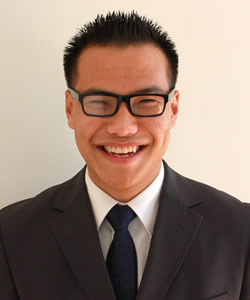
Daniel Chen A longtime resident of the Eastern San Francisco Bay Area, Daniel Chen is a junior at the University of California, Berkeley, where he is majoring in Political Science and minoring in Public...
Where do young people come down on questions of faith, values, and public life? How do they relate their values to public policy issues including education, economic inequality, and the environment? These questions, critically important for the 2012 election, are at the center of a campus conversation being organized by the Berkley Center and Georgetown University. This blog features an ongoing conversation about these issues between students selected as Millennial Values Fellows through a national competition. You can read and comment on their blogs here.

To learn more about the project, visit the Campus Conversation on Values page.

OTHER POSTS

Millennials on Social Media and Politics

November 15, 2012

Millennials on Social Issues and Diversity

November 12, 2012

Hira Baig (Rice) on Why the Presidential Election Matters to Millennials

November 7, 2012

Millennials on Religion and Interfaith Work

November 7, 2012

Ryan Price (Drake) on E Pluribus Duo

November 6, 2012

Mohammad Usman (DePauw) on Unpredictable Millennials

November 5, 2012

Millennials on Affirmative Action Policy

November 3, 2012

Seth Warner (Vassar) on What Happens as the "God Gap" Widens

November 2, 2012

Josina De Raadt (Dordt) on How Social Media Is Like Wii Bowling

October 31, 2012

Zachary Yentzer (Arizona State) on the Next Greatest Generation

October 29, 2012

Brice Ezell (George Fox) on Post-Racial America? Race, Millennials, and the 2012 Election

October 25, 2012

Tyler Bishop (Vanderbilt) on a Future of Hashtags #whatitmeansforus

October 23, 2012

Brice Ezell (George Fox) on How the People Can Heal a “Divided,” Partisan Nation

October 4, 2012

Hira Baig (Rice) on Religion and American Democracy

October 4, 2012

Tyler Bishop (Vanderbilt) on How It’s All About Relatability: Voter Turnout

October 3, 2012

Josina De Raadt (Dordt) on Mistaking Politics for a Hollywood Blockbuster

October 2, 2012

Mohammad Usman (DePauw) on the Internet Solution

October 1, 2012


>> more

Daniel Chen (UC Berkeley) on Pastoral Independence in Mixing Religion and Politics

September 4, 2012

“Faith has always provided a moral framework and vocabulary for this country to come to terms with its most pressing challenges… Faith—and the moral obligations that derive from our faith—have always helped us to navigate some of our greatest moral challenges.” –Barack Obama
One’s religious faith is an intensely personal matter. But is it just that? Should personal convictions remain in the privatized realm, divorced from entry into the public arena? If you’ve followed my polemical rants on the Berkley Center website, which you probably haven’t, then you know that I believe “the moral obligations that derive from our faith” can and should influence our actions, especially choices made for the collective good. Nonetheless, are there instances in which actors should refrain from publicly endorsing particular individuals or political parties?

For me, this question was borne out of Cardinal Timothy Dolan’s recent administering of the benediction at the Republican National Convention (RNC). The antagonism between President Obama and his administration and the U.S. Conference of Catholic Bishops has been well documented. The vicious attacks from both sides, notably the so-called “war on women,” have created general distrust between the two groups. As such, should Cardinal Dolan’s appearance at the RNC be construed as the “baptizing [of] the Republican nominee?” If it is, an ancillary question follows: has he acted responsibly in his office as a leader of the American Catholic Church?

John Piper, a prominent American, evangelical pastor, has noted that he disagrees with both Republicans and Democrats on different issues. He begins by differentiating between individual Christians and the institutional church, asserting that individual Christians have more freedom in airing their views as they are simply speaking for themselves, something that is not true for the church as an institution. Then, speaking as a church leader and pastor, he asks, “What strategies of involvement will preserve my freedom to be in peoples’ faces?” In effect, if one is perceived to be simply as a tool of either Republicans or Democrats, he or she loses a prophetic voice in either of the two parties. As far as I have thought this out, I believe that religious leaders should refrain from open endorsement of candidates and parties, even on political issues that are cut and dry. Preserving independence facilitates being faithfully present, especially with those with whom we disagree.

Providentially, it appears that Cardinal Dolan agrees.