RELATED PROJECT
RELATED PROGRAM

EVENTS
May 31, 2013Markets, Justice, and the Law
May 31, 2013
The Good Muslim and Religious Freedom
AT THE CENTER
RELATED RESOURCES: GOVERNANCE
May 14, 2012
Religion & State After the Arab Spring: Devising Ground Rules for a New Era
In the aftermath of the Arab Spring, do Middle Eastern nations need a new relationship between religion and state? On May 14, Georgetown University's Religious Freedom Project held a policy briefing with top experts designed to identify specific policy lessons concerning religion's future political role in Arab Spring countries.
For decades, in a quest to achieve enduring stability, authoritarian governments in Egypt, Tunisia, Libya, Syria and elsewhere placed a tight grip on religious organizations. The widespread subordination of religion to state not only stifled freedom, however, but also undermined stability by fomenting religious extremism. With the partial political openings afforded by the Arab Spring, there is a new prospect: the widespread subordination of state to religion. Islamist groups, parties, and leaders are ascending into a dominant position in Egypt, Tunisia, and Libya, and could be positioned to do so in a post-Assad Syria as well. There is therefore a new danger: that Islamist dominance could yield new threats to stability and freedom, thus thwarting the promise of the Arab Spring and threatening American interests.
To achieve the kind of stable democracy that avoids past cycles of instability, authoritarianism, and extremism, can there be a new balance between religion and state in North Africa and the Middle East? To achieve the kind of governance that is good for the region and good for America's long-term interests, can new ground rules be devised to accommodate religious communities as well as promote free and stable government?
Featuring
Alfred Stepan
Alfred Stepan is Director of the Center for the Study of Democracy, Toleration, and Religion and Wallace Sayre Professor of Government at Columbia University. His current work focuses on religion and politics, and he is expanding his 2001 article “The World’s Religious Systems and Democracy: Crafting the 'Twin Tolerations'” into a book. Stepan also works on the Pew-sponsored Arab Barometer. His other major publications include Crafting State Nations: India and Other Multinational Democracies (Spring 2011) with Juan Linz and Yogendra Yadav, Problems of Democratic Transition and Consolidation (1996) with Juan Linz, and Arguing Comparative Politics (2001). He taught at Yale University for thirteen years, was the first Rector of Central European University, the Gladstone Professor of Government at All Souls College, Oxford University, and Dean of the School of International and Public Affairs at Columbia University.
Participants
Thomas Farr
Full List of Publications
Thomas F. Farr is Director of the Religious Freedom Project at the Berkley Center for Religion, Peace, and World Affairs and a Visiting Associate Professor of Religion and International Affairs at Georgetown’s Edmund A....
William Inboden
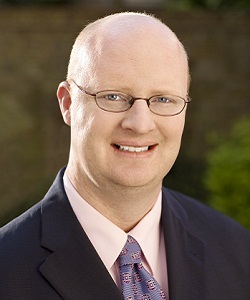
William Inboden is Assistant Professor at the LBJ School of Public Affairs and Distinguished Scholar at the Strauss Center for International Security and Law at the University of Texas-Austin. He is also a Non-Resident Fellow with the German...
Daniel Philpott
Daniel Philpott is exploring Catholic and Protestant contributions to democracy from the years 1800-2000 for the Christianity and Freedom Project. Dr. Philpott is Associate Professor in the Department of Political Science and the Joan B. Kroc...
Timothy Shah
Timothy Samuel Shah is Associate Director of the Religious Freedom Project at the Berkley Center For Religion, Peace, and World Affairs and Visiting Assistant Professor in the Government Department, Georgetown University. He is a political...
Tamara Wittes
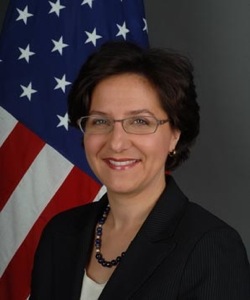
Tamara Wittes is a senior fellow and the director of the Saban Center for Middle East Policy at the Brookings Institution. Wittes served as deputy assistant secretary of state for Near Eastern affairs from November of 2009 to January 2012,...