


Secularization Theory and the Study of Chinese Religions
Secularization Theory and the Study of Chinese Religions Video Player
Thursday, March 26, 2009
12:00 p.m. - 1:30 p.m. EDT
Location:
Robert and Bernice Wagner Alumni House Conference Room Map
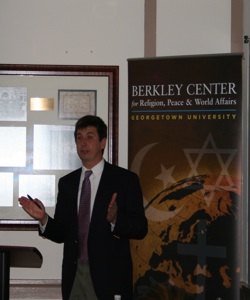
Over the course of the last half-century, evidence from China has been used first to support and later to confound simplistic arguments about the decline of religion in the face of modernity. Without launching a defense of secularization theory in general, Dr. Michael Szonyi argued that there is something to be gained from situating scholarship on Chinese religion in relation to recent debates in the theory. He suggested on the one hand that secularization theory can be a useful tool in understanding the modern history of religions in China and on the other that thinking about what secularization has meant in China is crucial to a comparative global history of religion and modernity. He also argued that attention to the course of secularization both as a historical process and as a political ideology may help us better understand the religious policies of the People’'s Republic of China today.
Discover similar content through these related topics and regions.


Image Gallery
Image Gallery
/1
Secularization Theory and the Study of Chinese Religions