Berkley Center Knowledge Resources Home Berkley Center Home Berkley Center on iTunes U Berkley Center's YouTube Channel Berkley Center's Vimeo Channel Berkley Center's YouTube Channel Berkley Center's iTunes Page Berkley Center's Twitter Page Berkley Center's Facebook Page Berkley Center's Vimeo Channel Berkley Center's YouTube Channel Berkley Center's iTunes Page WFDD's Twitter Page WFDD's Facebook Page Doyle Undergraduate Initiatives Undergraduate Learning and Interreligious Understanding Survey Junior Year Abroad Network Undergraduate Fellows Knowledge Resources KR Classroom Resources KR Countries KR Traditions KR Topics Berkley Center Home Berkley Center Knowledge Resources Berkley Center Home Berkley Center Forum Back to the Berkley Center World Faiths Development Dialogue Back to the Berkley Center Religious Freedom Project
May 25, 2013  |  About the Berkley Center  |  Directions to the Center  |  Subscribe
 
Programs People Publications Events For Students Resources Religious Freedom Project WFDD

BLOGGER

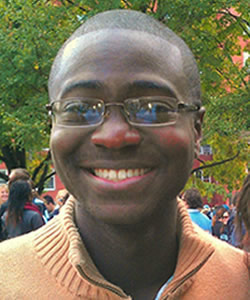
Jelani Harvey Jelani Harvey is a recent graduate of Columbia University who received his degree in American History. After he spent his high school years raising money and awareness for human trafficking in...
Where do young people come down on questions of faith, values, and public life? How do they relate their values to public policy issues including education, economic inequality, and the environment? These questions, critically important for the 2012 election, are at the center of a campus conversation being organized by the Berkley Center and Georgetown University. This blog features an ongoing conversation about these issues between students selected as Millennial Values Fellows through a national competition. You can read and comment on their blogs here.

To learn more about the project, visit the Campus Conversation on Values page.

OTHER POSTS

Millennials on Social Media and Politics

November 15, 2012

Millennials on Social Issues and Diversity

November 12, 2012

Hira Baig (Rice) on Why the Presidential Election Matters to Millennials

November 7, 2012

Millennials on Religion and Interfaith Work

November 7, 2012

Ryan Price (Drake) on E Pluribus Duo

November 6, 2012

Mohammad Usman (DePauw) on Unpredictable Millennials

November 5, 2012

Millennials on Affirmative Action Policy

November 3, 2012

Seth Warner (Vassar) on What Happens as the "God Gap" Widens

November 2, 2012

Josina De Raadt (Dordt) on How Social Media Is Like Wii Bowling

October 31, 2012

Zachary Yentzer (Arizona State) on the Next Greatest Generation

October 29, 2012

Brice Ezell (George Fox) on Post-Racial America? Race, Millennials, and the 2012 Election

October 25, 2012

Tyler Bishop (Vanderbilt) on a Future of Hashtags #whatitmeansforus

October 23, 2012

Brice Ezell (George Fox) on How the People Can Heal a “Divided,” Partisan Nation

October 4, 2012

Hira Baig (Rice) on Religion and American Democracy

October 4, 2012

Tyler Bishop (Vanderbilt) on How It’s All About Relatability: Voter Turnout

October 3, 2012

Josina De Raadt (Dordt) on Mistaking Politics for a Hollywood Blockbuster

October 2, 2012

Mohammad Usman (DePauw) on the Internet Solution

October 1, 2012


>> more

Jelani Harvey (Columbia) on Gay Marriage and the Challenge of Honest Dialogue

May 23, 2012

In another place, in another time, under different circumstances, Mahatma Gandhi once said “You must be the change you want to see in the world.” Whenever I think of this quote, I envision an egalitarian society in which everyone is encouraged to bring their voices to the public forum. A few weeks ago, I thought of Gandhi when President Obama came out in support of gay marriage. I thought, like so many Millennials, of how I could possibly change the world when dubious exclusionary practices halt who can, and cannot, get married.
Reflecting on gay marriage, I was reminded of the Millennial Values Survey, released last month, in which, religiously unaffiliated Millennials described Christians as “judgmental” and “anti-gay.” I was deeply troubled by these perceptions, because, as a follower of the Christian faith, I take great care to treat everyone I encounter with utmost civility. In my quest to use my new sense of optimism about public discourse, I asked my parents for their thoughts on gay marriage. Not surprisingly, my mother told me she was becoming more tolerant to the idea, while my father expressed that homosexuality was “unnatural.” My father’s opposition reinforced my feelings of paralysis and apathy shared by many people in my age group. Again, how could I be the change I wanted to see in the world, when so many people believed in restricting civil rights to homosexual people?

My frustrations made me remember the challenge posed by Dr. Banchoff at the culmination of the Millennial Values Symposium. Dr. Banchoff challenged us all to focus on how best we could save our democracy and I sincerely believe President Obama’s support of gay marriage has taken us one step closer to reaching that goal. The president’s comments encouraged all Americans to see the struggles of others, which many simply do not take time to do. The religious do not converse honestly with the secular. The rich do not speak genuinely about the plight of the poor. Heterosexuals do not empathize wholeheartedly with homosexuals. To conceptualize fixing our democracy we must clearly speak to each other-no?

If we can break free from the bondage of our distinct social enclaves, we create safe spaces that not only foster ideas of how to save our democracy, but, we also give all citizens the opportunity to follow Gandhi’s advice and to make their own difference in our world.