Identity and Belonging: Exploring the Experience of Ukrainian Adolescent Migrants in Krakow's Aspire Educational Hubs
By: Michelle Hadebe (SFS'25)
January 30, 2026
This project examines the impacts of the Education Hubs (EduHubs) in Krakow, Poland established through a partnership between the Ignatianum Foundation—the charitable arm of Ignatianum University—and Aspire, a Krakow-based association of IT and business services. Established in 2022, this initiative offers safe, modern educational spaces and programming tailored to support the integration and academic development of Ukrainian teenagers displaced by war.
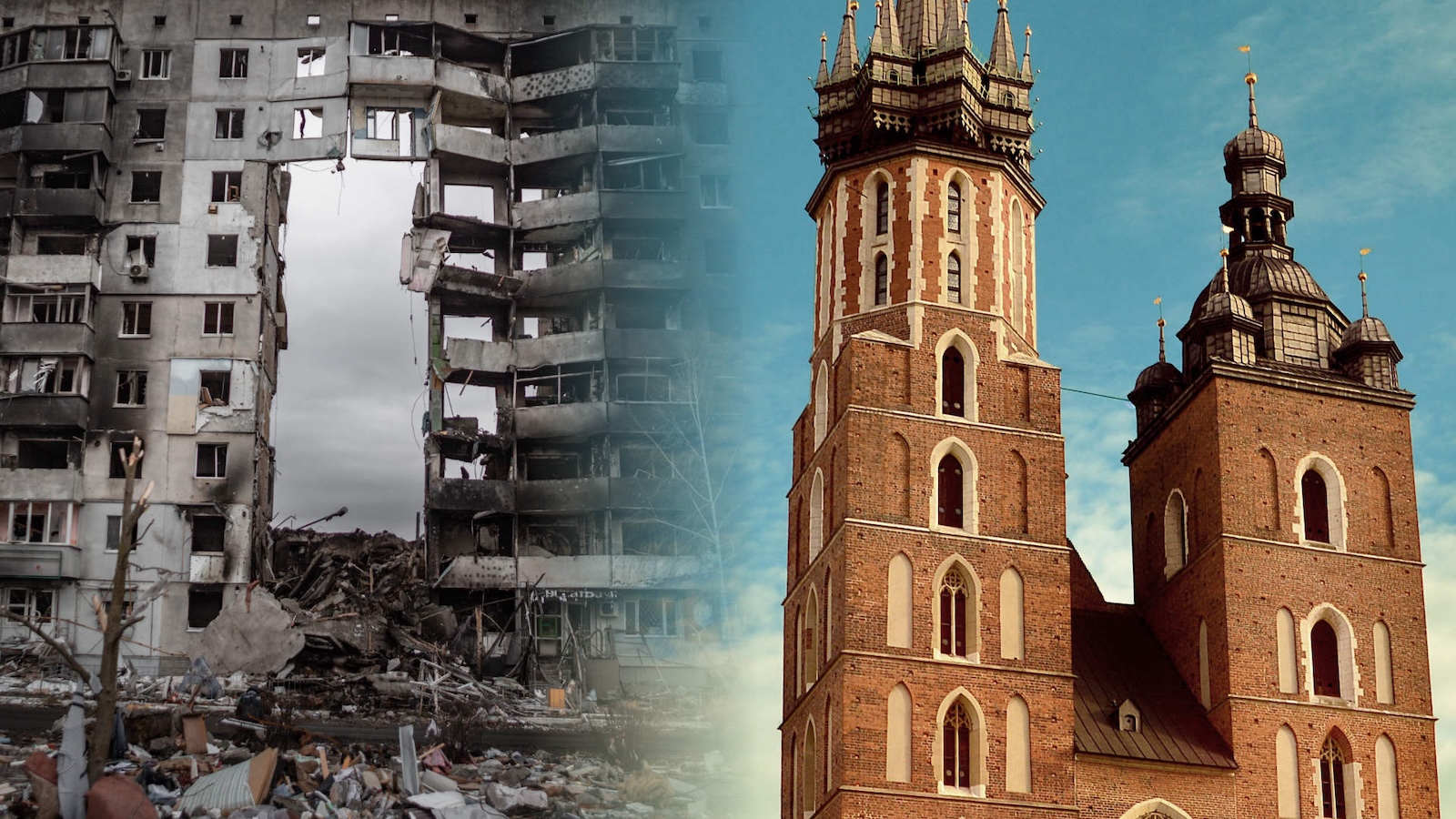
Ignatianum University and the Education Hubs: A Collaborative Model for Displaced Youth Education in Krakow
The Education Hubs (EduHubs) were established through a partnership between the Ignatianum Foundation—the charitable arm of Ignatianum University—and Aspire, a Krakow-based association of IT and business services. This initiative offers safe, modern educational spaces and programming tailored to support the integration and academic development of Ukrainian teenagers displaced by war. Since their founding in 2022, the EduHubs have served over 100 students, using a collaborative educational model that blends in-person tutoring, language classes, and psychosocial support.
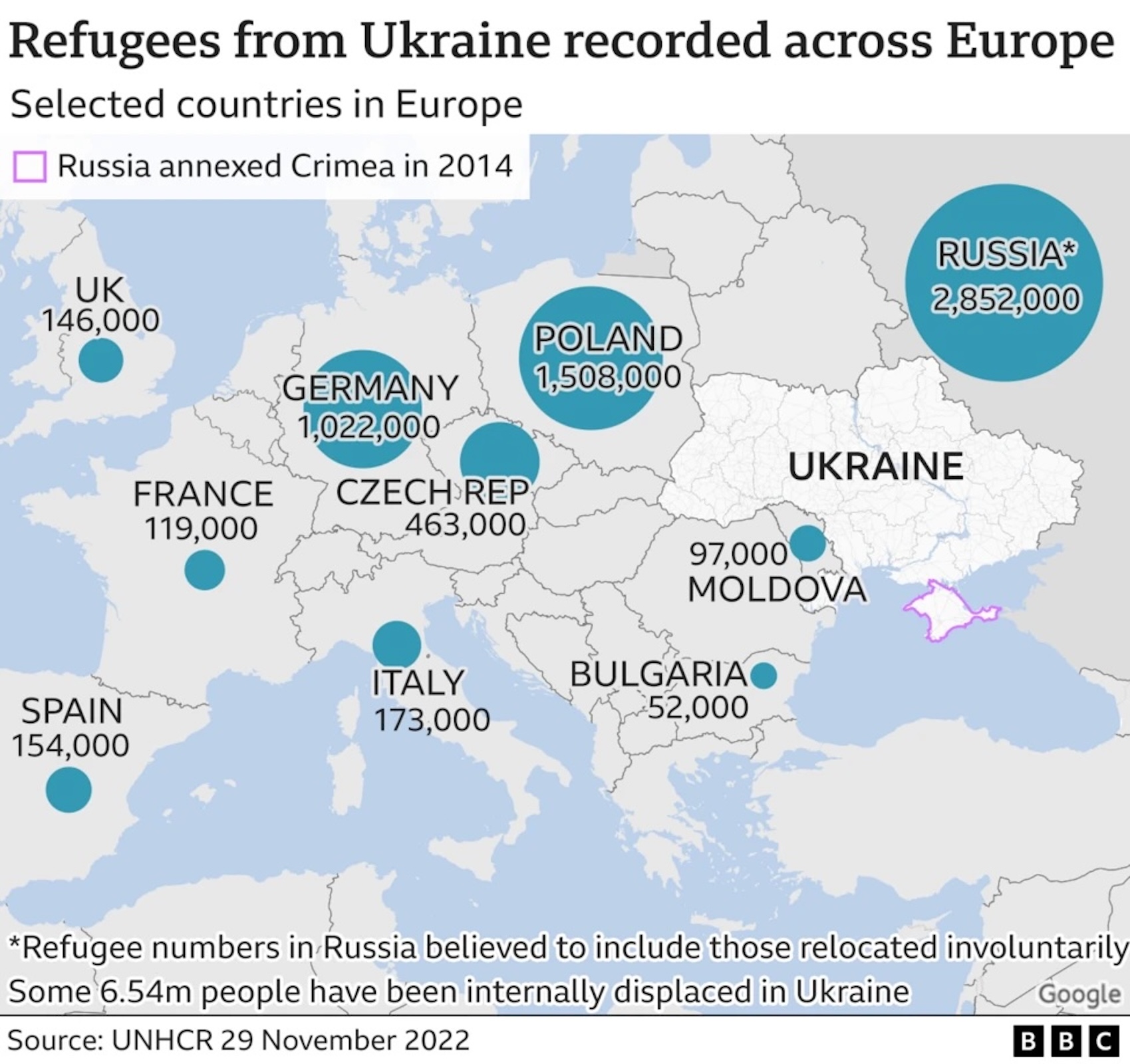
Figure 1: This map shows the distribution of Ukrainian refugees across selected European countries. Poland, Germany, and Russia host the largest numbers, each receiving over one million people displaced by the war. The map also notes Crimea’s 2014 annexation by Russia and highlights that more than 6.5 million Ukrainians have been internally displaced within the country. (Source: UNHCR, November 29, 2022)
Between a Classroom and a Screen: The Complex Educational Landscape for Ukrainian Teens in Poland
Poland is among the biggest recipients of Ukrainian refugees fleeing Russia’s invasion of their country in 2022. Krakow, one of Poland's historic cities, has become a significant destination for Ukrainian refugees. The arrival of large numbers of school-aged children has placed considerable pressure on the local education system. With Poland's decentralized education system, individual schools and local authorities have substantial autonomy, making the integration of refugee students uneven across the city. National policies and local initiatives, such as the Education Hubs (EduHubs) launched by the Ignatianum Foundation and Aspire, are critical components of Krakow's response to this crisis, aiming to provide educational support to displaced Ukrainian teenagers.
EduHubs offers a structured and supportive environment where Ukrainian teenagers can continue their education in dedicated office spaces equipped for learning. This initiative addresses the distinct challenges of integrating Ukrainian students into Polish schools, providing an alternative educational setting that complements local and Ukrainian systems. The EduHubs help bridge gaps, offering programs that support academic continuity amidst the disruptions caused by displacement.
ASPIRE Education Hub | Students Speak. This video offers a glimpse into the lived experiences of Ukrainian teenagers displaced by the war who are part of the Education Hubs. In it, they speak openly about their journeys and the impact the EduHub has had on their educational and social journey. (Source: ASPIRE Poland)
The Polish government mandates that all children residing in Poland, including refugees, enroll in local schools. This requirement has exposed gaps in the system, such as language barriers and cultural differences, which have been exacerbated by the sudden influx of new students. Polish schools, predominantly designed for in-person instruction, often struggle to accommodate the diverse needs of Ukrainian students who are more accustomed to distance learning.
Ukrainian education authorities have adopted a flexible approach by promoting distance learning, enabling students to continue their studies remotely during the war. Online platforms and resources from the Ukrainian Ministry of Education help maintain a consistent curriculum for students, regardless of their physical location. However, this reliance on distance learning complicates the integration of Ukrainian students into the Polish system, as they face the challenge of navigating two educational frameworks simultaneously. It also exposes the digital barriers in that some students don't have the necessary tools to actively participate in this form of distance learning. And this is where the EduHubs are able to fill in the gap. As some students put it:
The EduHubs in Krakow are where children come to study, to learn something. There are special places for us with tables, chairs, and laptops because a lot of children don't have a place to study at home. And even if they don't have a laptop, for example, they come here to study. I can name at least 3 students that came to EduHub to study something, to learn, because they don't have a place to study at home, or they're unfocused at home. And EduHub helps them to focus. (Interview with EduHub Administrator, July 1, 2024)
Ukrainian regulations mandate that school-aged children remain enrolled in Ukrainian schools, even while abroad. This creates a dual system for refugee students in Poland, who must fulfill enrollment requirements in both countries. Consequently, students often struggle to balance attending Polish schools for legal compliance while continuing distance learning with Ukrainian institutions. This duality adds to the workload and stress on students, while also straining the Polish education system, which must accommodate learners who are not fully integrated into the local curriculum.
The ongoing war in Ukraine and the associated refugee crisis significantly shape educational policies and initiatives in Krakow. While EduHubs offer vital supplementary support, the divergence between Poland’s emphasis on in-person learning and Ukraine’s flexible distance education model presents integration challenges. Additionally, mandatory Ukrainian enrollment requirements complicate efforts to adapt fully to the Polish education system, impacting both student well-being and the effectiveness of local schools.
Navigating Integration: Identity, Trauma, and Multilingualism in the Lives of Ukrainian Youth at the EduHubs
Identity and Belonging
The Education Hubs in Krakow are significant not only as physical refuges but as nuanced social spaces where Ukrainian teenagers negotiate the delicate balance between identity preservation and integration within a host country. Initiated by the Aspire Business Alliance and Ignatianum University, these hubs represent more than educational sanctuaries; they are foundational spaces that offer structure while allowing students to develop informal, organic communities. This delicate equilibrium between institutional community-building and peer-to-peer relationships underscores the opportunities and inherent challenges of cultural integration.
Aspire and Ignatianum’s approach exemplifies a structured, top-down model of community building. This institutional model seeks to stabilize and support Ukrainian students academically and emotionally by organizing workshops, language classes, and art therapy. The hubs’ focus on structure is rooted in the objective of helping students adapt while maintaining a sense of psychological security. As an Aspire representative noted, the hubs were designed as “a refuge… somewhere that Ukrainian children could go and feel safe,” emphasizing a structured environment offering security amidst the uncertainty of displacement (Interview, July 1, 2024). This top-down approach underscores the urgency of a stable and welcoming setting for refugees navigating the traumatic transition from home to host society, a foundational stability that is crucial for their academic and social adaptation.
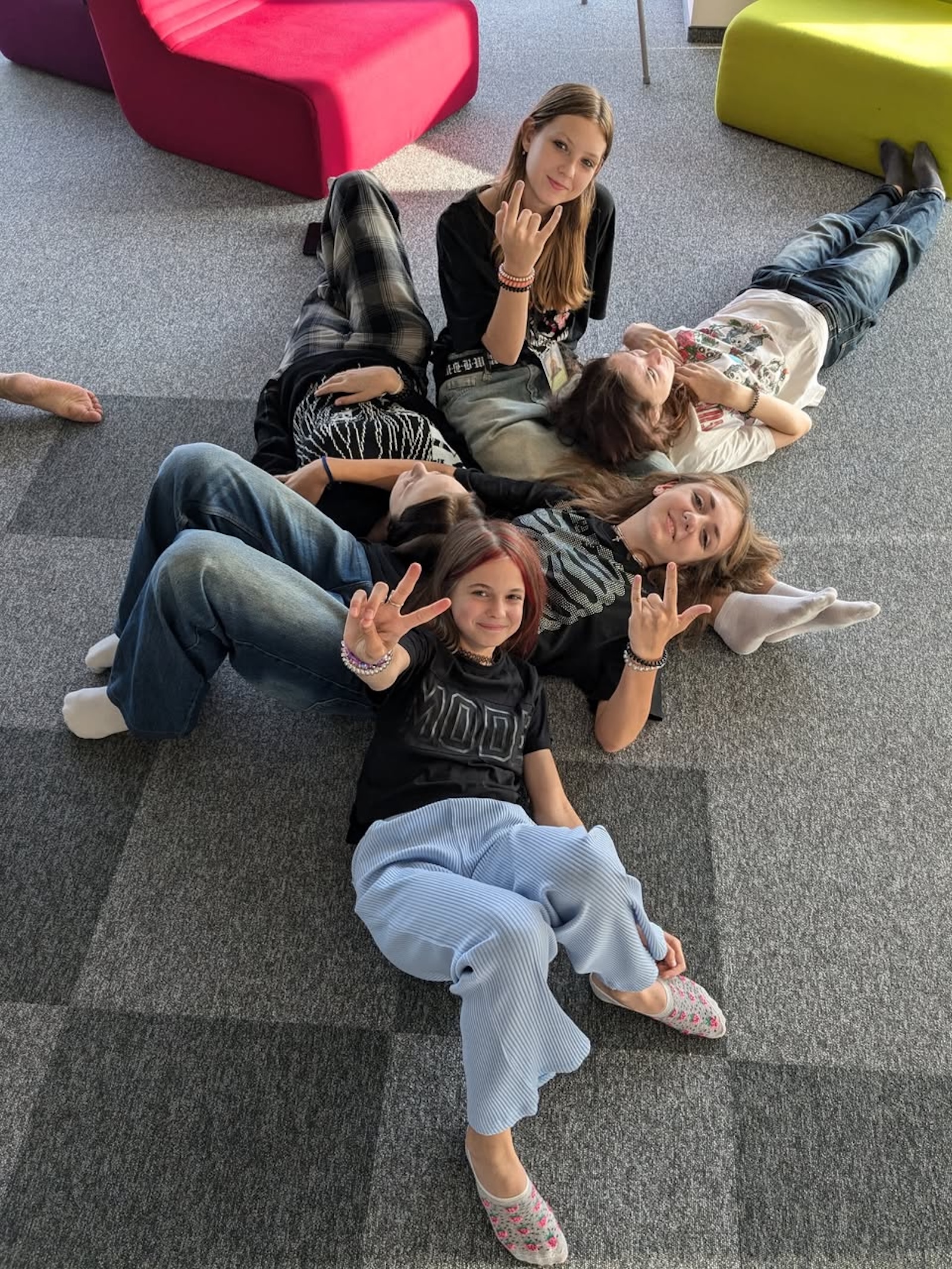
Figure 2: EduHub students posing after their lessons at an EduHub site (Source: EduHub Facebook page)
However, the hubs also foster a bottom-up, peer-to-peer model of community-building, developed organically through the students’ daily interactions. From observations, this approach is neither directed by the institution nor bound by formal programming; rather, it emerges from students bonding through shared experiences and cultural connections, which provide a sense of familiarity and mutual understanding. They get to have the opportunities to form these bonds during workshops and fun activities led by EduHub facilitators and through self-directed free time and peer-led games and activities at the EduHubs. Ukrainian students expressed it clearly:
It's much easier to make friends with somebody who is from your country, who can speak your language. And maybe they [too] have some of the same thoughts about the world, some ideas you share, and the same interests (Focus Group 1, July 4, 2024).
This comment reveals the value of language and shared identity as psychological anchors that ease the feelings of alienation inherent in displacement. The informal bonds among students create a support system that feels both genuine and resilient, allowing them to face the social and emotional challenges of integration together in ways that feel authentic to their experiences.
Together, these two forms of community-building—one institutional and structured, the other organic and peer-driven—intersect in ways that enhance resilience and adaptation. Aspire and Ignatianum’s structured programming fosters resilience by creating a stable foundation, providing displaced students with a secure environment to rebuild their confidence and academic skills. However, peer-to-peer connections add an irreplaceable layer of cultural continuity, allowing students to bridge the divide between their Ukrainian heritage and new surroundings. Through this dual model, the hubs create a multi-layered community that enables young refugees to regain a sense of belonging, drawing strength both from institutional support and from the cultural familiarity of their peer networks.
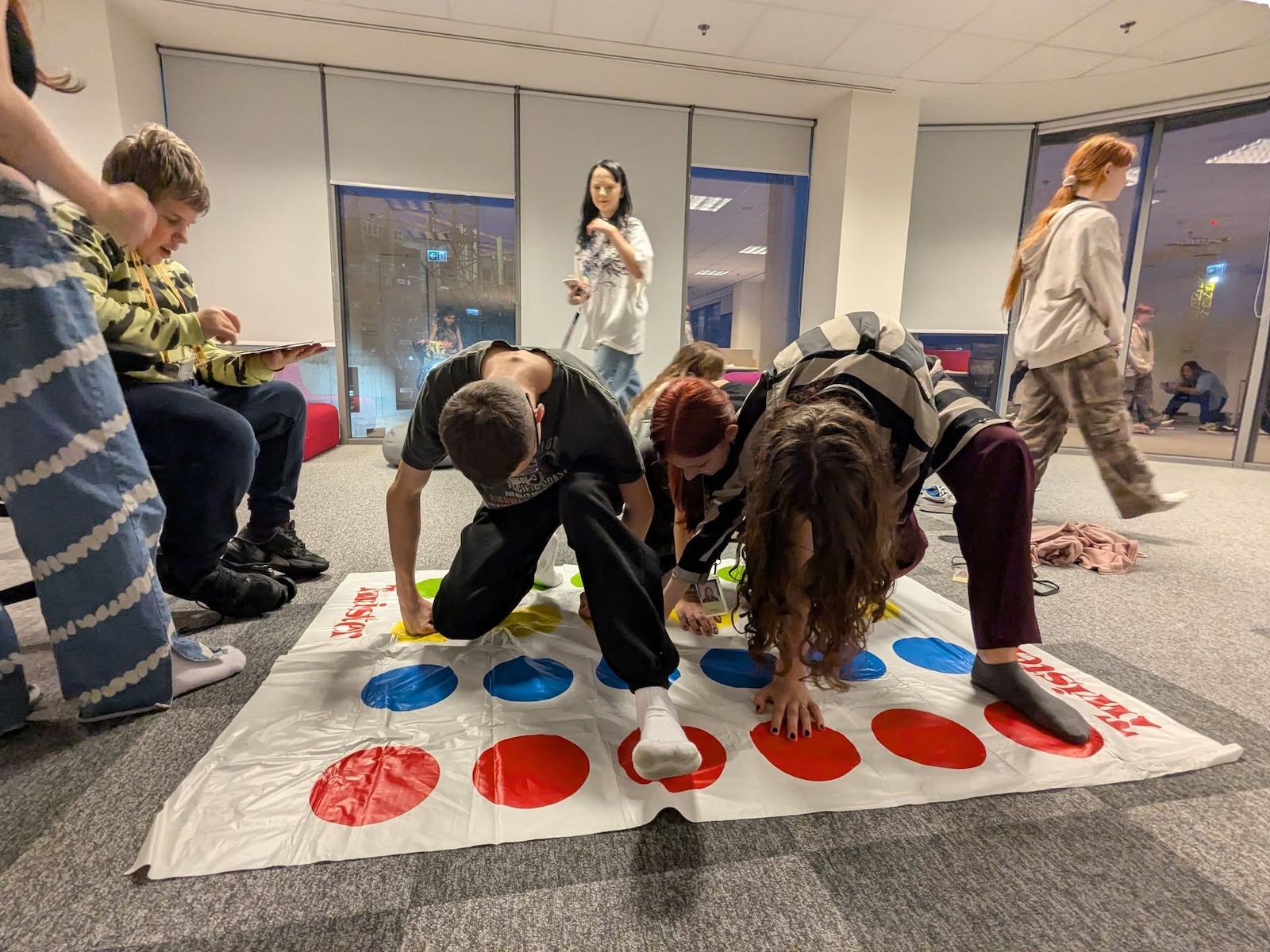
Figure 3: EduHub students playing a game during their lessons at an EduHub site (Source: EduHub Facebook page)
Despite the strengths of this dual approach, the realities of cultural division persist, and some barriers remain that institutional programming alone cannot dismantle. While Aspire and Ignatianum’s structured support is effective in creating an initial framework for integration, many Ukrainian students remain marginalized by subtle, and sometimes overt, "othering" within the broader Polish social landscape. Polish students’ “jokes” and disparaging remarks about their Ukrainian peers underscore the persistence of cultural exclusion, where Ukrainian teens face identity-based discrimination that undermines their sense of belonging (Focus Group 1, July 4, 2024). This "othering" effect reveals the challenges of integration, as these teens’ identities are often questioned or even demeaned, complicating their ability to feel fully accepted by their Polish peers at school or in their neighborhoods and communities (Spivak, 1988)1.
The vision for these hubs, articulated by the director of the Center for Innovation and Knowledge at Ignatianum, is to serve as “a center of integration” where Polish and Ukrainian students can forge genuine friendships (Interview, July 4, 2024). This goal reflects the hubs’ commitment to facilitating social cohesion through intentional programming designed to bridge cultural gaps. However, the hubs also highlight a dual reality: while they support belonging, they simultaneously expose the complexities of cultural division. The Ukrainian teens remain deeply connected to their heritage, forced to navigate integration without the gradual adaptation that many immigrants experience. This creates an environment of subtle cultural contestation, where the need to preserve one’s identity can often feel at odds with the external pressures to integrate. Thus, in a way, the Ukrainian students, from my observation, have carved out the EduHubs as "their space," and although the institutional desire is to have both Polish and Ukrainian students at the center, the center has largely remained Ukrainian. The work of integration happens outside.
In essence, the hubs function as both sanctuaries and sites of negotiation, where students constantly balance the preservation of their Ukrainian heritage with the demands of adapting to new cultural expectations. The hubs' dual approach enables these students to build community on two fronts: through structured institutional support and organic peer networks. Aspire and Ignatianum’s formal programming lays the foundation for stability, offering security and structured adaptation. Meanwhile, the student-led networks of support and solidarity provide a buffer against cultural alienation, allowing teens to connect authentically through shared language and experiences.
Psychological Effects of an Ongoing Conflict and Forced Migration
The Ukrainian teenagers at Krakow’s Education Hubs are not only adapting to a new educational system but are also grappling with the trauma of war, displacement, and the psychological uncertainty this brings. Forced to leave behind homes, families, and the stability of their past lives, these students experience the emotional impact of separation and loss daily. This trauma often manifests as what one coordinator described as "a closing off"—a visible retreat into themselves when memories or conversations about the war surface. As Olena, a facilitator, observed, "When we talk about war, they either shut down or cry…this trauma stays with them; it’s not processed, and it will continue," (Interview, July 8, 2024). Her insight underscores how deeply the effects of war penetrate these teenagers’ lives, shaping both their behavior and interactions.
The hubs offer tailored programs, such as art and theater therapy, that aim to create a safe outlet for processing this trauma. Olena, who conducts the theater sessions and art therapy sessions, explains that this therapeutic approach helps children express their experiences in a way that words often cannot capture. Nevertheless, the support these programs provide does not fully resolve the internal struggle. One student shared the lingering anxiety: "I want to feel normal, but there’s this constant fear that everything will change again," (Focus Group 2, July 8, 2024). For these teens, psychological stability feels elusive, with the ever-present threat of instability casting a shadow over their daily lives.
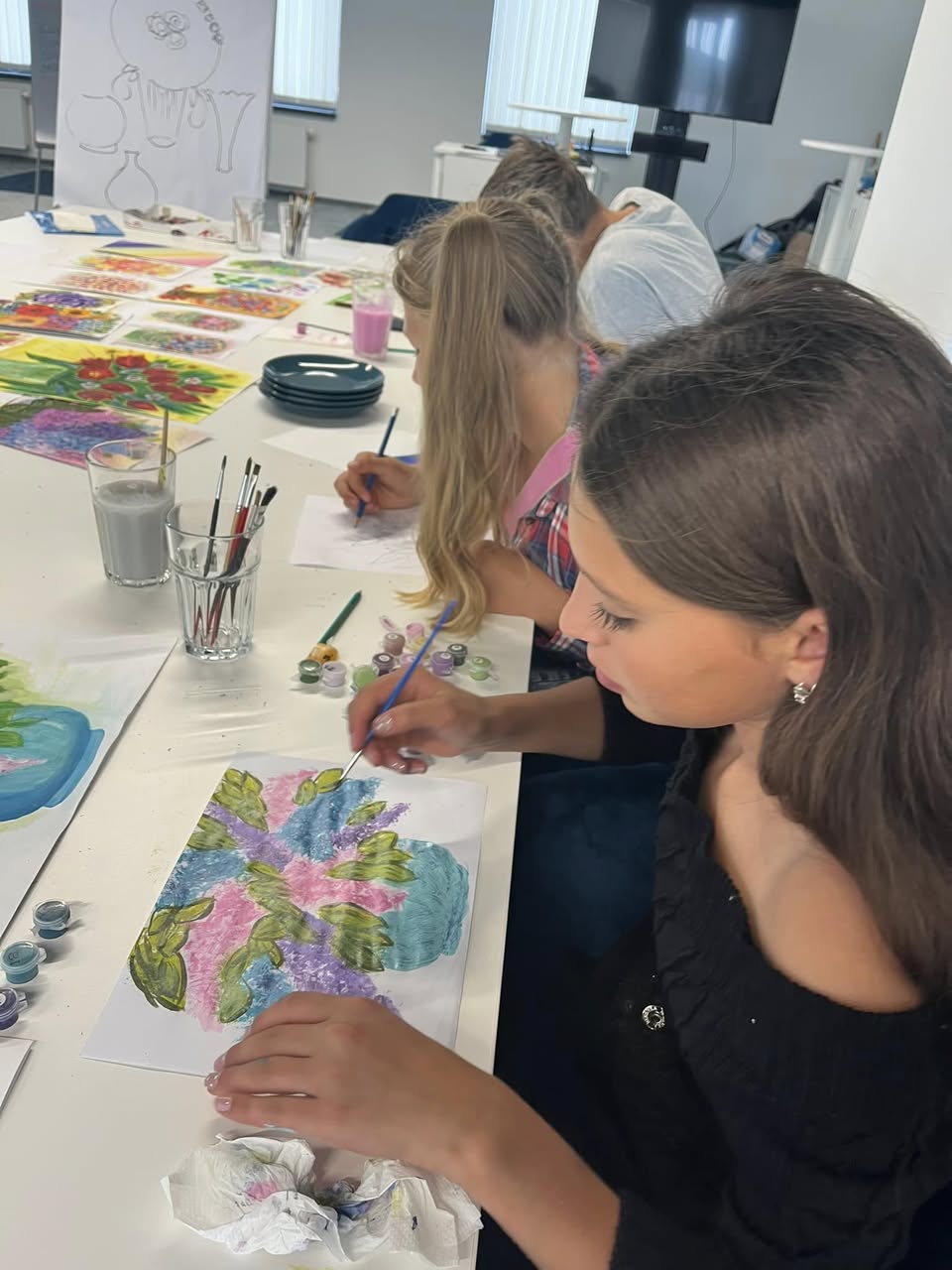
Figure 4: Teenagers participating in an art therapy workshop at the Krakow Education Hub, where facilitators encourage creative expression as a gentle way to process the trauma of war, separation from home, and the emotional “closing off” many experience when discussing their past (Source: EduHub Facebook page).
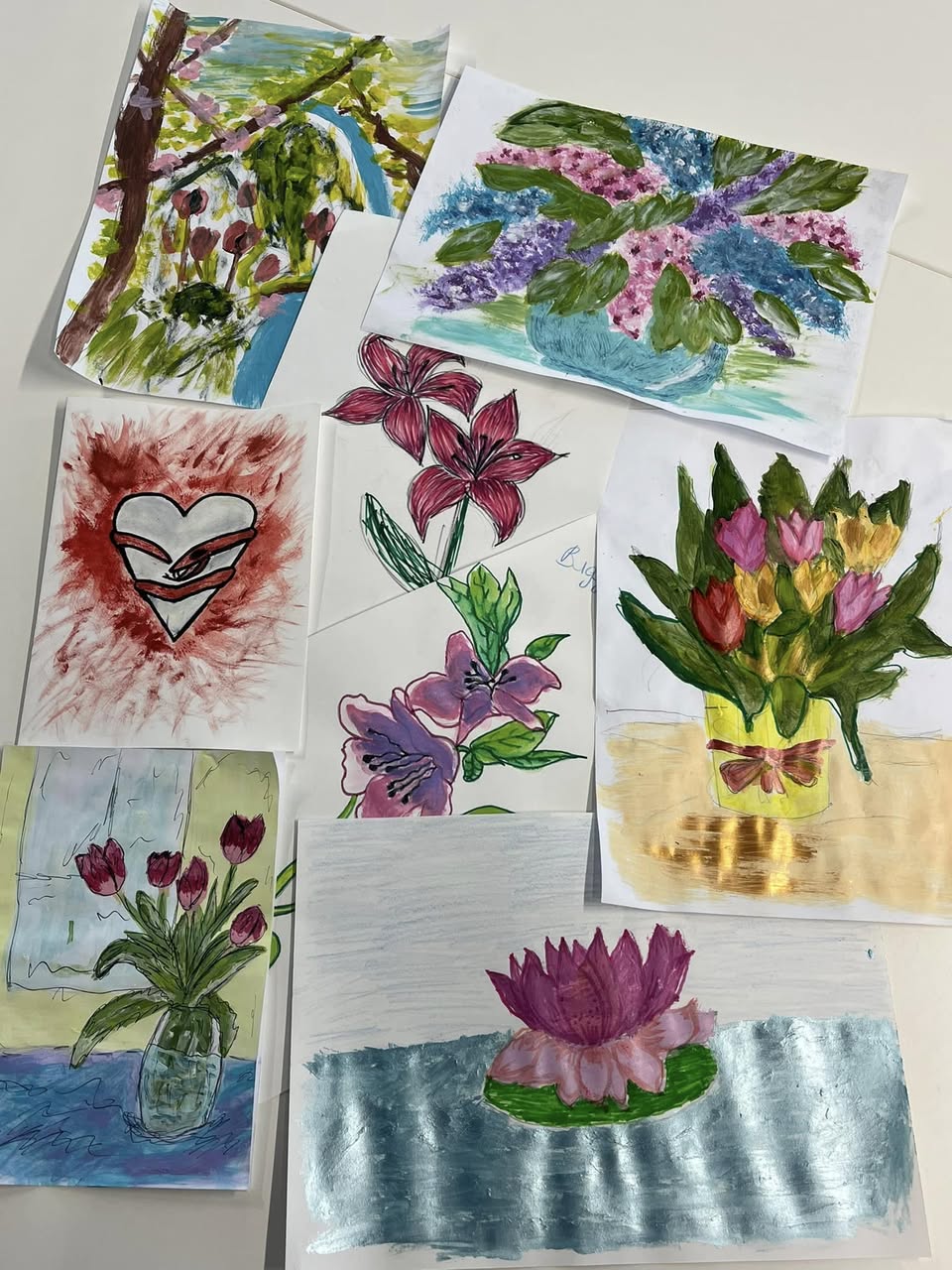
Figure 5: Examples of the art made by teenagers participating in an art therapy workshop at the Krakow Education Hub (Source: EduHub Facebook page)
Moreover, the continual longing for family exacerbates this uncertainty. Many students have fathers, brothers, or other loved ones fighting on the front lines in Ukraine, adding layers of anxiety to their displacement. Olena notes, "We look every day…at this horrible news, about something destroyed, someone killed," pointing to how they carry this awareness with them (Focus Group 2, July 8, 2024). This anxiety is compounded by the difficulty of relating to Polish peers who, as Olena noted, the teenagers "cannot understand what it means to live without the possibility of peace," (Focus Group 2, July 8, 2024). This disconnect often heightens feelings of isolation, even in an environment designed to provide community and support. Even the realities of forced migration leave a scar on the teenagers' early childhood development. One student noted:
When the war started, we fled to the western part of Ukraine and stayed there for three months. Then, I went to Romania for one week. Then, to Hungary for one week. Then, to Slovakia for one week. Then, I went to Poland for three weeks, but there was a law that if you weren't a citizen of the European Union, you can't stay there more than 19 days. So, we went from Europe to Croatia and Montenegro. Since the war started, I lived only one night in Ukraine, and I was really disappointed when we left. We swapped flats or houses every week (Interview with EduHub student, July 4, 2024).
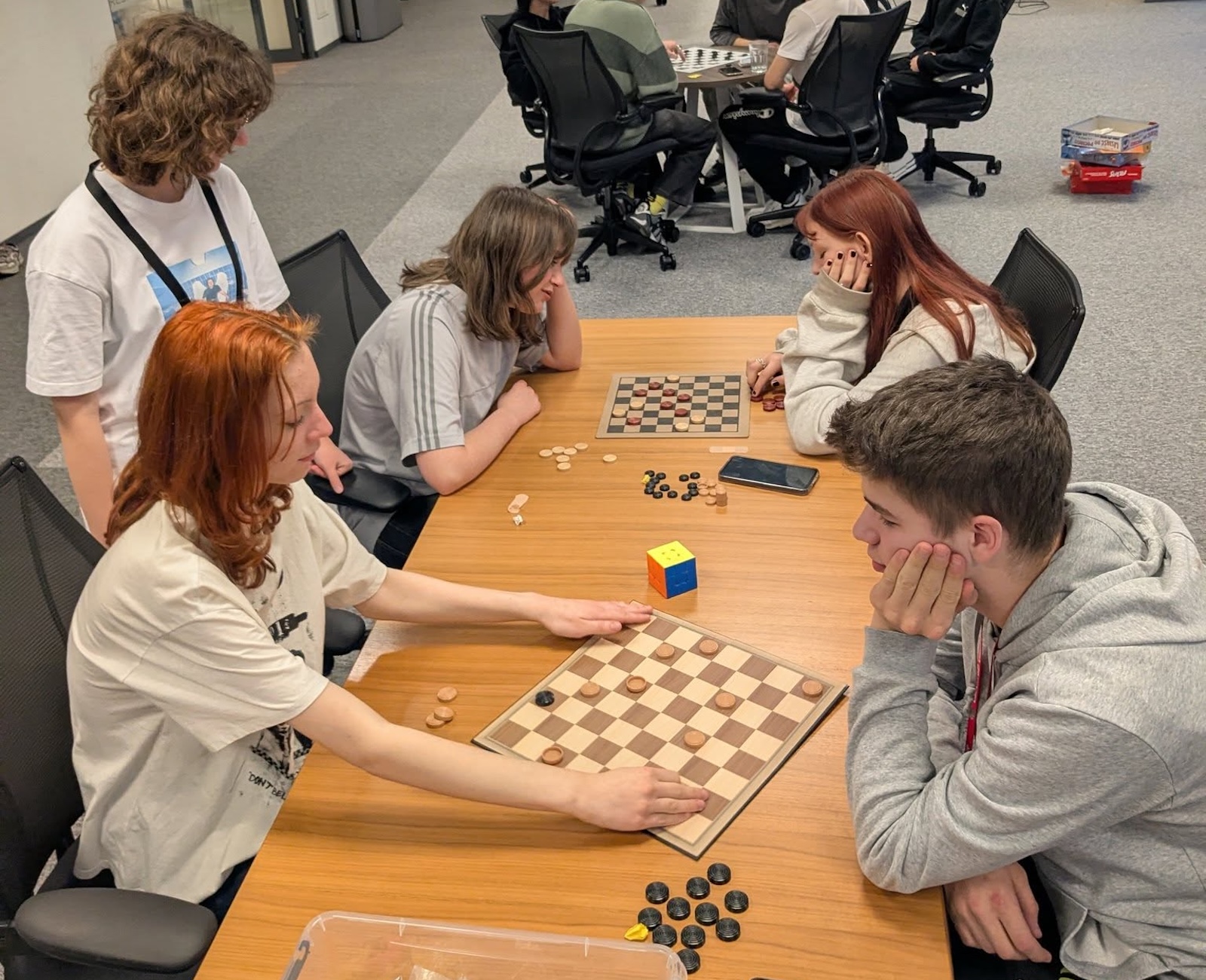
Figure 6: Ukrainian students gather to play board games at the Krakow Education Hub, at the communal area where they share meals, and sing karaoke, helping create a family atmosphere (Source: EduHub Facebook Page)
Through these programs and the supportive environment of the hubs, these teenagers begin to regain some sense of security. The hub’s “family atmosphere,” as described by facilitators, minimizes stress and fosters a safe space where these teens can express themselves without fear (Interview, July 3, 2024). From observation, the fact that students get to eat lunch together, sing karaoke, or play board games in communal areas is what cements the EduHubs as a safe space for the students. For those coping with conditions such as autism or heightened anxiety, the hubs also provide a place where socializing feels manageable, allowing for positive changes over time. As one facilitator put it, “we see the positive change…they feel safe enough to open up,” (Interview, July 8, 2024). Yet, the deep-seated trauma remains a constant undercurrent, shaping their present and casting uncertainty on their future. The Education Hubs, while offering a haven, highlight the enduring complexities of healing from trauma in the context of forced migration and ongoing conflict.
Navigating Multilingual Realities
The Ukrainian teenagers at Krakow’s Education Hubs view language acquisition as a gateway to opportunity and a means of navigating their complex identities in displacement. English, Polish, and Russian each hold distinct significance, reflecting their aspirations, cultural ties, and integration challenges. For these teens, learning languages is not merely practical but deeply symbolic, embodying their connections to the past, their place in the present, and their hopes for the future.
English occupies a central role as the language of opportunity and global mobility. Its association with higher education and career advancement makes it highly valued among students. “My mother always said English is the most popular language,” one teenager explained, emphasizing its ubiquity and importance in globalized spaces (Focus Group 1, July 4, 2024). The hubs have reinforced this prioritization, offering English lessons led by native speakers. Andrii, a student, noted that these classes "broke the ice" for him, helping him overcome shyness and gain confidence in expressing himself (Interview, June 2024). Facilitators also observed a persistent demand for English instruction, with teenagers viewing fluency as a tool for securing opportunities outside Poland or Ukraine. This focus aligns with the broader trend of English as a lingua franca, where proficiency is often seen as synonymous with upward mobility and a ticket to international academic and professional spaces.
Polish, in contrast, is seen as essential for local integration, though it evokes mixed responses among students. Many recognize its practical value in interacting with Polish peers and navigating daily life, especially for those attending Polish schools. However, its perceived similarity to Ukrainian can lead to complacency. Julia, a hub coordinator, remarked that some students assume they can “get by without deep knowledge,” relying instead on the shared Slavic roots of the two languages (Interview, July 3, 2024). This assumption is further bolstered by the widespread availability of Ukrainian translations in Poland, which reduces the immediate need for fluency. Yet, for others like Andrii, Polish is a challenge worth embracing. Andrii’s journey of learning Polish through self-study and familial support highlights the determination required to master the language and its rewards in fostering social connections and academic progress. As he put it, “Without Polish, I would never get into university,” underscoring its indispensability for long-term integration (Interview, June 2024).
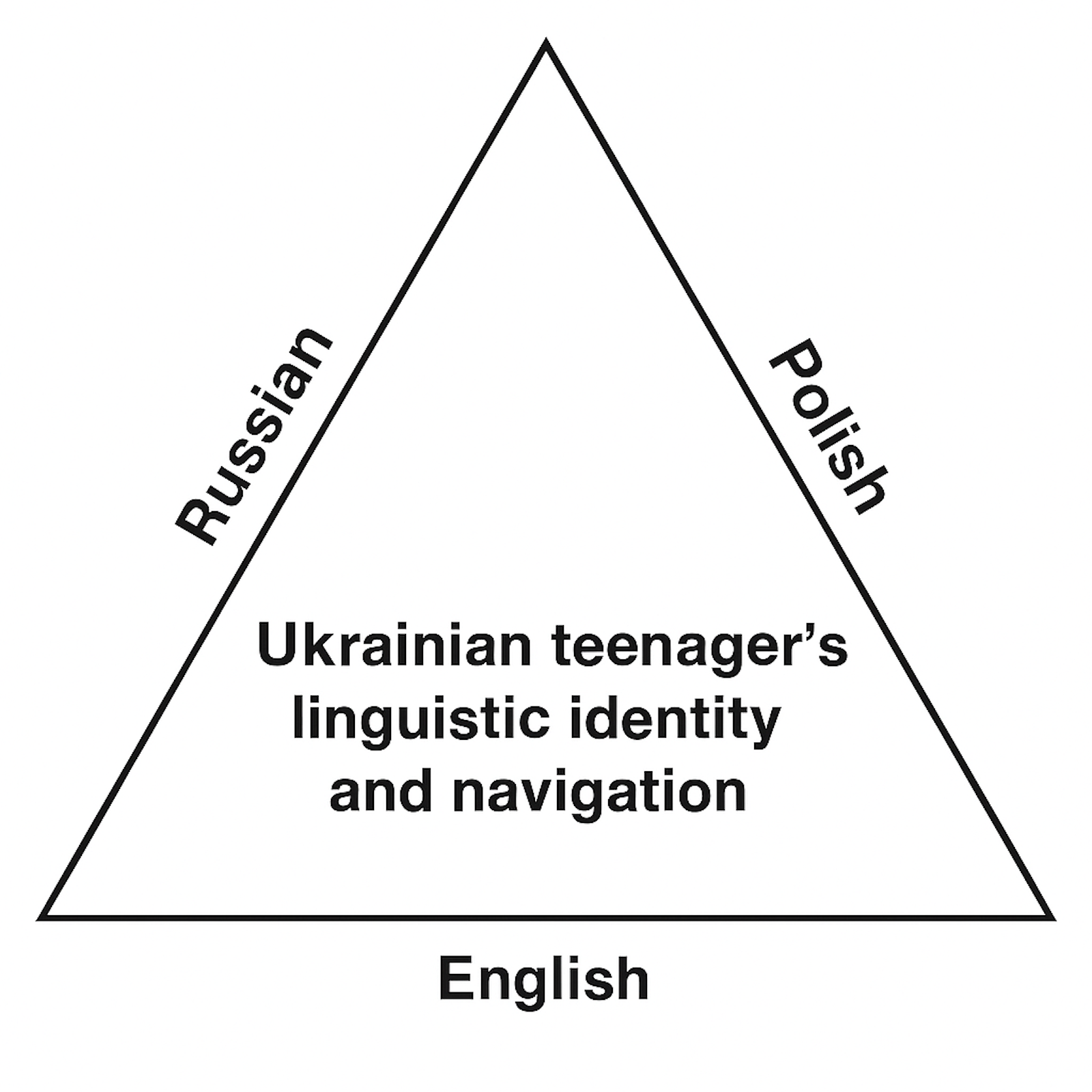
Figure 7: A triangular visual representation of how Ukrainian teenagers navigate linguistic identity at the intersection of Russian, Polish, and English (Source: created by Michelle Hadebe)
Russian, while not formally part of the hubs’ programs, holds a more fraught place in students’ linguistic repertoires. In an interview with Professor Paula Olearnik, a professor of philosophy and Eastern European studies, noted that for some Ukrainians, Russian is simply a functional language from their pre-war lives, used within families or communities. For others, however, it carries the weight of political and emotional associations, due to the ongoing conflict. This duality underscores the complexities of identity for Ukrainian teenagers, where language is not only a means of communication but also a marker of historical and cultural positioning. The hubs’ role in shaping students’ linguistic priorities extends beyond structured lessons. Peer interactions and daily experiences amplify the importance of language as both a social tool and a marker of identity. English often serves as a bridge for cross-cultural interactions, Polish facilitates local integration, and Ukrainian remains a core thread of cultural continuity. One student observed that speaking Ukrainian at the hubs felt like a “necessity,” a way to stay connected to their roots even while adapting to new environments (Interview, July 1, 2024). This sentiment reflects the dual role of language as both an anchor to the past and a vehicle for navigating the present.
Despite the hubs’ efforts, challenges remain. Some students struggle with the psychological demands of juggling multiple languages, each carrying distinct connotations and expectations. Others face societal pressures, such as the expectation to quickly adapt to Polish norms, which can feel overwhelming. The hubs provide a supportive space to mediate these tensions, but the process of linguistic adaptation is deeply personal and uneven, reflecting the unique circumstances of each student.
Ultimately, the language dynamics at EduHubs reveal the interplay between practicality, identity, and aspiration. English symbolizes a gateway to global opportunities, Polish represents the immediacy of integration, and Russian reflects the layered histories these students carry with them. Through structured lessons, peer-driven interactions, and personal determination, these teenagers are navigating a multilingual reality that is both challenging and empowering. The hubs stand as crucial spaces where language is not only taught but also lived, enabling students to use it as a tool of resilience, connection, and self-definition. In doing so, the hubs help these young refugees envision and build a future shaped by the languages they prioritize today.
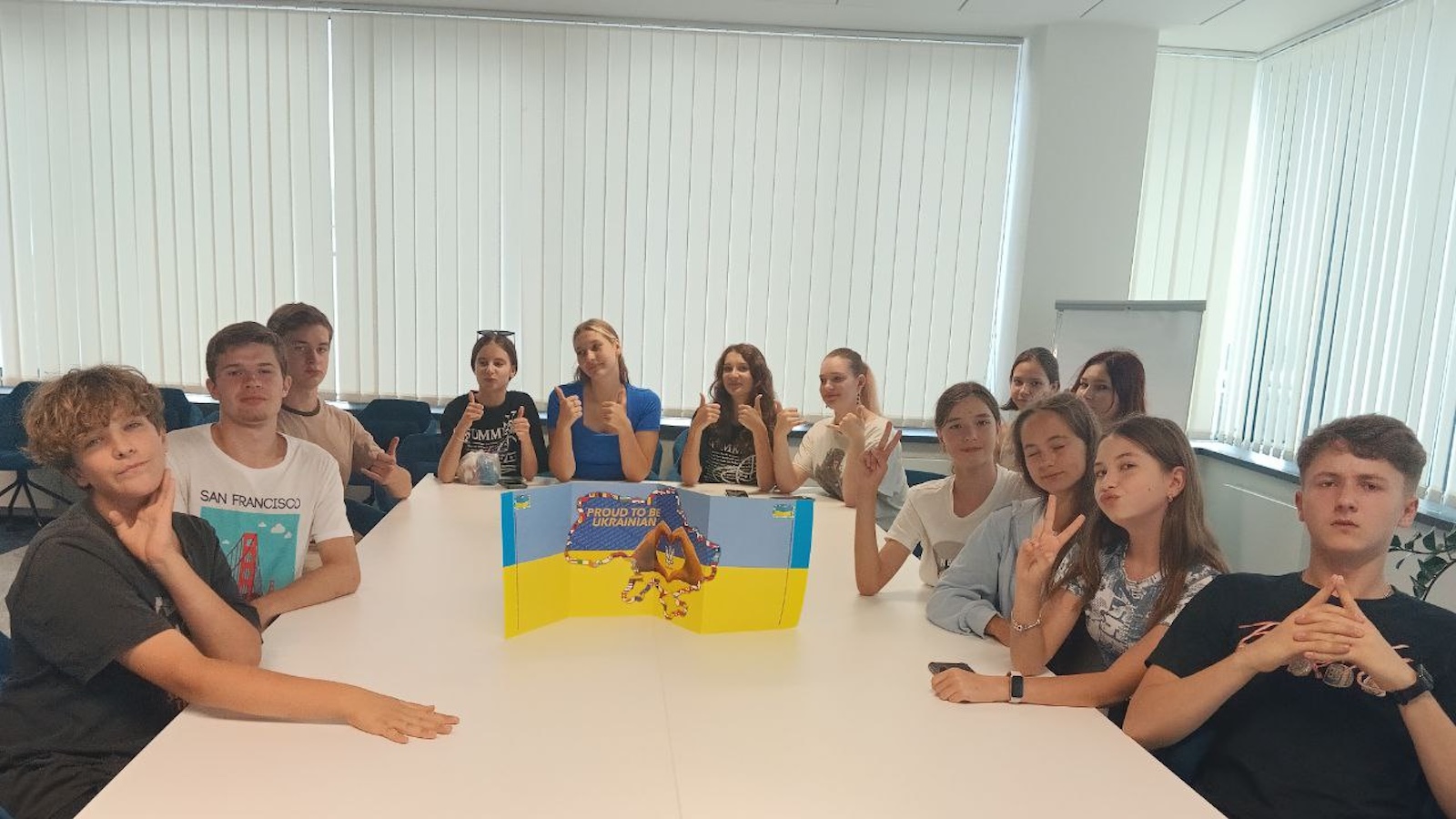
Figure 8: Students gather around a shared table. At the center of the table sits a student-made art piece that says, “Proud to be Ukrainian,” a vivid reminder of how identity, community, and healing intertwine within Krakow’s Education Hubs (Source: EduHub Facebook Page)
The findings from Krakow’s Education Hubs illustrate the intricate processes of identity preservation, psychological healing, and multilingual adaptation faced by displaced Ukrainian teenagers. These hubs are more than spaces of learning; they represent comprehensive ecosystems where institutional support and organic peer dynamics intersect, addressing both the immediate and long-term challenges of forced migration.
Identity and belonging emerge as central themes in the hubs’ dual approach to community-building. Structured institutional programs provide the stability and security necessary for young refugees to adapt academically and socially, while informal, peer-driven networks foster cultural continuity and mutual support. Together, these models create a nuanced community where teenagers navigate the tension between preserving their Ukrainian heritage and integrating into Polish society. However, the persistence of subtle “othering” underscores the barriers to complete integration, revealing the enduring complexities of cross-cultural acceptance and belonging.
In parallel, the psychological effects of ongoing conflict and displacement remain profound. The hubs serve as sanctuaries where teenagers begin to process the trauma of war and separation through tailored interventions like art and theater therapy. Despite these efforts, the weight of unresolved trauma and the uncertainty of their circumstances continue to shape their emotional landscapes. The hubs offer a rare environment of safety and emotional support, fostering incremental positive changes, yet they also highlight the enduring nature of psychological recovery in the face of war and displacement.
Finally, language dynamics within the hubs reflect the multifaceted identities and aspirations of these teenagers. English symbolizes global mobility and opportunity, Polish serves as a tool for local integration, and Ukrainian anchors them to their heritage. The hubs play a pivotal role in supporting these linguistic journeys, balancing structured lessons with peer interactions to create a multilingual environment that empowers students to navigate their complex realities. However, the psychological and social challenges of juggling multiple languages remain significant, underscoring the deeply personal nature of linguistic adaptation.
In essence, Krakow’s Education Hubs function as vital spaces of negotiation, where Ukrainian teenagers navigate the intersections of identity, trauma, and aspiration. They provide a blueprint for holistic refugee support, blending institutional structure with organic community-building, therapeutic interventions, and linguistic empowerment. Yet, the findings also reveal the inherent limitations of these efforts, as the broader social and psychological challenges of forced migration persist beyond the walls of the hubs. Moving forward, addressing these gaps will require a collaborative approach that extends integration efforts into the wider community while continuing to prioritize the well-being and resilience of displaced youth. The hubs stand as a testament to the power of intentional, multifaceted support in enabling young refugees to rebuild their lives amidst profound uncertainty and change.
Footnotes:
1. Spivak, G. C. (1988). Can the Subaltern Speak? In C. Nelson, & L. Grossberg (Eds.), Marxism and the Interpretation of Culture. Urbana/Chicago: University of Illinois Press
The views expressed in this student research are those of the author(s) and not of the Berkley Center or Georgetown University.