Ecological Belonging at Comillas University
Caring for the Common Home: an Exploration of Sustainability Initiatives at Comillas Pontifical University
By: Madison Ross (C'27)
May 1, 2026
In May and June 2025, Madison Ross (C'27) spent three weeks at Comillas Pontifical University in Madrid, Spain researching how institutions can nurture hope and collective responsibility in the face of global environmental challenges. Through its Integral Ecology Unit (IEU), Comillas aims to connect its Jesuit institutional values with practical sustainability initiatives. This report explores how members of the Comillas community engage with these initiatives and offers recommendations for strengthening participation, based on responses provided in semi-structured interviews.
Global Temperature Anomalies from 1880 to 2023. Video 1: A map of the world demonstrating changes in global temperatures from 1880 to 2023. Normal temperatures are shown in blue, calculated from averages over the period 1951-1980. Above-average temperatures are shown in red and below-average temperatures in white. The map begins with most of the world in blue or white, with some years having flashes of higher temperatures (shown in yellow). As the years progress, global temperatures rise (begin to turn yellow or red). The Arctic and Pacific oceans are especially warm (yellow or red) around 1940. After 1970, the majority of the world is shaded yellow, and by 2023 (the end of the visualization), the majority of the world is shaded a deep red, representing a significant increase in global temperatures (Data and Visualization Source: NASA Global Temperature - Earth Indicator).
Climate change is one of the most pressing challenges of our time. As a social justice issue, it is unique in its scale and salience. It has, and will continue to have, drastic effects on the global community. Although it is driven largely by industrial practices in wealthier nations, its effects fall disproportionately on low-income and marginalized communities. News stories about natural disasters or catastrophes exacerbated by climate change are not unfamiliar. We, as a global community, have failed to stay on track to meet the emissions targets that scientists have deemed necessary to prevent debilitating consequences to the global environment due to rising temperatures. The map above provides a visual representation of the rise in global temperatures over the last century and a half.
Spain is facing extreme challenges as a result of climate change, including rising temperatures, water scarcity, and desertification. Policymakers have already attempted to address climate challenges at the national and international levels, including Spain’s Integrated National Energy and Climate Plan (NECP). The NECP is part of a 10-year EU initiative for member states to meet reduced greenhouse gas emissions targets. Within Spain, policymakers have attempted to address the local effects of climate change, as well. Madrid lawmakers have implemented policies to target emissions within the city, including restrictions on car emissions in high-pollution areas in the city center.
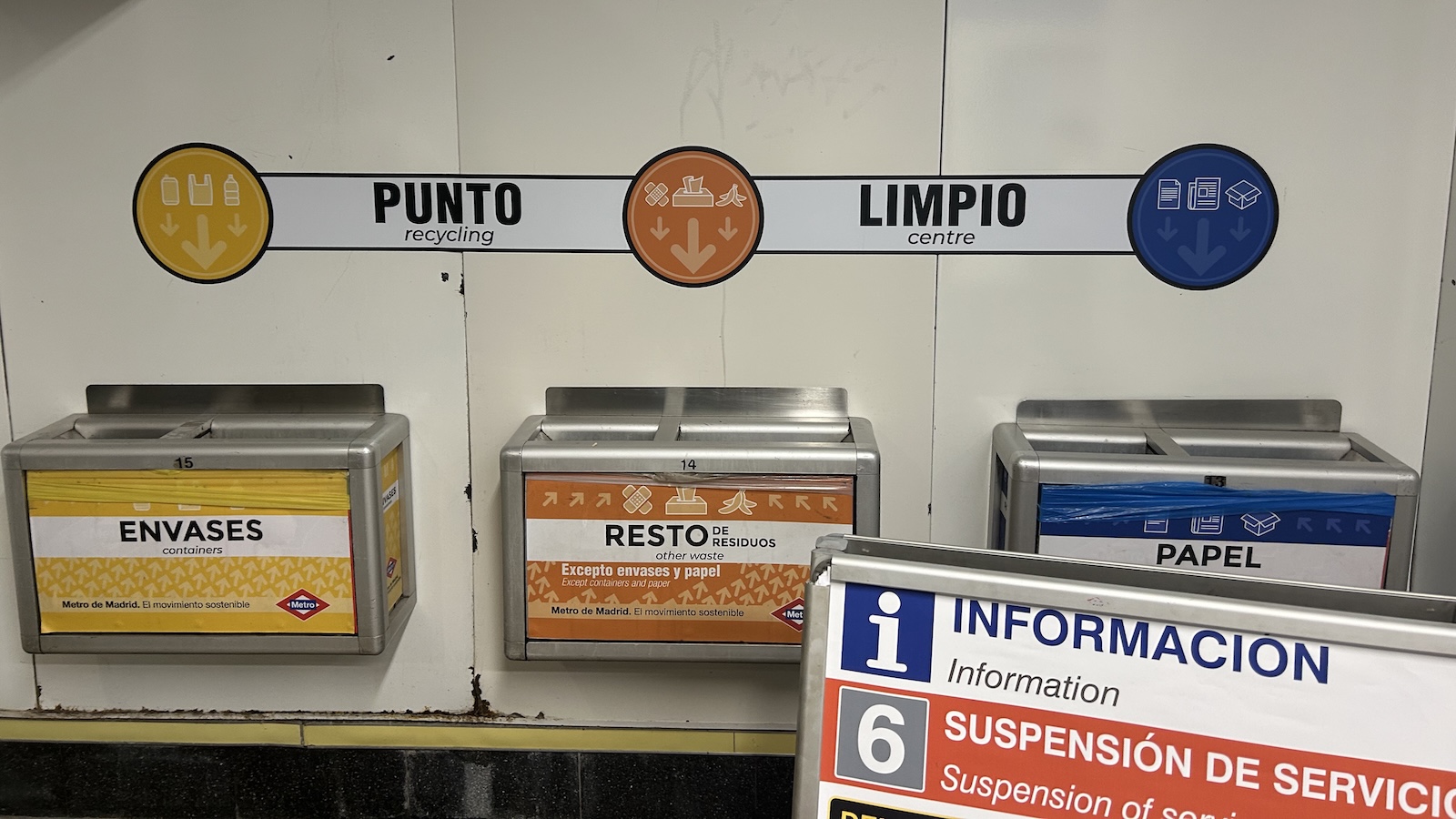
Figure 1: Three waste receptacles in a Madrid metro stop. The words “Punto Limpio” are written on the wall, with the English translation “Recycling Centre” underneath them. On the left there is a yellow receptacle for containers, in the middle there is an orange receptacle for other waste, and on the right there is a blue receptacle for paper. A metro information sign is visible in the foreground, slightly blocking the view of the blue receptacle (Source: Madison Ross's personal photos).
Many feel powerless in the face of the scale of the climate crisis, in addition to inaction by the world’s largest polluters. This sense of powerlessness can lead to a loss of hope and disengagement with the issue entirely, even though small, meaningful actions remain necessary for long-term progress.
Within this broader context, institutions like Comillas play an important role in shaping attitudes and local action around sustainability, especially among young adults preparing to enter the workforce. The consulting member recognized this importance, starting their own initiative to promote sustainable practices within their department at Comillas. Their work was later incorporated into Comillas’ Integral Ecology Unit, working within their department to continue to promote sustainable practices and activities while now also bringing feedback and new ideas to the IEU as a whole (interview, May 30, 2025).
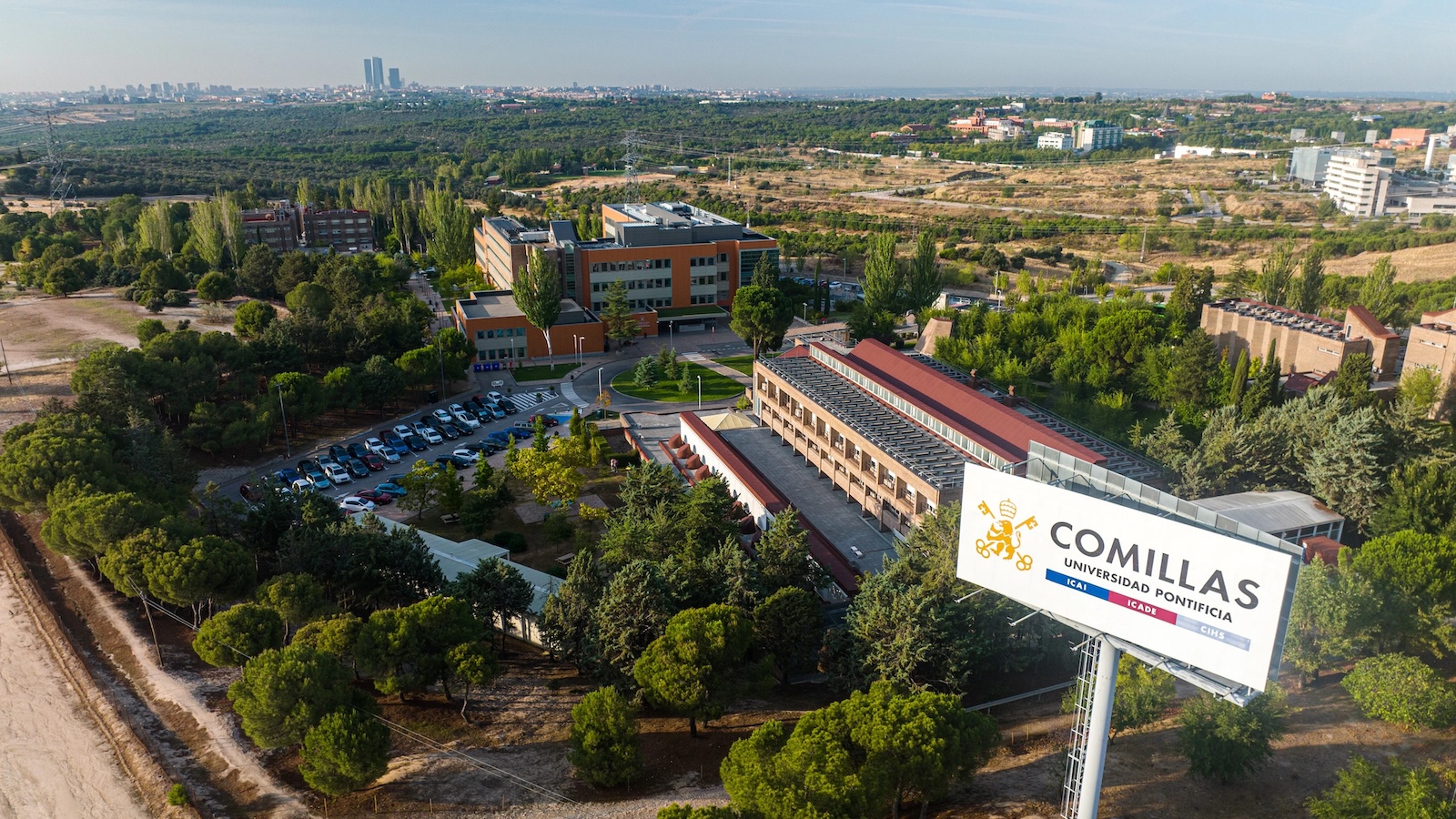
Comillas Pontifical University (“Comillas,” “the university”) was founded in 1890 as a Jesuit seminary in Comillas, Spain. The university has gradually expanded its academic offerings beyond clerical formation, now including programs in theology, psychology, education, engineering, business, and more.
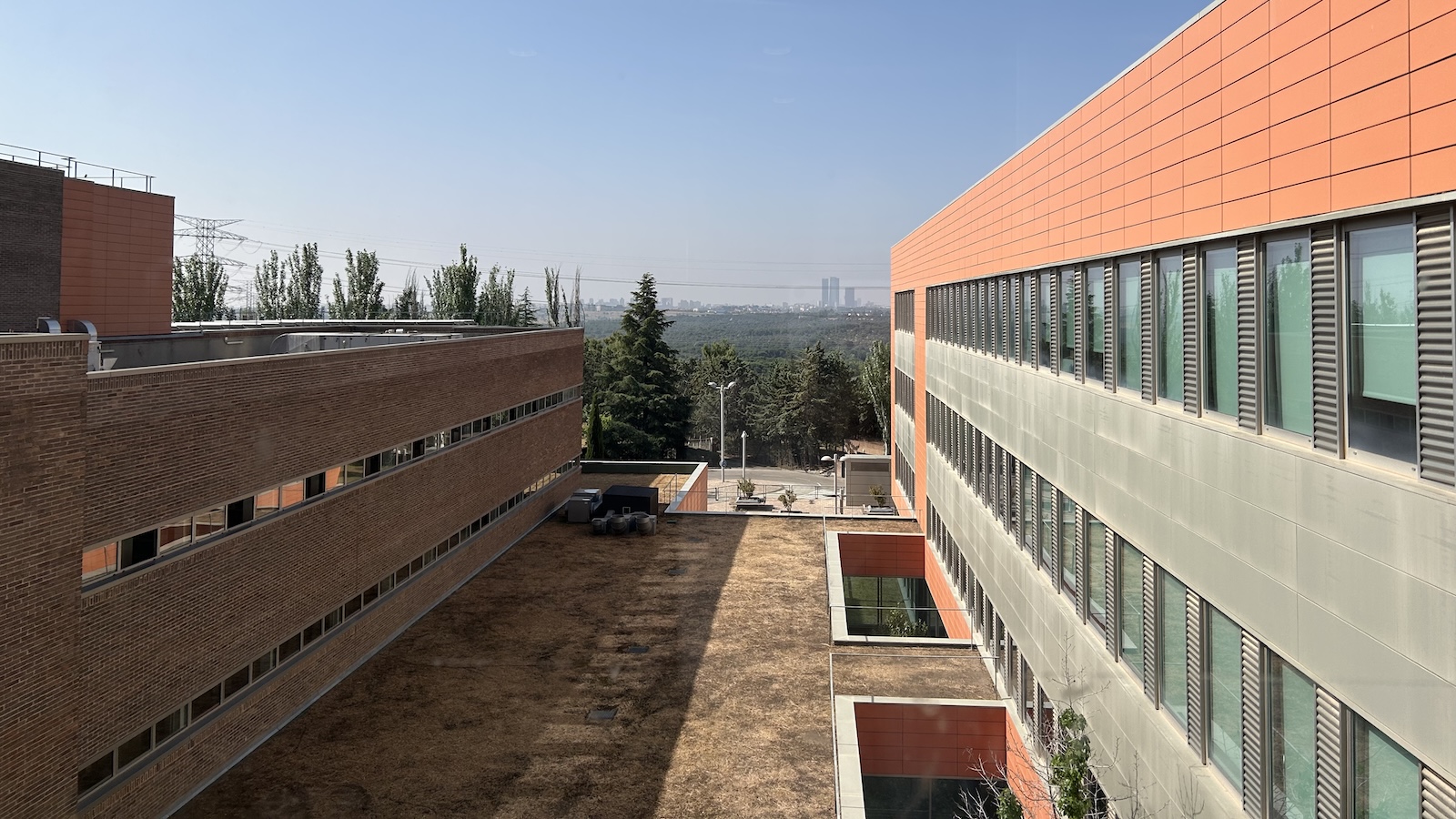
Figure 2: View from a window at the Comillas Cantoblanco campus. The foreground displays a section of the new building rooftop at the Cantoblanco campus. The exterior orange wall and windows of another building are visible to the right, and the tops of trees are visible beyond the roof. Part of the Madrid skyline is visible in the background (Madison Ross's personal photos).
Comillas has maintained close ties to its Jesuit mission. Their website directly references their Jesuit heritage and values as guiding principles in their work, including values, such as caring for “the common home,” that are directly related to sustainable practices. Their mission statement is “to transform students into competent and ethical professionals, committed to social transformation.”
The Integral Ecology Unit (IEU) at Comillas was created as an institutional response to Pope Francis’ encyclical Laudato Si’ (2015), which calls for a holistic and relational understanding of environmental stewardship. The IEU aims to promote the seven types of ecology outlined by Pope Francis: environmental, social, economic, everyday, education, spiritual, and cultural. The IEU assigns delegates within each department, promoting sustainable initiatives and bringing community suggestions back to the IEU. Jesús Sánchez, director of the Integral Ecology Unit, further explains the IEU’s mission in the video featured on IEU's homepage.
My research focuses on environmental ecology and the work of the Integral Ecology Unit at Comillas Pontifical University. In this report, environmental ecology is taken to mean “a call for environmental protection, as well as a commitment to address the climate crisis, biodiversity loss and ecological sustainability” (Source: Comillas Integral Ecology Unit). I therefore use the term “sustainability” interchangeably with environmental ecology.
I worked closely with a consulting member of the Integral Ecology Unit to develop a research project exploring Comillas’s dedication to sustainability. Examples of the activities of the IEU include providing infographics to promote sustainable behavior, hosting guest speakers and events to connect community members to environmental experts, and running a garden complete with a small greenhouse to promote sustainable food practices.
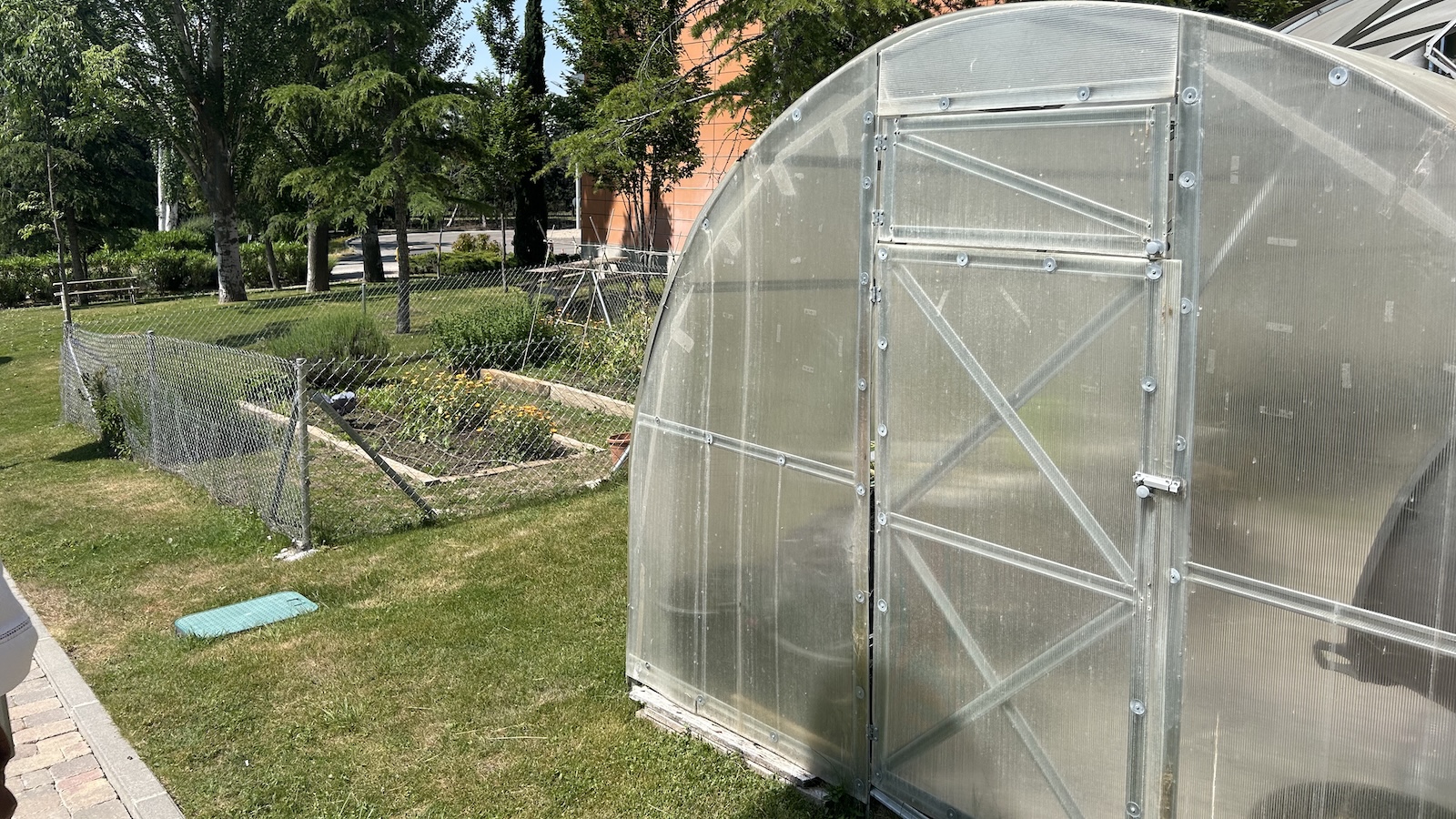
Figure 3: A photo of the garden and greenhouse at Comillas’s Cantoblanco campus: A greenhouse is visible on the right-hand side of the image. Its walls are an opaque gray, and its roof is curved in a U-shape. To the left, two garden beds are visible through a chicken wire fence, with some green plant growth. Trees are visible in the background, directly in front of a modern campus building with an orange exterior (Source: Madison Ross's personal photos).
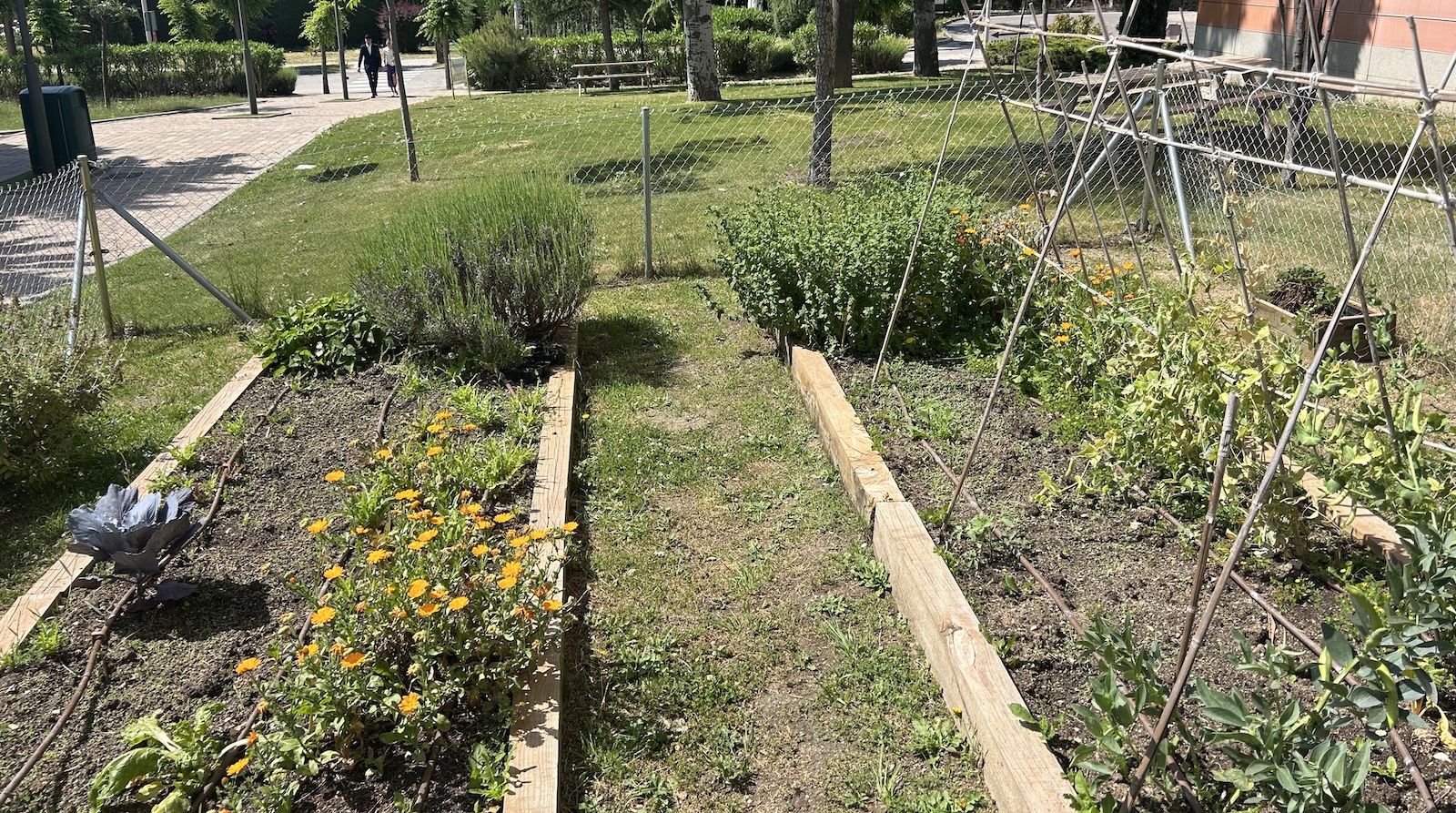
Figure 4: A closer look at the garden at Comillas’s Cantoblanco campus: two garden beds surrounded by a chicken wire fence. The left bed has yellow flowers and a small amount of other green plants. The right bed has trellises with a few green tomato plants growing upward onto it. This photo was taken at the beginning of the growing season. In the background, some trees, a walkway, and two campus buildings are visible (Source: Madison Ross's personal photos).
This research combines a review of Comillas’s sustainability reports, materials published by the IEU, and 19 semi-structured interviews. To gain a full understanding of the IEU and its impact on the university community, I conducted interviews with students, staff, and faculty who had a wide range of involvement in and knowledge of the IEU. These interviews lasted approximately 30 to 60 minutes each and were conducted in English, Spanish, or both languages.
In my conversations with one of the IEU’s consulting members before I began fieldwork, we discussed the challenges facing a bottom-up, community-led initiative in meeting a top-down policy change by the university. They explained that many of the challenges faced in day-to-day attempts to promote sustainability related to a lack of engagement by students, faculty, and staff. Through these conversations, I developed the following question, which guided my research: What barriers or factors influence how students, staff, and faculty interact with the sustainability events and resources offered by the Integral Ecology Unit at Comillas University? I aimed to explore community members’ reactions to and perceptions of the IEU’s work and to develop formal recommendations for how the IEU can reach a wider audience.
Barriers and Opportunities to Taking Personal Responsibility for the Environment
My first finding directly addresses the central research question regarding the factors influencing how community members interact with the Integral Ecology Unit, which largely center on the degree of personal responsibility they feel capable of assuming in response to global climate challenges. Participation in activities that require personal initiative, such as recycling workshops or work in the community garden, presupposes that individuals feel some sense of ownership over environmental issues and see their actions as meaningful contributions to sustainability.
Through my interviews, three recurring themes emerged regarding personal responsibility in sustainability efforts: time constraints, frustration due to global inaction, and a sense of passivity in the face of the scale of the crisis.
Many students, staff, and faculty cited their demanding schedules as a significant barrier to involvement in unit activities. The university’s structure and culture of academic rigor leave little room for extracurricular engagement, including sustainability-related initiatives. This challenge is intensified by the lengthy commute most Comillas community members undertake daily. One Comillas student described how, “you get [to the university] maybe at 8:30 in the morning and you leave at 7 at night,” which makes participation in activities promoted by the Integral Ecology Unit particularly difficult (Third-year female primary education student, interview, June 5, 2025). Similarly, Carlos Muñoz, a Comillas staff member, explained that the onus is placed on community members “to voluntarily decide and dedicate our own time to participate in these activities, as there is no specific time designated by the university to take part in these activities” (interview, May 28, 2025). While sustainability is a stated institutional priority, participation in related initiatives often relies solely on voluntary engagement outside of working or academic hours.
Beyond logistical limitations, many interviewees expressed a deeper sense of frustration and hopelessness in the face of global inaction on climate change. This emotional dimension appeared to influence whether individuals perceived their own efforts as meaningful. The consulting member explained, “I think people are frustrated that there is not enough international support, you know?” (interview, May 30, 2025). Several interviewees cited U.S. President Donald Trump’s withdrawal of the United States from the Paris Agreement as a symbolic moment of disillusionment—an example of powerful nations retreating from global environmental responsibility. For many, such political setbacks diminished their personal motivation to act, reinforcing a sense that individual contributions were insignificant within the broader global crisis.
There's a little bit of 'Well, I can't do anything about this, anyway. What am I gonna do?' kind of feeling (Comillas English Professor, interview, June 13, 2025).
A majority of my interviews echoed a similar passive sentiment to that expressed by the quote above, reflecting the way that community members might disengage from sustainability practices due to a feeling of powerlessness. Another professor observed that “Everyone thinks, well, ‘my actions are not going to change anything’... And you feel powerless and that your actions are not going to matter that much,” which often results in inaction (Comillas Psychology Professor, interview, June 2, 2025). These comments highlight a pattern of collective disengagement rooted in the belief that sustainability is a systemic issue beyond the reach of individual agency.
Overall, participation in the Integral Ecology Unit’s initiatives is shaped not only by structural and logistical factors but also by psychological and emotional barriers. Time limitations, frustration with institutional and global inaction, and a pervasive sense of futility combine to dampen personal responsibility and reduce engagement. For the IEU to expand its impact, continuing to address both the material and motivational dimensions of participation will be important. These areas of focus can be broadly grouped into the categories of commitment, community, and hope.
By continuing to focus on promoting small, reasonable habits that busy community members can incorporate into their daily routines, the Integral Ecology Unit can effectively support individual commitment sustainability. Small actions may also help fight feelings of passivity and frustration in the face of global inaction. One Comillas professor with a background in psychology shared that when “you feel powerless and that your actions are not going to matter that much... That's where tiny habits can actually improve. So, just a small behavior that you know is actually effective and that means something” (interview, June 2, 2025). Lowering the barrier to participation by offering small actions as personal sustainability solutions is something that the IEU can continue to do.
If you do many small things, you can change your community (Jesús Sánchez, Director of the Integral Ecology Unit, interview, June 13, 2025).
Building a link between individual actions and collective outcomes is also important in encouraging community members to engage in the Integral Ecology Unit’s programming. José López-Ruiz, a sociologist at Comillas, described how framing environmental challenges as part of a larger social problem could help to motivate action: “That's the key—that we start to see ecology as a social justice problem.” (interview, June 12, 2025). Acknowledging that individual action, or inaction, related to sustainability has broader societal implications can be used as a tool for motivation.
We need to feel that there is hope, that the future will be better. And it is a long way to that, but we need that narrative but with actions (David Armisén, Unit Staff Member, interview, June 10, 2025).
In addition to making sustainability convenient and community-centered, building personal responsibility for the environment also requires hope. Hope is what drives action in the face of uncertainty. Hope is what drives the people at the center of the IEU’s work. Many expressed hope that their small actions, especially when collectivized, would lead to a brighter future (David Armisén, Unit Staff Member, interview, June 10, 2025; Jesús Sánchez, Director of the IEU, interview, June 13, 2025; Comillas English Professor, interview, June 13, 2025; Comillas Business Administration Professor, interview, May 30, 2025; IEU consulting member, interview, May 30, 2025). The IEU could leverage this kind of changemaking hope through workshops and events or by highlighting cases in which community members successfully collaborated to make positive changes in their local environments.
Balancing Grassroots Enthusiasm with Institutional Frameworks
My second finding emerged more subtly, through a combination of formal interviews and informal conversations with individuals familiar with the IEU’s work. One interviewee expressed a sense of simultaneous frustration and gratitude toward the university’s institutional support, appreciating the resources and visibility it provided while also feeling constrained by the bureaucratic processes that often accompany institutional projects (IEU consulting member, interview, May 30, 2025). This tension between passion-driven engagement and administrative structure reveals a broader challenge in institutional sustainability efforts. How can we sustain grassroots enthusiasm within a formalized framework?
After interviewing several staff members, I noticed that the bureaucratic components of the IEU, including longer approval processes and frequent meetings, seemed to be slowing down its overall function. Leadership changes at high levels of the university further complicated this process, as shifting administrative priorities sometimes led to changes in policy or resource allocation. At the same time, interviewees also highlighted some important benefits of institutionalization. The IEU’s official recognition within the university provided a critical layer of organizational scaffolding and a direct line to decision-making power. Tied to the moral and ecological vision of Laudato Si’, the IEU gained legitimacy and a platform to disseminate ideas across departments more effectively than before. For some, the trade-off between autonomy and institutional support was a worthwhile compromise, as it allowed sustainability to move from the margins to the center of campus discourse. This ultimately lowered the barriers to access for the broader Comillas community and increased involvement (Comillas Psychology Professor, interview, June 2, 2025).
The long-term growth of the IEU is a good example of the complex dynamics that emerge when bottom-up enthusiasm meets top-down structure. Its evolution raises important questions for sustainability practitioners more broadly: How can universities design sustainability initiatives that balance bureaucratic accountability with community-driven passion? And, perhaps more importantly, how can institutions preserve the creativity and commitment of individual changemakers while ensuring organizational coherence and continuity? The tension between community and institutional support can create potential barriers to access for the broader Comillas community. Carefully navigating this tension can increase opportunities for more sustainable community involvement.
Lived Values and Future Engagement Efforts
As noted, the IEU was created as an institutional response to Pope Francis’ Laudato Si’ encyclical and as a means for Comillas to live out its Jesuit value of “caring for the common home” across its different institutional branches. However, interviewees offered different perspectives on how explicitly their own sustainability practices connected to Jesuit ideals. Some made direct references to the Jesuits, others alluded to Jesuit values without naming them, and still others made no reference to these values at all.
What is integral ecology for us as a Jesuit university? … What is the ecology for us, with this Christian social thought or perspective? - Jesús Sánchez, Director of the IEU (interview, June 13, 2025).
Those most closely connected to the IEU tended to articulate their motivations using explicitly Jesuit language. They frequently referred to ideals such as caring for “the common home” or “the whole person,” and often linked these values to the Jesuits or their own spirituality. For example, the director of the Integral Ecology Unit, Jesús Sánchez, spoke directly about his spirituality and the Jesuit identity of Comillas in relation to framing the IEU’s sustainability work, stating: “What is integral ecology for us as a Jesuit university? So, integral ecology, as you know, I imagine, is a protection of the human dignity, the society, and the protection of the planet, as a holistic, worldwide. So, there are not two crises, the social crisis related to the peace related to other things related to politics, but also the common home, the protection of ecosystems, biodiversity. It’s one crisis, only one crisis.” (interview, June 13, 2025). Similarly, Rafael Jódar, the vice dean of research in the Department of Human and Social Sciences, stated, “I think the Jesuits’ [concept of the] environment helps a lot, like it has the whole, great vision about the common house, protecting the planet and everything” (interview, June 3, 2025). David Armisén, the sole full-time staff member of the IEU, also described how his experience as a former Comillas student, believing that the university could “take better care of people and nature,” motivated him to campaign for change, work for NGOs, and ultimately return to Comillas to advance these values through the IEU (interview, June 10, 2025).
Other professors at Comillas also referenced Jesuit values, although the degree of directness varied. Some explicitly named religion as a factor in their approach to teaching and supporting students. One professor, for example, explained that she and her colleagues strive “to see a student as more than just their academic selves,” which demonstrates a commitment to the Jesuit value of “care for the whole person,” and additionally linked the work of the IEU to Pope Francis’ Laudato Si’ (Anonymous, interview, June 13, 2025). Others made more implicit connections without naming the Jesuits directly (José López-Ruiz, Sociologist, interview, June 12, 2025; Gisela Delfino, Professor of Psychology, interview, May 29, 2025). Even in cases where religion was not directly invoked, professors at Comillas consistently described a campus culture and commitment to sustainability infused with Jesuit values, suggesting broad permeation of these values into the worldviews of faculty at Comillas.
Students, however, cited Jesuit values less frequently when describing their experiences with sustainability. Some students, similar to many of the interviewed professors, expressed commitments that aligned with Jesuit ideas, but did not name them directly. For example, Ariadna Fernández emphasized the importance of sustainable action because “I think we have to take care of the planet,” but did not tie this to religion or the Jesuits directly (interview, June 3, 2025). A few students referenced ideas consistent with care for the whole person or the common home, even if they did not explicitly connect their statements to the Jesuits or use explicitly Jesuit language (Primary Education Student Research Assistant, interview, June 5, 2025; Primary Education Student Interested in Underconsumption, interview, June 9, 2025). Several students also highlighted different priorities altogether, such as focusing on academic demands, professional development, or adopting small, convenient, sustainable behaviors, revealing values that differed from those articulated by staff and faculty (Third-Year Primary Education Student, interview, June 11, 2025; Transfer Primary Education Student, interview, June 10, 2025).
What emerges, then, is not simply the presence of Jesuit values at a Jesuit institution, but the varying ways that individuals perceive and experience these values depending on their level of institutional involvement. Staff working directly with the IEU most frequently articulated explicitly Jesuit values, followed by professors, and then by students.
Recognizing these differences offers the IEU opportunities for more strategic ways to increase engagement. Tailored messaging might help different groups within the university better resonate with the mission of the IEU. For example, emphasizing efficiency or professional practicality when communicating with students, while maintaining the IEU’s grounding in Jesuit values, could increase their motivation to participate in its activities.
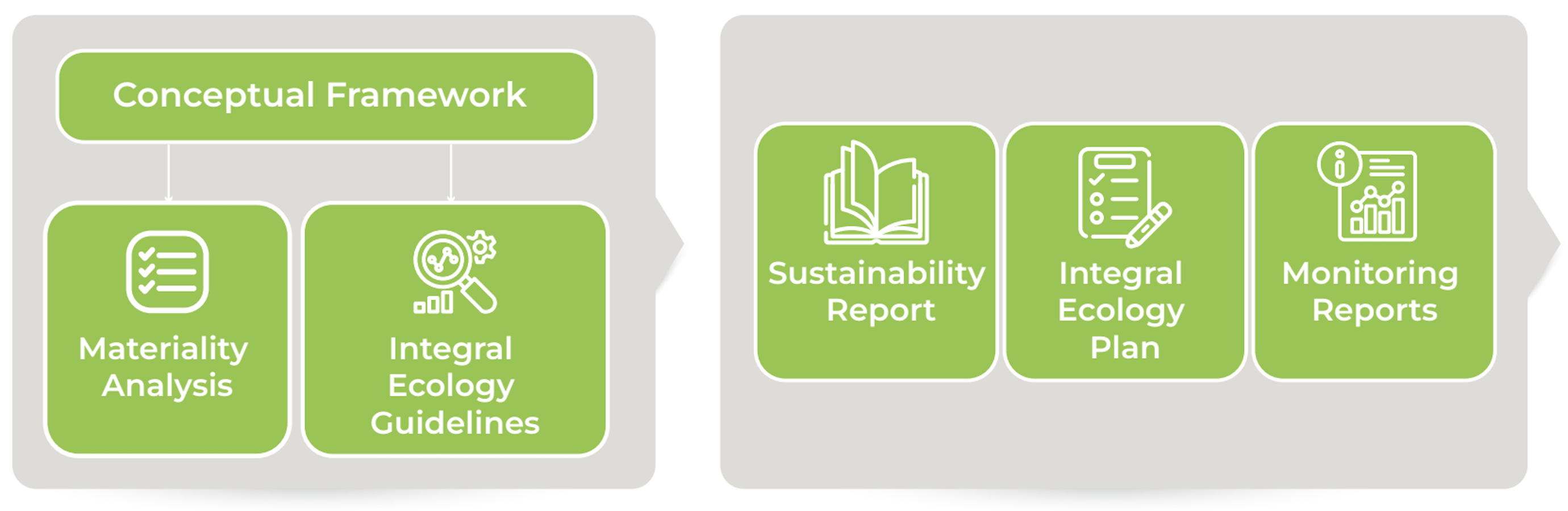
Figure 5: A figure from the IEU’s conceptual framework demonstrating the framework for the organization’s development. The framework involves an initial analysis process via a sustainability report for the entire university and its overall integral ecology plan, as well as a continuous review process via monitoring reports: A gray box on the left with the heading “Conceptual Framework” is outlined by a green box, underneath which two green boxes titled “Materiality Analysis” and “Integral Ecology Guidelines” outline the initial steps of setting up the IEU. An arrow from that first gray box points to a second gray box on the left. This second box has three smaller green boxes titled, from left to right, “Sustainability Report,” Integral Ecology Plan,” and “Monitoring Reports.” These three boxes make up the IEU’s framework for continuous development. (Source: Integral Ecology Unit Conceptual Framework).
The IEU has made great strides in its first few years as an institutional response inspired by Pope Francis’ Laudato Si’. Above is a visual representing the IEU’s framework for soliciting feedback and adjusting to challenges as it continues to expand the scope of its activities and offerings. Having a solid framework for change that is rooted in self-reflection and program monitoring is what will allow the IEU to continue to work towards building a Comillas community that lives out its Jesuit mission of sustainability.
In my interviews with Comillas community members, I identified several potential barriers to engagement with the IEU’s programming and promotion of sustainable practices. For one, developing a sense of personal responsibility for environmental outcomes among individuals is in and of itself difficult. Secondly, the push and pull between community-led organizing and the institutionalization of these programs can undermine movement growth unless handled strategically. Thirdly, different levels of the university use different lenses to approach the issue, and not all will be effective for including everyone in the IEU’s mission.
The unit could continue to employ a myriad of strategies to increase overall engagement. Some possibilities include: acknowledging the fast-paced university environment and providing opportunities for low-cost engagement, such as through short workshops or incentivized program participation, offering free food or course credit for student attendees, or paid training time for faculty and staff. The IEU might also find ways to tailor their messaging to emphasize the inherently religious or spiritual nature of sustainability work in the context of a Jesuit institution while also promoting ways that sustainability ties into other value frameworks, such as efficiency or pre-professionalism.
My interviews ultimately provided reason for celebration and hope. I spoke with people who are incredibly passionate about the environment and sustainability; some related this passion to religion, others did not. While apathy in the face of an incomprehensibly large-scale issue such as climate change may be found across geographic and social issue contexts, Comillas lends insight as to how this may be overcome. As David Armisén said, “We need to feel that there is hope, that the future will be better” (interview, June 10, 2025). The importance of hope in sustainability work, and in other social justice fields, cannot be overstated. My conversations with the passionate changemakers at Comillas helped me to maintain my own personal sense of hope. In the face of a seemingly impossible challenge, choosing hope will allow us to take the actions necessary for change.
The views expressed in this student research are those of the author(s) and not of the Berkley Center or Georgetown University.
Featured Person: Madison Ross Person