Sudan
A Religion, Peace, and Conflict Country Profile
By: Janette Yarwood
April 30, 2026
On April 15, 2023, Sudan’s political crisis escalated into full-scale war as fighting broke out between the Sudanese Armed Forces (SAF) and the Rapid Support Forces (RSF), spreading rapidly across the country. Since then, Sudanese families have navigated shifting frontlines, closed roads, and the erosion of everyday routines. Religious communities have suffered greatly, with many places of worship attacked, occupied, or destroyed. Yet the conflict is not fundamentally about faith. At its core, it is a struggle for state power—who commands the security forces, who controls territory, and who controls resources and revenue.
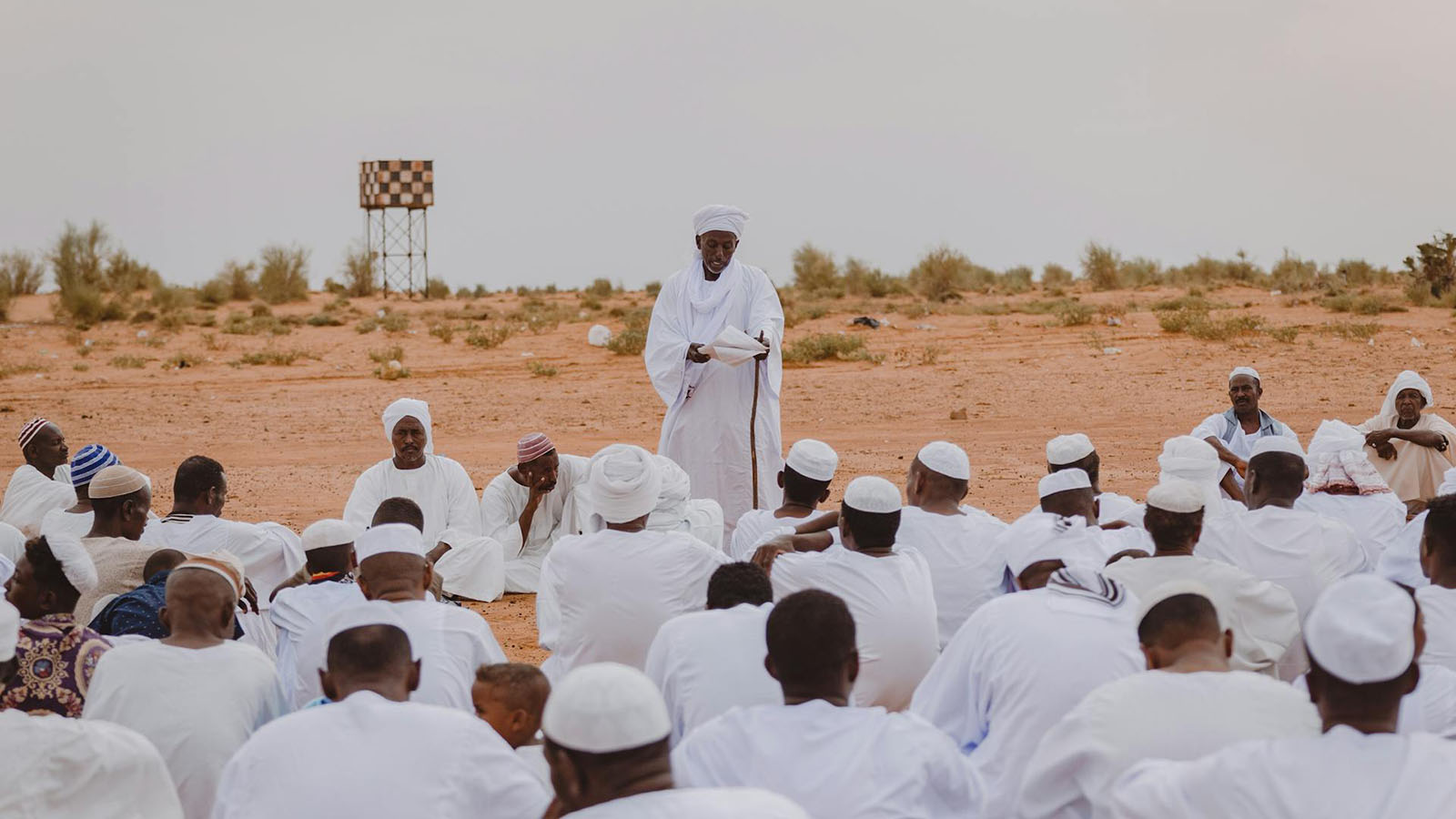
The human toll has been severe. Millions have been displaced, often repeatedly, moving from one unsafe location to another in search of food, shelter, and family. Many remain trapped in cities with open fighting or cut off by checkpoints and armed patrols. Civilians have endured grave abuse. As markets collapse and farmland becomes inaccessible, hunger has reached extreme levels. In this context, religion matters in practical ways: mosques and churches can serve as lifelines for refuge, mutual aid, and moral guidance, but they can also become sites of vulnerability when armed groups raid, occupy, or target them. Concurrently, religious language circulates through rumor, sermons, and social media as people try to assess danger and predict who holds power. Armed actors exploit religious language to justify control and stigmatize rivals.
Framing the war as a religious conflict masks the material and political drivers of violence. Yet leaving religion out of analysis creates blind spots in protection, access, and post-war legal design. This report argues that Sudan’s current war is not a sectarian conflict, but religion meaningfully shapes how civilians experience violence and protection, how armed actors govern, and how legitimacy is framed.
Brief Historical Overview
Religion in Sudan has long intersected with state power, but it functions primarily as a political instrument and institutional framework and less as a cause of conflict. Ruling elites have used religious ideas to define norms of governance, consolidate support, and delegitimize rivals. These patterns continue to shape the current war, even as the immediate drivers are power, territory, and resources.
Two historical patterns help explain the present. First, elites have repeatedly sought to legitimize state authority through religious narratives. These often take the form of moral reform campaigns where political elites call for a return to Islamic values and frame corruption, social change, or political disorder as moral crises that need religious renewal. At other times, the state has embedded religious norms in law and enforcement systems and then used security services and courts to enforce Islamic codes and suppress dissent or difference, including exerting pressure on minorities and critics. This practice transforms religion into an instrument of governance rather than a matter of faith, where compliance signals loyalty and opposition signals deviance. Labeling political opposition as “against religion,” “impure,” or disloyal, even when the real dispute is about money, governance, or who controls the state, allows coercion to be justified under the pretense of virtue.
Second, the rule of former president Omar al-Bashir (1989-2019) left behind entrenched Islamist networks, including relationships inside parts of government bureaucracy, the security sector, and patronage systems that persisted after the 2019 transition. These networks retained organizational capacity and ideological narratives that continue to shape political life. Recent reporting suggests that actors tied to these networks see the war as an opportunity to reassert influence by aligning with SAF-linked structures and shaping debates about what Sudan’s post-war state should look like. Their engagement is not incidental but strategic, aiming to embed Islamist norms within debates over state reconstruction and to secure a role in defining the post-war order.
Religious Demographics and Settlement Patterns
Religious Demographics of Sudan
Legend
- Muslim - 91%
- Christian - 5%
- Indigenous Religions - 2%
Sudan is primarily Muslim with a small Christian minority. According to the U.S. State Department, the Sudanese population is roughly 91% Muslim, 5.4% Christian, and 2.8% follow indigenous religions. Historically, Christian communities have been regionally concentrated. Displacement because of conflict has shifted settlement patterns, increasing the presence of Christians in urban areas and improvised sites including church compounds and internally displaced persons (IDP) camps.
These patterns matter because urban conflict and mass displacement dismantle local protection systems and redraw the map of everyday support. When families flee into overcrowded neighborhoods or improvised IDP sites, they may lose access to trusted religious and civic institutions that once helped them find shelter, share food, and navigate risk. In Wad Madani, a city in Gezira State, church leaders reported that the Evangelical Presbyterian Church was deliberately set on fire in mid-January 2024, after the RSF took control of the city, cutting off a key community hub. In Al-Fashir in October 2025, residents took shelter in underground bunkers to try to protect themselves from drones and shells after intensifying attacks on displacement shelters, clinics, and mosques. This illustrates a wider mechanism impacting churches and mosques: how displacement and shifting urban control can turn a minority institution into a vulnerability. When a place of worship becomes a gathering point for safety and support, it can also become exposed when armed actors seize territory and control movement.
Legal Status of Religion
After the 2019 revolution, reforms briefly opened space for religious freedom, most notably through the 2020 legal changes that removed apostasy from the statute books and eased some religion-linked restrictions affecting non-Muslims. But even before the war, practice lagged behind law. Converts and minority communities still faced pressure, and older “public order” habits persisted in discretionary policing and administrative practice.
Since April 2023, legal and administrative authority has fractured across territories, and “rules” are increasingly produced through checkpoints, detention, intimidation, and armed governance rather than predictable courts. Thus everyday religious practice, including Friday prayer, church services, or informal study circles, is more contingent on who controls a neighborhood. In effect, law gives way to localized rule sets enforced by those with guns, reshaping when, where, and how people can worship or mobilize mutual aid.
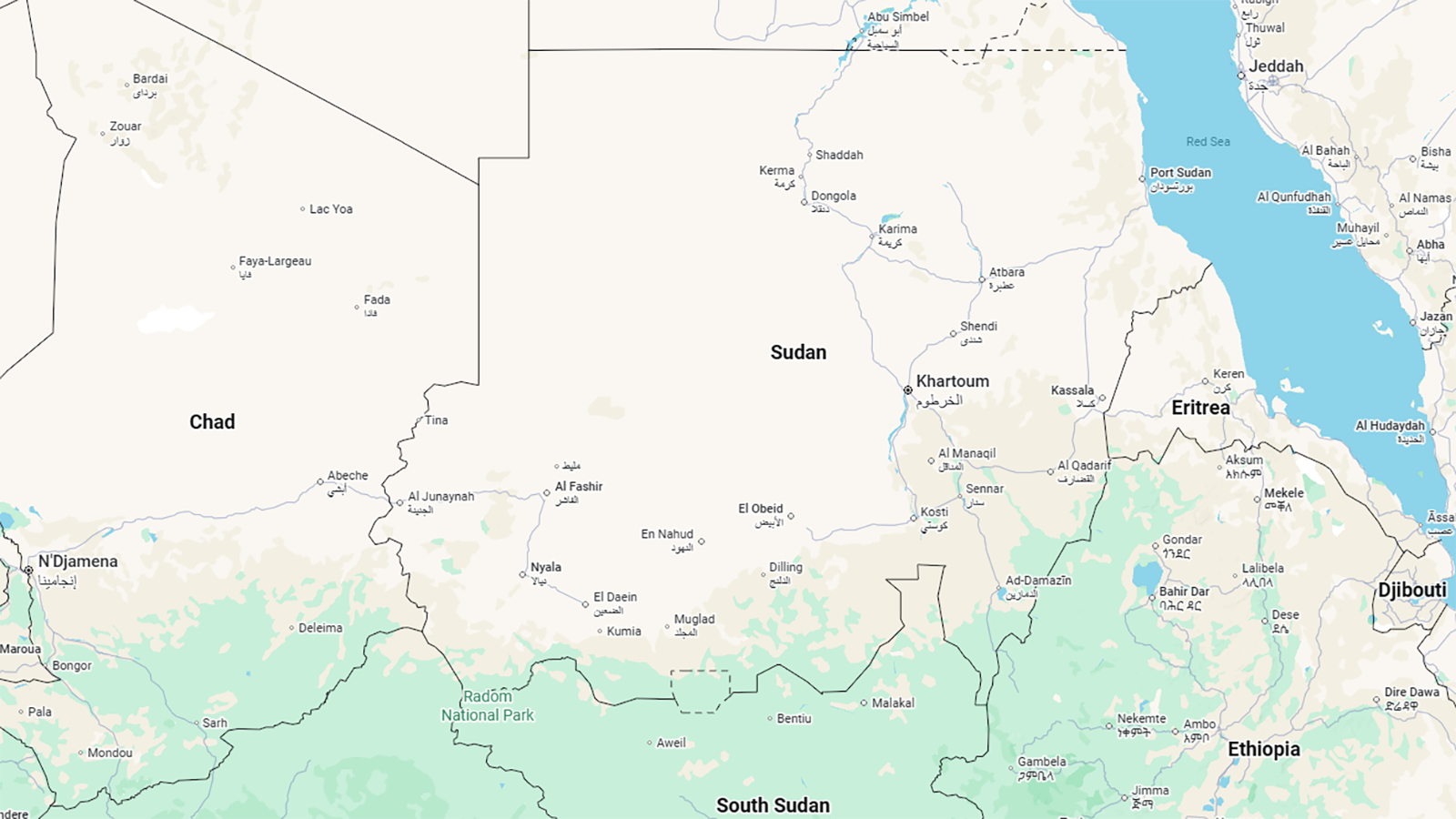
(Source: Google Maps)
Key Religious Actors and Institutions Today
Sudan’s religious landscape runs through mosques and Sufi lodges, neighborhood committees, churches, and diaspora linked aid networks. Influence is usually situational rather than hierarchical: it shows up in who can provide shelter and basic services, who is targeted or coerced, and who can mobilize resources and attention across borders. In the current conflict, religious actors are often most visible at the points where civilians try to survive: finding refuge, negotiating movement, sharing food, documenting harm, and maintaining social order when state systems are absent or predatory.
Key Muslim Actors and Institutions
Muslim religious life in Sudan is plural. Two long-standing Sufi-linked communities–the Ansar and the Khatmiyya (the latter more precisely a tariqa, though commonly grouped with Sufi-linked institutions)–have historically shaped public life partly through their social reach and partly through their long association with Sudan’s major sectarian parties (Umma and the Unionist/DUP current).
In many communities, Sufi practices and gatherings function as durable social anchors: networks of belonging, charity, and moral authority that can stabilize daily life even when formal governance collapses. Local sheikhs and imams may help calm disputes or lend credibility to community-level arrangements, including informal agreements that reduce retaliation or facilitate limited access.
Within these traditions, authority is not uniform. Different sheikhs, imams, and zawiyas may take distinct positions, or remain quietly neutral, depending on local security conditions, generational dynamics, and past relationships with state or armed actors. For policymakers, this means religious leaders are not interchangeable; the most visible figures are not always the most trusted or influential at the neighborhood level.
Religious affiliation also intersects with regional histories and grievances, especially outside Khartoum-centered politics. In places like Darfur and parts of Kordofan, legitimacy and protection often flow through dense local networks that connect religious institutions and Sufi lineages with tribal and civic structures. What shapes alignment here is not theology, but the social infrastructure that determines who can mobilize, mediate, or assert moral standing in a fragmented landscape.
From the perspective of Darfur and other peripheral regions, the current war builds on longstanding patterns of exclusion and militarized governance that predate April 2023. Conflict analysis and expert testimony show that armed violence in Sudan’s peripheries has long been driven by center–periphery inequality, militia politics, and impunity. This helps explain why religious and tribal idioms often appear together as shared social languages for grievance and protection rather than expressions of theology. Alongside these long-standing currents, Islamist networks linked to the former ruling movement have sought renewed influence by aligning themselves with SAF-linked structures and presenting themselves as indispensable to the war effort and post-war order. Reporting describes efforts by actors associated with the former National Congress Party and Islamist movement to provide fighters, train civilians, and build SAF-aligned units such as the al-Baraa Ibn Malik brigade, while also signaling a preferred post-war model in which the army governs through an extended stabilization period before elections.
This does not mean the SAF is waging war for Islam. Rather, it shows how organized ideological networks can matter in a non-sectarian war through personnel pipelines, unit formation, messaging, and post-war institutional positioning if these actors consolidate influence.
Key Christian Actors and Institutions
Christian institutions in Sudan do not exert influence through armed force, but they are influential because they operate at three key points of leverage: delivering shelter and services, projecting a public moral voice, and activating international advocacy channels.
Catholic sites have functioned as protection hubs when state services collapsed, including the Dar Mariam Catholic mission in Khartoum, where displaced families sheltered under bombardment and struggled to obtain food and safe evacuation. Because the Catholic structures are transnational, church networks share information about protection needs through channels that reach diplomats, humanitarian actors, and global Catholic media, sometimes faster than formal systems in a fragmented war environment. Sudan’s Catholic bishops have appealed publicly for international pressure toward ceasefire and humanitarian access, framing the war as a political struggle with civilian casualties.
In practice, bishops and clergy function less as intermediaries and more as trusted community representatives who document harm, communicate urgent needs, and help coordinate evacuation or shelter protocols with external partners. They can also become targets because they are visible and because churches can be perceived as organized civilian spaces in a security vacuum. Early in the war, armed men attacked worshippers at the Mar Girgis (St. George) Coptic Church in Omdurman during a service, and reports described violence against the Coptic bishop who was present.
The Sudan Council of Churches (SCC) is best understood as quiet infrastructure. It convenes across denominations, shares information outward, and helps coordinate joint programming that can continue even when formal governance breaks down. Reporting also indicates the SCC has sought to convene Muslim and Christian clergy together for peace-oriented engagement, which matters in a war where local peace often depends on neighborhood-level understandings rather than national-level bargains.
The Coptic Orthodox Church has described mobilizing support for Sudanese affected by the war, including assistance for displaced Sudanese in Egypt, illustrating how diaspora-linked religious institutions can extend practical relief beyond Sudan’s borders.
Across denominations, the core point is the same: when armed groups raid, occupy, or repurpose church compounds, the attack is not only on worship but also on a community’s coping system (food, schooling, medical referral, documentation, and trusted leadership).
Diaspora Networks
Sudan’s diaspora networks matter less as a single centralized actor and more as a dispersed transnational network that mobilizes financial resources, expertise, information, and political attention across borders, often faster than formal institutions. Their influence shows up most clearly where the war has broken everyday life by keeping community kitchens running, supporting emergency medical response, and helping local volunteers stay connected to external partners. A practical point is that this diaspora mobilization is often routed through religious infrastructure abroad—including church communities, mosque networks, and faith-linked associations—because these spaces provide trust, rapid communication, and ready-made fundraising channels. Religious voices outside Sudan also shape what external publics and policymakers hear by speaking to media, documenting civilian harm, and reinforcing pressure for ceasefires and humanitarian access.
The same cross-border support that sustains mutual aid can simultaneously raise the profile of local volunteers and trigger suspicion from armed actors who want to control resources and information. Some volunteers reported that RSF troops stole phones used to receive donations and physically coerced volunteers to disclose who was funding their kitchens. This illustrates how diaspora support, especially when routed through trusted religious spaces, can strengthen local response capacity while also becoming a leverage point that armed actors try to capture or intimidate.
Legitimacy, Moral Claims, and Public Messaging
Political and military elites and their affiliated networks draw on Islamic idioms and moralized narratives to transform acts of violence into culturally legible claims of “defense,” “order,” or “national salvation.” These narratives spread rapidly via rumor and social media, shaping perceptions in a context where formal information systems have collapsed and fear governs decision-making. The strategic use of religious language and hate speech escalates identity-based polarization, heightens atrocity risks, and undermines prospects for reconciliation. For civilians, such narratives operate less as ideology than as predictive cues about security threats, shifting power and imminent danger at checkpoints, raids, or neighborhood transitions.
Evidence is stronger on organized networks than on the private religious views of rank-and-file fighters. But available reporting suggests Islamist actors linked to the former ruling movement have used the war to re-enter the security landscape through recruitment, training, and SAF-adjacent unit formation. This helps explain how religious-ideological infrastructures can shape mobilization without making the war theological. Field research on the RSF points to a coalition shaped more by patronage, coercion, and regional recruitment than by a coherent religious program, even though moral and religious language may still be used opportunistically in community-facing messaging.
Muslim Religious Life under War
For most Sudanese Muslims, the war reshapes religious life primarily through the collapse of routine safety and service. For example, displacement disrupts worship, local leadership, and the everyday institutions that help neighborhoods cope. Mosques and religious leaders often function as practical community infrastructure: early in the conflict in Darfur, an imam described joining other religious leaders to approach RSF commanders to plead for an end to fighting, framing restraint as a religious and communal obligation. In settings of mass violence and flight, civilians also seek refuge in religious spaces and networks, and Reuters’ Darfur investigations include survivor accounts describing religious sites as places people turned to when state protection failed. These investigations documented that Muslim communities experience direct harm when places of worship become targets or are caught in siege warfare.
Reuters reported that on September 19, 2025, an RSF drone strike hit a mosque in El Fasher during prayers, killing more than 70 people. The attack underscored how worship gatherings can become moments of acute vulnerability. The UN Fact-Finding Mission condemned the strike on Al-Safiya Mosque and warned that civilians in El Fasher face grave risk under siege conditions, reflecting a broader pattern in which religious sites—mosques as well as churches—fall within the blast radius of urban war and coercive control.
How Minority Status Changes Risk
Discrimination against Christians, converts, and Muslims predates the current war, but the collapse of formal governance has intensified these vulnerabilities. For many civilians, including in majority-Muslim areas, vulnerability is shaped less by religious identity than by local control and checkpoint practices as SAF/RSF forces and allied groups restrict movement through checkpoints where people report ID checks, searches, extortion, and, in some cases, targeting based on markers such as ethnicity, age, or profession. As noted earlier, attacks on churches through looting, occupation, or destruction strip minority communities of spaces that once anchored social life and mutual aid. In displacement contexts, survival strategies often rely on concealment, including avoiding visible worship, altering routines, and silencing affiliation to navigate insecurity. These adaptations show how religious practice persists but is reshaped under fear, illustrating the tight link between belief, visibility, and protection in wartime Sudan.
Notable Faith-based and Interfaith Peacebuilding Efforts
Religious actors are rarely formal parties in Track I mediation on Sudan, but they still shape peacebuilding in ways that matter for civilians. Their influence tends to appear in two lanes. First, through community-level de-escalation, locally trusted figures, including religious leaders, help negotiate restraint, reduce retaliation, and broker small arrangements that keep people moving and services functioning even when national talks stall. Second, through religious diplomacy and public advocacy, interfaith and global religious bodies call for ceasefires, civilian protection, and humanitarian access, and these religious bodies help keep attention on civilian harm when other channels fall silent. Examples of these efforts include:
- African Council of Religious Leaders – Religions for Peace (ACRL–RfP) and Al-Itidaal Organization: ACRL–RfP, working with partners including Al-Itidaal, has convened interfaith engagement and publicly framed Sudan’s war as a peace-and-protection emergency. Their convening work includes calls for ceasefire and humanitarian access and emphasizes the role of religious leaders in countering narratives that harden fear and division.
- UNDP “Insider Mediation”: UNDP’s insider mediation approach treats peacebuilding as something sustained by locally credible intermediaries—religious leaders among them—who can negotiate limited agreements and de-escalate tension when state authority is fragmented. This provides a concrete way to describe how religious authority can function as practical conflict management, especially in displacement areas where formal governance is absent.
- World Council of Churches (WCC) and the Sudan Ecumenical Forum: The World Council of Churches has documented peacebuilding work in Africa that includes Sudan-linked engagement and has connected this work to interfaith relations and human rights concerns, including through the Sudan Ecumenical Forum. The WCC has also issued public appeals urging an end to violence and support for affected communities, reinforcing a protection-focused narrative even when diplomatic tracks stall.
- Ecumenical Joint Statements on Ceasefire and Civilian Protection: Ecumenical coalitions have issued joint statements after major incidents calling for restraint and stronger civilian protection. These statements circulate through humanitarian channels such as ReliefWeb. Such interventions function as a form of religious diplomacy. They broaden the audience for protection demands and keep public pressure on conflict parties even when formal negotiations are stalled.
- High-profile Religious Diplomacy via the Catholic Church: Reuters has reported papal appeals urging dialogue and expanded humanitarian relief for Sudan, which function as high-visibility religious diplomacy rather than direct mediation. These appeals can shape external perception and sustain political attention to civilian suffering, even without a formal negotiating role.
Policy Implications
This analysis of the role of religion in the conflict and in peacebuilding efforts in Sudan leads to several policy implications for international affairs practitioners.
- Right-size religion: Treat religion in Sudan as operational infrastructure, affecting protection, access, and governance, without misdiagnosing the war as theological.
- Produce a local trust map for access and protection: To guide negotiations and referrals, identify who can credibly mediate locally (imams/mosque committees, Sufi leaders, bishops, SCC-linked conveners).
- Protect worship sites as survival hubs: Monitor and respond to attacks on mosques and churches as civilian infrastructure failures, not only as religious freedom violations.
- Develop post-war guardrails: Expect organized Islamist networks and other hardline actors to compete over law, education, and security-sector rules. Support a rights-based legal baseline (religious freedom, equal citizenship, due process) and institutional accountability mechanisms that limit coercive enforcement, while avoiding messaging that frames reform as anti-Islam or privileges one community over another.
Conclusion
For three years, Sudan has been engulfed in a war between the SAF and the RSF that has become one of the world’s largest humanitarian emergencies. Civilians have carried the heaviest burdens through repeated displacement, bereavement, collapse of services, and pervasive insecurity. As of December 1, 2025, UN-coordinated tracking reported 11,853,382 forcibly displaced people from the conflict, both inside Sudan and across borders. Death toll estimates vary widely, but credible reporting and research indicate tens of thousands killed, and likely far more when indirect deaths from hunger and health-system collapse are included. The crisis is also deepening through hunger. IPC analysis warns of severe acute food insecurity and flags a risk of famine in specific localities under worst-case scenarios tied to siege dynamics and intensified hostilities.
The war’s worst violence is not explained by theology or as a battle over doctrine. It is best understood as a struggle for state power, command of armed institutions, and control over territory and resources, unfolding in a country already weakened by long cycles of authoritarian rule, corruption, and failed political bargains. Yet religion still matters because it shapes how civilians survive and how armed actors govern. Places of worship become shelters and aid hubs and, for that reason, can become visible sites of coercion, occupation, and attack. Moral narratives about order and values can be used to justify narrow rule and everyday intimidation, while faith-linked networks inside Sudan and in the diaspora move resources and attention when formal systems fail.
The analytical mistake is binary thinking. Sudan is neither a religious war nor a conflict where religion is irrelevant. For policy and practice, the path forward is to recognize religion’s operational roles in protection, humanitarian access, local mediation, and post-war debates over law and citizenship, without confusing moral language for the war’s material drivers.
Author’s Note on Methods, Source Use, and Limitations
This report integrates:
- Country-of-origin reporting to track cross-regional security dynamics and patterns of civilian harm;
- Official documentation on religious freedom and the prevailing legal framework;
- Established scholarship analyzing religious authority, Islamist legacies, and modes of social organization; and
- Select journalistic and advocacy sources to capture incidents affecting minority communities, triangulated where feasible to mitigate bias.
Nonetheless, limitations remain. Conflict reporting is shaped by severe access constraints, strategic propaganda, and underrepresentation of rural and minority experiences. Therefore, it is advisable to treat reports of religiously linked incidents as operationally relevant for protection planning, while maintaining rigorous evidentiary standards to avoid misattribution and overgeneralization.
This profile was written by Janette Yarwood, director for Europe, the Middle East, and Africa in the Office of International Affairs at Yale University.
Featured Person: Janette Yarwood Person