The Power of Service Learning: Volunteering at Loyola University in Seville, Spain
By: Cici Sprouse (C'26)
In June 2025, Cici Sprouse (C'26) conducted research at Universidad Loyola Andalucía in Seville, Spain. She interviewed students and staff at the university to learn about the ways in which students are impacted by their experiences in volunteer work.
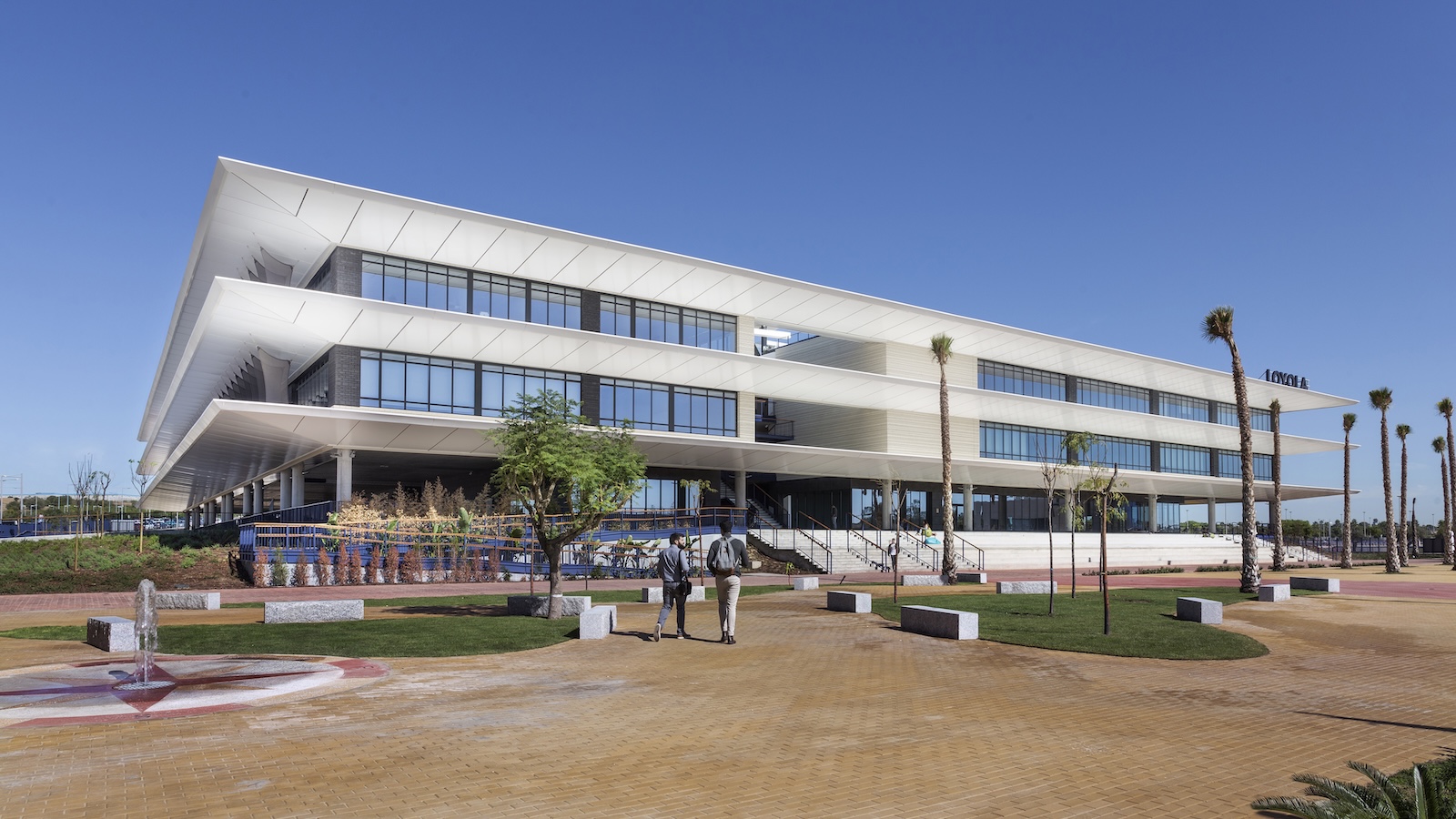
The Service of Evangelicalization and Dialogue (SED) at Loyola University is a university-sponsored department that works to enrich the organizational community through reflection and dialogue based on Ignatian values. As a key program under SED, their service experiences enable students and faculty to support the work of 20+ nonprofit organizations around the city of Seville through weekly volunteer hours during the academic year. To enroll as a participant, each applicant, whether student or faculty, meets with the program coordinator, Juan Romero González, to match their interests with the specific mission of a partnering nonprofit. This process enables SED to create a personalized community service experience aligned with Loyola’s mission that also supports the needs and goals of organizations across Seville.
As my primary point of contact at Loyola University, I worked closely with Juan to understand the mission of SED and how volunteer experiences furthered these efforts. Juan described volunteering as “a window that's on the ground floor, on a landing of an apartment. [Volunteering] is the intention to open that window and climb out” into reality (interview, June 9, 2025). Through these programs, SED seeks to create opportunities for learning and self-discovery beyond the traditional space of a classroom. This innovative approach to education is often called service learning, and it has become increasingly popular amongst Jesuit institutions, such as Loyola University, as a means of inspiring Ignatian values and social responsibility in their students.
SED Voluntariado. Video 1: Promotional video for the Universidad Loyola's SED (Service of Evangelization and Dialogue) volunteer program. In this video, director Juan Romero González encourages students to volunteer in Seville and Cordoba to gain empathy, broaden their perspective, and help improve the quality of life for people in the local area. (Source: Loyola University)
During my research, I spoke with eighteen different individuals involved in the volunteer work of SED, including students, university faculty, and representatives from partner organizations, such as Fundación Prodean and Hogar Padre Lerchundi. On the one hand, I spoke with faculty of Loyola University and partner organizations about how they perceived volunteering in the process of student formation and what it brought to local nonprofits. On the other hand, I primarily focused on student and volunteer voices. I asked these interviewees to discuss their experiences with services, and was specifically interested in examining their motivation to initially enroll as well as what kept them engaged in the program. Through these conversations, individuals reflected on their volunteer work and supported the mission of Loyola’s SED department by giving valuable feedback on the program.
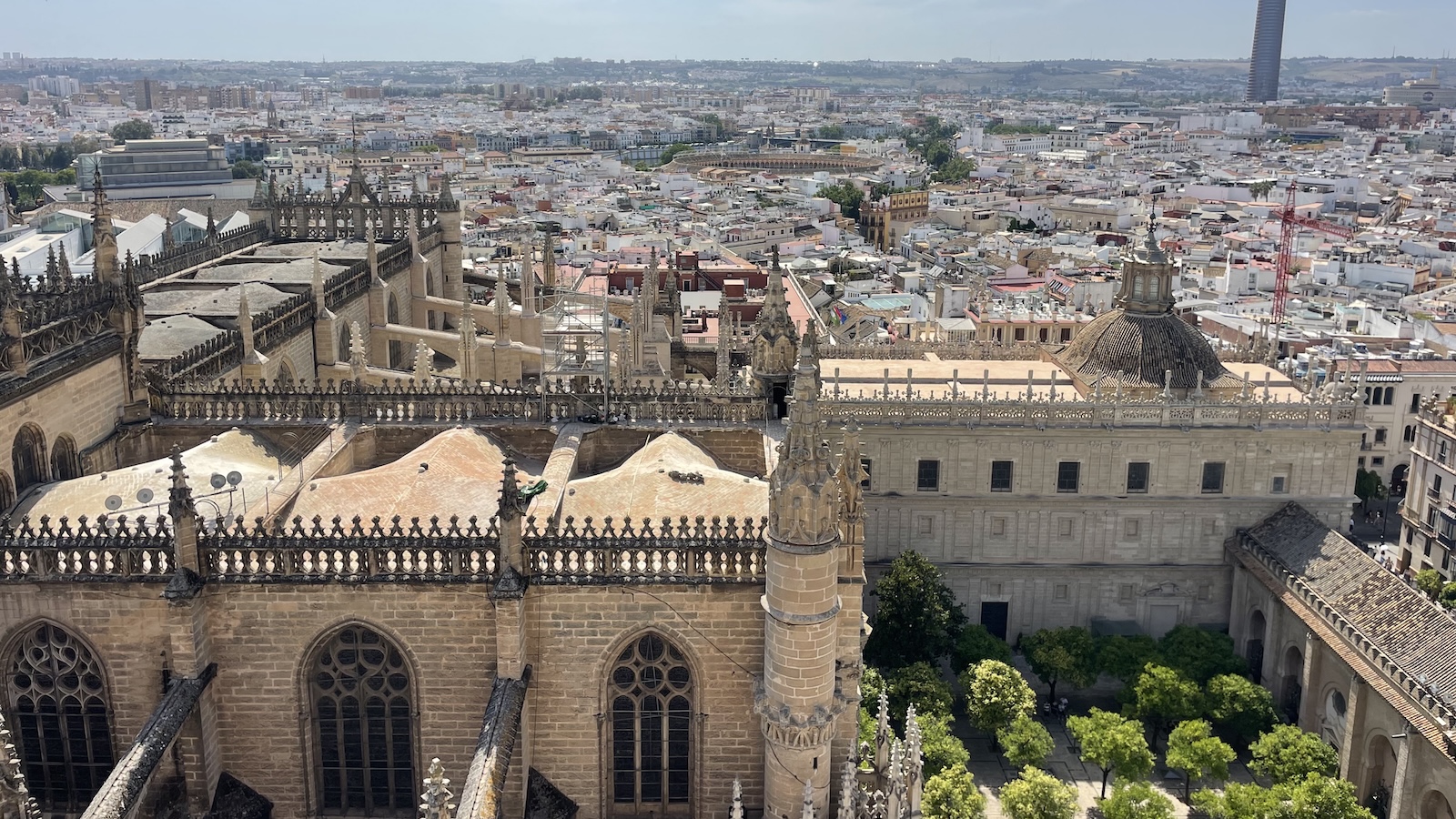
Figure 2: View from the Giralda tower of the Seville Cathedral. This image shows the skyline of Seville, Spain as well as the rest of the cathedral rooftop in the foreground. (Source: Cici Sprouse's personal photos)
Religious, Geographical, and Socioeconomic Context of Loyola University
To fully understand the findings of this research, there are three key pieces of context that impact Loyola University and the volunteer programs offered by SED. The first is religious identity, the second is geographic proximity to North Africa, and the third is local economic disparities in Seville.
A strong Catholic identity defines Andalucía and its capital city of Seville. Despite a long, complex religious history and lasting Islamic influence, the autonomous community in Spain remains overwhelmingly Catholic. Religious traditions like La Semana Santa, one of the country’s most important religious celebrations honoring the sacrifice of Christ, define local identity and public life. This strong religious identity directly shaped the volunteer experiences at Loyola University. For example, all participants enrolled in their position through communication with SED, a department founded to promote the university’s Catholic heritage and Ignatian values.
The second important factor is Loyola University’s geographical location in Andalucía, the southernmost autonomous region of Spain. Considering its proximity to North Africa, Seville is a destination for migrants of Morocco as well as Latin America, according to the Mediterranean City to City Migration Project . Many NGOs in Seville specifically focus on supporting migrant populations with early education programs, job training, and language services. During my research, I also noted that Loyola was particularly involved in such organizations, bringing volunteers into contact with individuals from very different ethnic and national backgrounds.
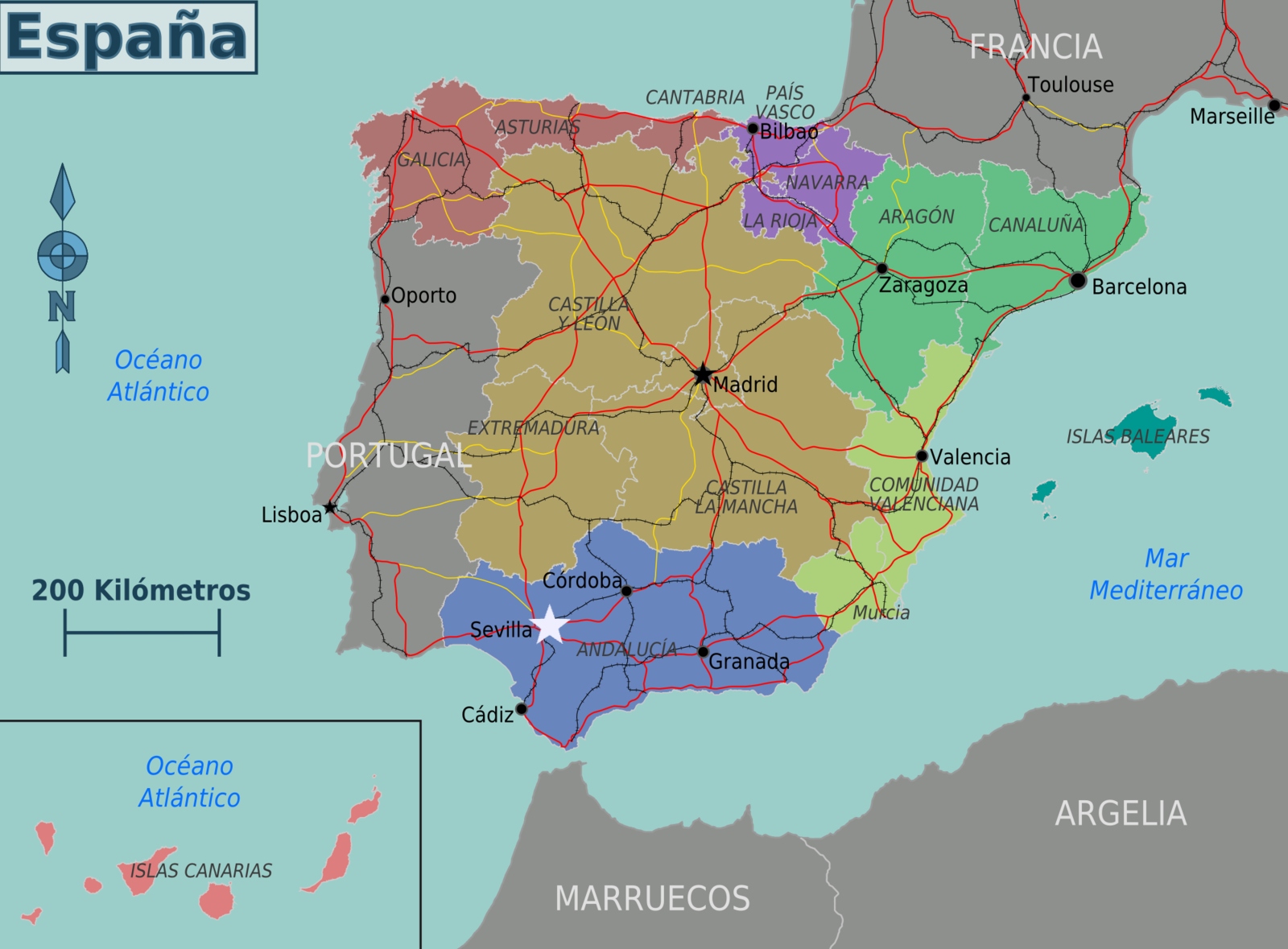
Lastly, economic inequality and high rates of poverty also shape Seville’s landscape and the particular demand for social impact work. The neighborhood of Los Pajaritos, located at the heart of the city, was designated the poorest neighborhood in Spain for multiple years in a row, according to the National Statistics Institute (INE). Many program participants traveled to Los Pajaritos for their weekly volunteer hours at local organizations, bringing them to an area very different from the rest of Seville. I also traveled to Los Pajaritos to speak with representatives and volunteers at Fundación Prodean, a nonprofit founded in 1990 that supports low-income families. Patricia Tejera, one of three full-time staff members, said, “We have at least 30 volunteers there in a school, where we help them with academic reinforcement. There are [also] several classrooms where elderly people from Pajaritos come. Ninety elderly people come in the morning. People who are alone, people who live alone and [come from a] very, very low economic level” (interview, June 2, 2025). Many of the volunteers Patricia described were Loyola students, who travelled to Los Pajaritos to serve one of the most underserved populations in the country. Similar to the relevance of Seville’s geographic location and the impact of immigration, the vastly different socioeconomic statuses between SED volunteers and those they supported across the city is important to highlight.
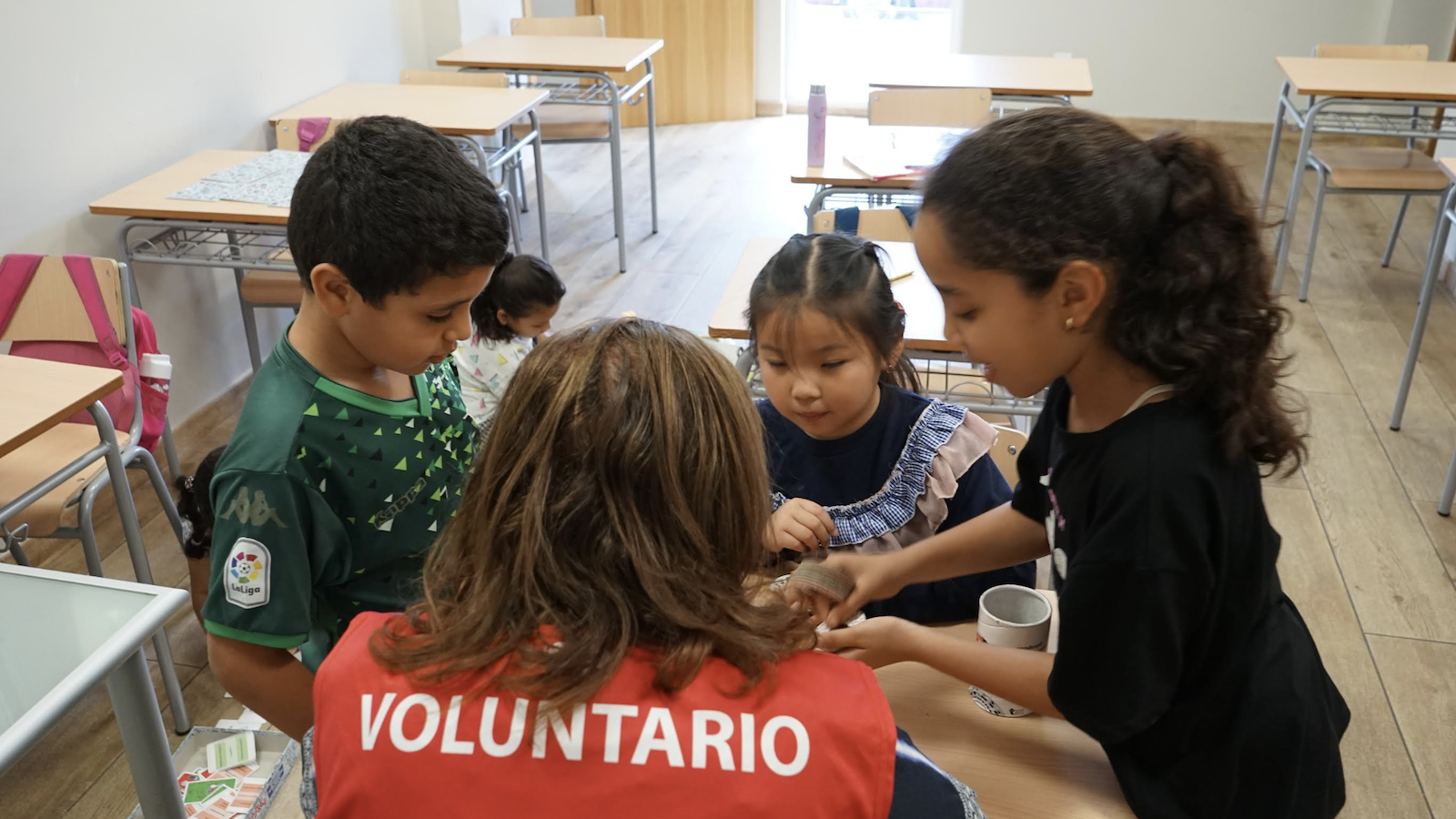
Figure 4: A Fundación Prodean volunteer wearing a red vest that says “VOLUNTARIO” (volunteer) on the back is seated at a table, interacting with three young children in a classroom with various desks and chairs. Two girls and one boy are gathered around the volunteer, engaged in an activity, possibly a game or craft, with various small items on the table. (Source Fundación Prodean)
The Perception and Value of Volunteering for Student Experience
Long before arriving in Seville, I began communication with program coordinator Juan to discuss the objective and usefulness of my ESJ project to his work with SED. During the initial planning of this project, we established that the end goal of this research was to highlight the department’s role within the Loyola community, hoping its importance would motivate more members of the university community to get involved. Thus, we decided to focus this research on sharing the experiences and stories of those already involved, including students, faculty, and community partners. This led me to design my project around the following question: How do SED participants perceive and make meaning of their service experiences?
Based on this research question, my interviewees identified three key ways in which SED’s community service program influenced the development and identity of each volunteer. The first is social-emotional transformation, which includes the notion of strengthening both personal relationships and one's own self-conception. The second is academic and professional development, encompassing the importance of applying theory to practice and the discovery of long-term and career goals. The third and final finding is the embodiment of SED’s institutional values, which interviewees described as spiritual enrichment, the sharing of community, and the promotion of justice.
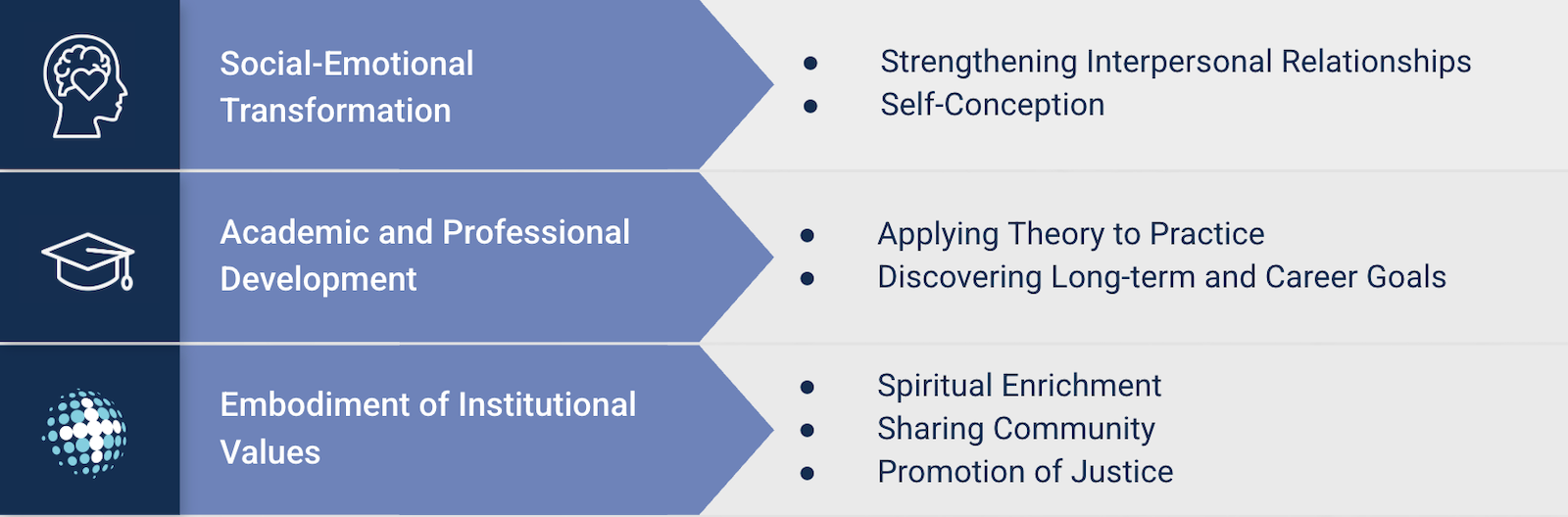
Figure 5: A three-row infographic listing outcomes of a program. Row 1 (icon: head with heart): “Social-Emotional Transformation” with bullet points “Strengthening Interpersonal Relationships” and “Self-Conception.” Row 2 (icon: graduation cap): “Academic and Professional Development” with bullet points “Applying Theory to Practice” and “Discovering Long-term and Career Goals.” Row 3 (icon: Loyola University logo): “Embodiment of Institutional Values” with bullet points “Spiritual Enrichment,” “Sharing Community,” and “Promotion of Justice.” (Source: Cici Sprouse)
Social-Emotional Transformation
As community members reflected on their experiences with SED, many identified a process of social-emotional transformation that arose during their engagement with SED. Students oftentimes felt that their weekly community service hours enabled them to grow as individuals and members of society. Unlike the traditional classroom setting, service learning with SED allowed volunteers to step out of their comfort zone, strengthening their interpersonal relationships and deepening their understanding of themselves and societal positionality. José Vicente, the director of Hogar Infantil Padre Lerchundi, which provides educational and training activities for children's development in Tanger, Morocco, explained, “Many times, it is the first experience students have outside their homes. They arrive here and, from one day to the next, their entire context and surroundings change. They leave their comfort zone and have to start acting in a context they don't know, with rules they don't know, with ideas different from their own,” (interview, June 10, 2025). In this way, SED puts Loyola students into a real-world learning environment, rather than that of a familiar classroom.
Oftentimes, these new environments posed experiences of discomfort and difficulty. Students explained that their volunteer work was often both physically and emotionally taxing. “I can tell you [that] you are going to be tired, because that is the reality. But volunteering will make your worldview just a little more aware of our world [and] having a bit of knowledge about what is out here is essential,” said Julia Moreno, a Loyola student who volunteered at Hogar Padre Lerchundo (interview, June 13, 2025).
Despite these discomforts, students perceived venturing into the unknown as an important part of service learning. For example, many volunteers indicated that they purposely volunteered at organizations where classmates and friends did not. María Sánchez Vargas, a fourth-year student studying early education, explained, “I think it also helps you to open up because by going alone, it's like you leave your comfort zone. And you open up and meet people. Ultimately, if you go with a friend, you are always going to talk to that person, you always have that support. If you go alone, well, you force yourself to open up and meet more people,” (interview, May 28, 2025). In this way, María and other volunteers intentionally moved beyond their familiar peer group. Creating these experiences of “leaving your comfort zone” served as a catalyst for two spaces of social-emotional transformation: strengthening interpersonal relationships and enhancing one’s own self-conception and self-reliance.
I really like what volunteering provides, because it's like it brings you closer to many different realities… I've been there, and I was taking care of the girl, and then… you leave, and you're already friends with the girl and the parents. It offers you a lot—so many different perspectives (interview, Macarena Rodríguez Guerrero, a student studying criminology and psychology, June 6, 2025)
Strengthening Interpersonal Relationships
By stepping into unfamiliar environments where they lacked the security of their usual peer groups, students found themselves needing to build entirely new connections across cultural and social boundaries. This discomfort became the very foundation for meaningful cross-cultural relationships. As students ventured into new social and cultural contexts, they came into contact with people from vastly different backgrounds. Many interviewees admitted to previous worries about language and cultural barriers getting in the way of their assigned roles and responsibilities at their SED-paired volunteer site.
However, these concerns transformed into an aspect of volunteering that students saw as highly rewarding. Student Jacobo Zhangquing explained, "You learn a lot about diversity, of different types, from different groups, from different communities, cultural diversity, because many times, I have also worked with people from other religions… [such as] Muslims or migrants from other countries. In the end, this diversity helps you open your mind," (interview, June 3, 2025). Because they were so far removed from familiar settings, such as a Loyola classroom, students had to find creative ways to connect with those they served. For example, at Hogar Padre Lerchundi, this meant playing games, sharing laughter, and interacting for countless hours a day with local youth. Based on these interviewee’s reflections, the removal from their comfort zone necessitated these deeper, more authentic forms of human connection.
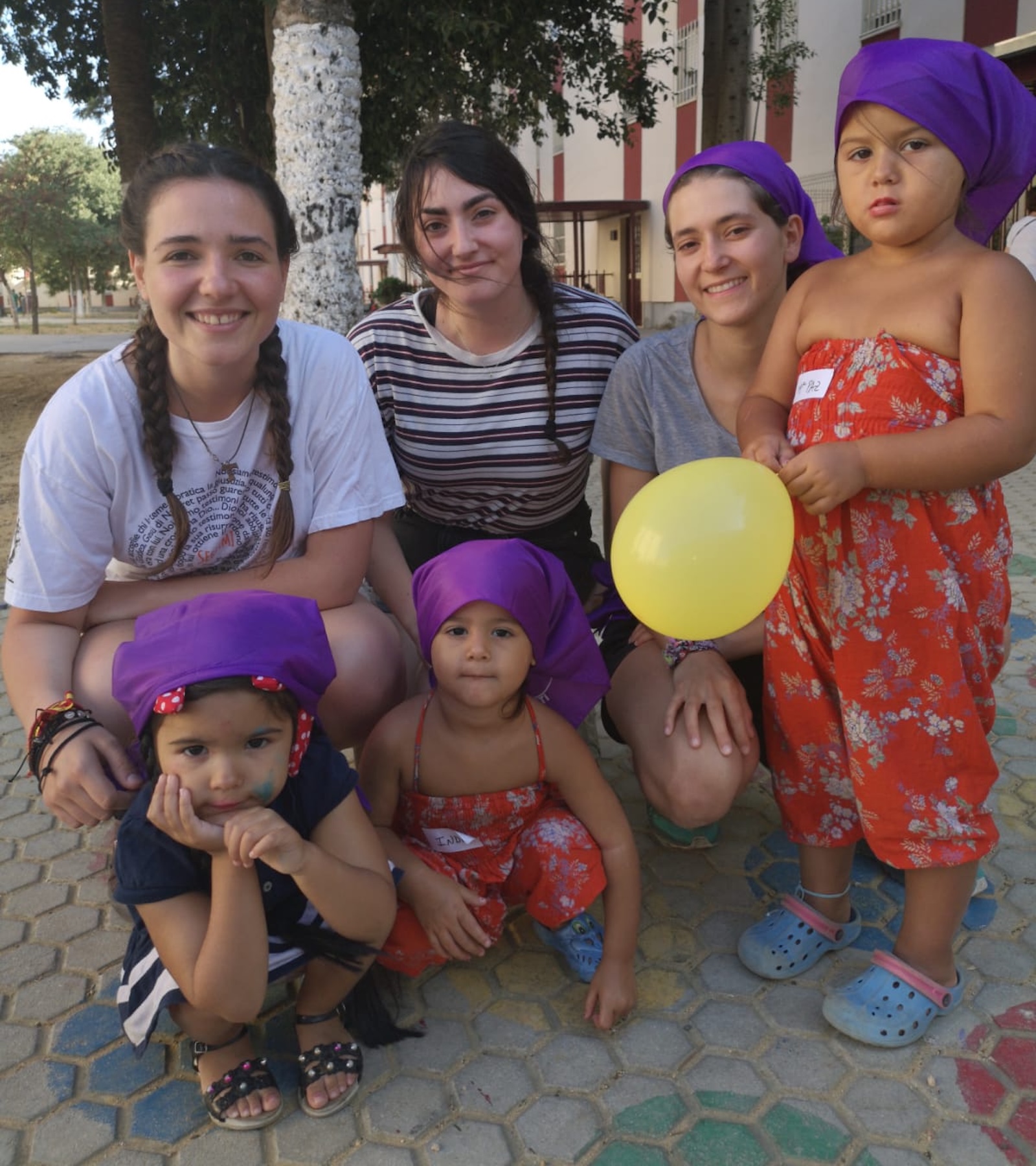
Figure 6: A group of four volunteers with small children posing in front of palm trees and a residential building. The women are smiling, and the three children are wearing matching purple headscarves and brightly patterned outfits, including one holding a yellow balloon. (SOURCE: Juan González's personal photos)
Enhanced Self-Conception
Beyond strengthening interpersonal relationships, stepping outside familiar contexts also prompted SED participants to turn inward and examine themselves more deeply. Interviewees identified a deeper understanding of themselves and their own positionality through service work. As a key component of service learning, this inspiration for reflection enabled students to come to valuable realizations that have a positive impact stretching much further than just their time at Loyola.
On the one hand, interviewees felt as though volunteering meaningfully improved their self-conception through building confidence and recognizing their abilities. The unfamiliar settings demanded that even the most reserved students speak up, make decisions, and take initiative in ways their comfortable campus life never required. For example, I spoke with multiple volunteers who described themselves as “timid” or “quiet.” However, these individuals explained that volunteering encouraged them to feel more confident speaking up and making decisions without supervision. After working at Fundación Prodean, Marilu Nieto Pérez said, “I feel that I am more open both to meeting new people and to helping others. I mean, I have always been a person who was more shy, and volunteering helps me to open up to others a bit too," (interview, June 5, 2025). Similarly, a graduate student described her shift away from their “shy” personality as one motivated by a “spark” as they become more “resourceful and confident,” (interview, June 9, 2025) This outcome of service learning demonstrates growth that extends far beyond the volunteers' work with SED or their time at Loyola; building self-confidence is also a transformation that students will benefit from for the rest of their lives.
Many students also believed their volunteer work enabled them to truly comprehend their own privilege and come to a greater sense of appreciation for their lived experiences. “I think [volunteering] has enriched me a lot as a person. It made me more humble about all the privileges I have at home, simply by having a good family, and being able to study… I've valued things more,” reflected Marina Muñoz Ariza, a student studying law and criminology (interview, June 5, 2025). By working in contexts very different from their own, SED inspired volunteers to be more grateful for even the most basic resources that students had, as this interviewee explains. However, volunteering also enabled students to appreciate the value of their own education at Loyola. In this way, SED’s volunteer program also bolstered their investment in classes, further supporting the educational mission of the university.
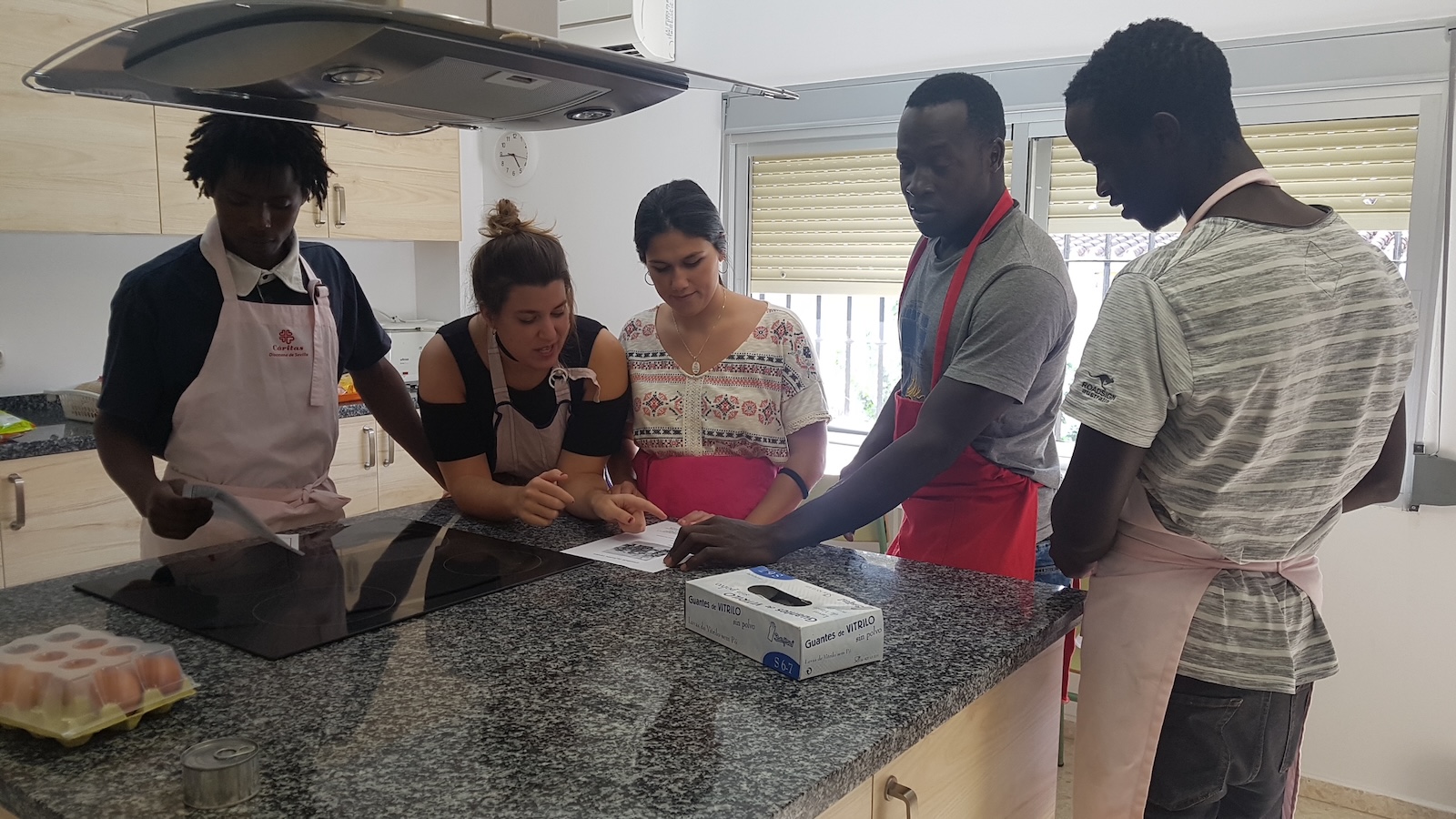
Figure 7: A group of five people wearing red aprons and reading cooking instructions in a training kitchen. Two of these people are Loyola volunteers as they support a nonprofit that provides social services to immigrant populations in Seville. (Source: Juan González's personal photos)
In addition to a process of social-emotional transformation, service learning also demonstrates meaningful impacts for a student’s academic learning and professional future beyond their time in university. Loyola students expressed this benefit of volunteering with SED in two key ways: the application of theory to practice and discovering long-term career goals.
During my research, I noted that many SED volunteers worked with organizations that closely aligned with their major and future career field. Students studying early childhood education often taught classes or supported educational nonprofits at their SED site. One interviewee with both law and criminology majors pursued relevant experience by volunteering with Fundación Horizontes Abiertos, a nonprofit that offers workshops and summer camps to youth living within the carceral system. Another Loyola student connected his major in audio-visual communication with volunteering by teaching art classes for children with Down Syndrome through SED.
Through working at organizations that are directly related to their academic life at Loyola, volunteers both intentionally furthered the impact of service learning as it connected both aspects of their university experience. Out of the 13 students I interviewed, 10 of them personally identified a very clear or partial connection between their volunteer work through SED and their official major at Loyola. This is a product of the volunteer’s decision making as well as the SED coordinator who intentionally chooses partnering organizations for each volunteer that align with their unique profile and interests. For instance, if Juan encounters a student who wants to work with children but isn’t high-energy or very comfortable with lots of new people, he might redirect their interest to a position more tailored to their interests. He explained, “Maybe it's a volunteer position more dedicated to working with people with physical disabilities or with the elderly. Or a volunteer position more dedicated to more logistical and organizational tasks,” (interview, June 9, 2025). In this way, Juan designs the volunteer program to match the profile needs of the partnering nonprofits and the strengths of each Loyola student.
Applying Theory to Practice
Considering the common connection between their volunteer work and academic studies, many SED volunteers valued the opportunity of taking content from their classes to a real-world experience. Interviewees described this benefit of service learning by using phrases that can be translated as “bringing theory into reality” or “seeing a study in practice.” Service learning enabled Loyola students to step beyond the traditional learning environment, in which theories often remain in the classroom and are detached from their day-to-day life. Through SED, students deepened their understanding of these concepts by using them to better support their partner organization.
For example, student Marilu Nieto Pérez explained how her major in performing arts was particularly useful for volunteering at Fundación Prodean. She said, “We organize a lot of games while volunteering, which are like improvisation games, or, for example, the kids love karaoke, and they love doing choreography. So, I apply what I know about art and the performing arts in my volunteer work. If they ask me to plan choreography because the children feel like dancing, I apply what I learned in the subjects of body expression or dance, and I then apply them in the dance the children want to do,” (interview, June 5, 2025). Similarly, students from other art-related disciplines, psychology, and education described how they thought explicitly about content from their class while completing their weekly volunteer hours.
This reflection demonstrates how Juan’s intake interview and matching process creates a relationship of mutual exchange and benefit for both the student volunteer and the partner organization. Partner organizations received volunteers well prepared for their current needs and responsibilities. At the same time, these experiences also greatly contributed to the academic development of Loyola students as they witnessed firsthand the real-world context of their studies and took these experiences back into the classroom. María Sánchez described this connection, saying, “Many times, I see things that happened during my volunteer work that I would later present in class, as a complement to that theory,” (interview, May 28, 2025). Multiple students went as far as to say that their academic studies at Loyola would not have been complete without volunteering at SED due to the important link between academia and practice.
Based on these students' insights, service learning at SED creates a powerful and reciprocal relationship where the academic studies of Loyola-affiliated volunteers were enriched and validated by meaningful real-world encounters. Through this application of theory and practice, SED volunteers also furthered their positive impact at partnering nonprofits by being more capable and informed collaborators.
The opportunity I had helped me a lot to precisely complement my education, because my education is very theoretical, but you have the theory precisely, so you can understand the complexity of the society that you are working with, right? My volunteer work has been key (interview, Giraldo Sánchez, May 30, 2025)
Discovering Long-Term and Career Goals
Beyond relevant experience within their major and academic studies, SED volunteers also identified ways in which their volunteer work informed and altered their professional aspirations. During these conversations, I observed varying degrees of how students believed their volunteer experiences impacted their academic goals and decisions.
On one end of the spectrum, many interviewees explained how volunteering helped them to narrow down their specific subfields of interest. Macarena Rodríguez Guerrero, a volunteer majoring in psychology, explained, “I started the degree thinking that child psychology was never going to be for me. I mean, I saw it as impossible. I said, 'Me with children? Absolutely no way.' And finally, through volunteering, I've realized that the realm of children in psychology is the ticket for my future. I mean, I've realized that I genuinely do like children,” (interview, June 6, 2025). Similarly, several Loyola students studying education learned that they were more passionate about teaching specific age groups or in the field of special education.
On the other end, service learning fundamentally changed the professional path of Loyola students by providing experiences that deepened their dedication to social impact work and altered their long-term goals. I spoke with many students who believed their volunteer experience with SED directly impacted their plans after graduation. For example, Jacobo Zhangquing explained that he now planned to dedicate an entire year to community service before entering the workforce because “in the end, volunteering really helps you see that the most important thing isn’t money, but what you do with your work, the relationship between your job, yourself, and the people who are affected by that work,” (interview, June 3, 2025). SED’s volunteer program motivated this student to reflect more deeply on his goals for the future and how social impact work could be incorporated into this plan.
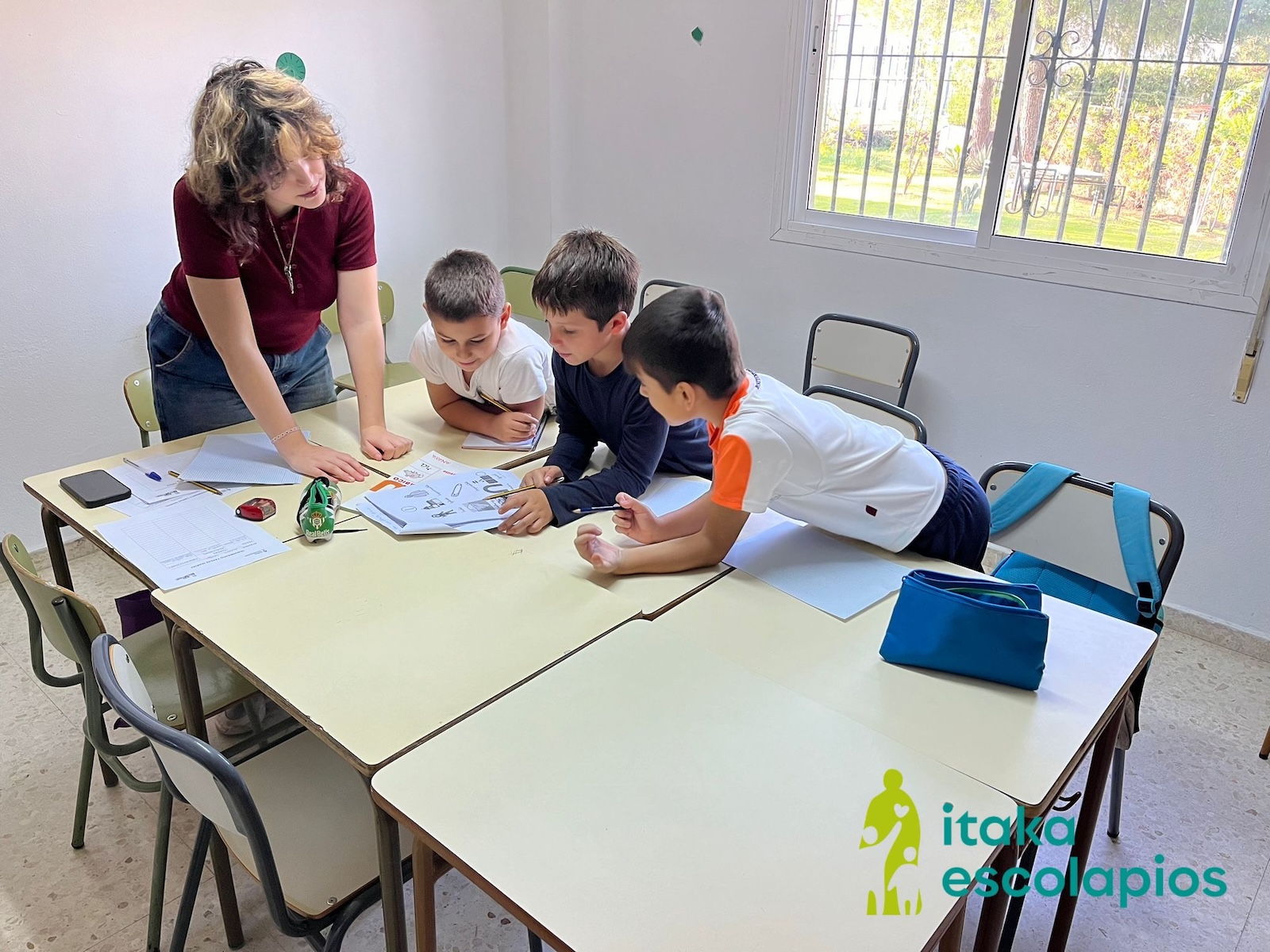
Figure 8: A volunteer helping three elementary-aged boys with books and papers spread out. The group is working in a brightly lit room with a window showing greenery outside, and a logo for Itaka Escolapios is in the bottom right corner. (Source: Itaka Escolapio)
Ultimately, these interviews reveal that volunteering through SED represented much more than an extracurricular activity as it created meaningful connections between a student’s education and future after graduation. Volunteers not only discovered their unique interests within a field but also the deeper values that they wanted to pursue in their professional life after graduating. In this sense, SED’s model demonstrates the powerful role that experiential learning can play in shaping long-term career goals rooted in social impact and purpose.
Embodiment of SED Values and Mission
Compared to the previous two sections, my third finding is the result of a more complex and layered analysis of my transcripts, which required me to not only analyze the explicit ideas of interviewees but also how these perspectives interacted with the mission and functions of SED itself. In this way, this discovery holds a more interpretative lens in comparison to the overall report.
Ultimately, I came to realize that many interviewees either directly or indirectly referred to the institutional values of SED when describing the importance of their volunteer work. Although only about half of the interviewees identified as religious, they perceived their volunteer experience in ways that directly aligned with the institutional goals of SED, a body within Loyola specifically oriented towards its Jesuit identity. The core values they described closely corresponded to the department’s mission of student formation in spirituality, solidarity, and social justice work (Loyola University). The power of this finding is that interviews revealed that SED had successfully crafted a program that spread their values from the top down, starting with Loyola faculty and partnering organizations and reaching all the way to the individual student volunteers.
Spiritual Enrichment
Firstly, when asked to reflect on the importance of volunteer work, many participants expressed that it led to a sense of personal satisfaction, which they described as “happiness” or feeling “content.” This description of community service closely resembled SED’s emphasis on the illumination of humanity and spirituality. Through volunteering, students were supported in devoting time and energy to nurturing a more personal and intimate aspect of their life and emotional self.
Sometimes, participants would connect this emotional enrichment to their religiosity and carrying out their faith. For example, Marilu explained, “I feel that peace is a way of being connected with God through helping others and loving others,” (interview, June 5, 2025). These perspectives are more closely aligned with the institutional value of SED to “illuminate humanity in the style of Jesus” as it allowed volunteers to connect on a spiritual and emotional level to their faith (Loyola University).
However, many of the interviewees referred to this emotional aspect of volunteering without directly relating it to a religious practice. Volunteer Sofia Camuñez Hitos reflected, “When I go, I feel like a fulfilled person. If I can make someone’s day better, it honestly makes me very happy,” (interview, June 9, 2025). Sentiments such as these demonstrated that giving back to others provided volunteers with enriching experiences to their spiritual self through emotional responses and satisfaction, an understanding of volunteering that interviewees arrived to regardless of their religious identity.
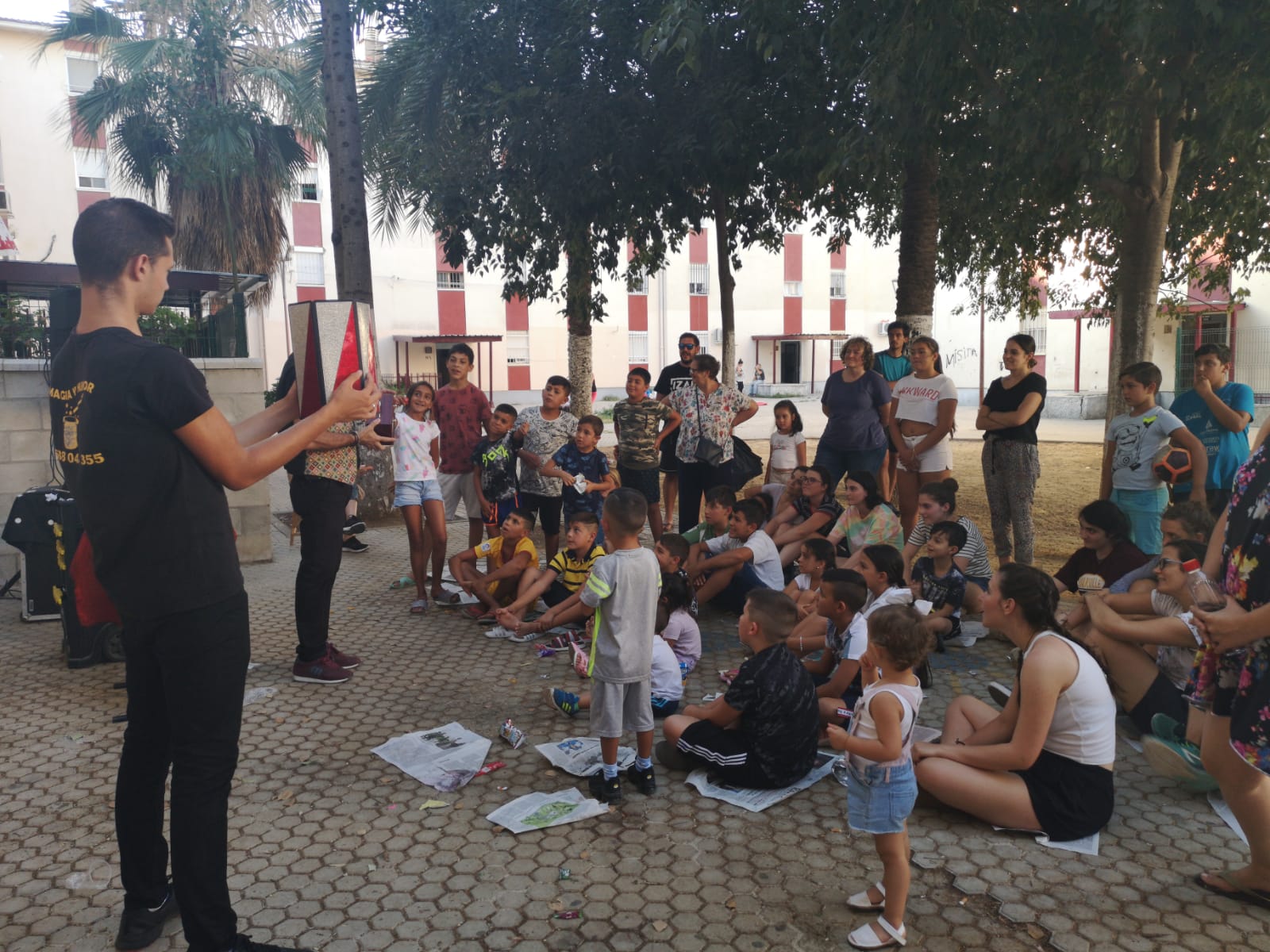
Figure 9: A Loyola student standing in the left foreground holding up a small box or prop. A crowd of approximately 20 children and a few adults is sitting on the ground in a semi-circle watching him, in a paved outdoor area shaded by large trees next to a residential building. (Source: Juan González's personal photos)
Sharing Community
In addition to spiritual enrichment, many volunteers indicated that they valued community service due to their ability to contribute to society and create a positive impact within Seville. This emphasis on supporting their community closely resembled SED’s hopes of inspiring students to engage in solidarity efforts as a “responsible, active, and compassionate practice” (Loyola University). Most interviewees identified this aspect of volunteerism through simply referring to the opportunity of making a positive difference in the lives of others and their community. Jacobo said, “I believe that doing volunteer work has a great impact on the local community, and I really value that students are given the opportunity to create a positive impact around them,” (interview, June 3, 2025).
However, there were also many students who used almost identical language to the explicit mission statement of SED. María Luján Ibáñez González explained, “I think what motivates one is the idea that we are part of the world, and we have to collaborate… as part of… our common home, we all come from the same place. And to the extent possible, we should work to make a better world,” (interview, June 9, 2025). This reference to the world as our “common home” relates directly back to the institutional goal of SED to “committing [itself] to the care of our common home,” a pillar of Jesuit values (Loyola University). Alongside alignment with the department’s spiritual and emotional aim, interviews again demonstrated how the mission of SED filtered down from the faculty and university staff down to the individuals volunteering across Seville.
Something [volunteering] has supported is this sense of duty, of seeking greater justice for people. Not only in my country, but in the world (interview, Luis Párraga, June 3, 2025).
Promotion of Justice
Lastly, I spoke with many students who felt as though volunteering with SED gave them a chance to build a more equitable society in Seville, a city that suffers from extreme inequality and some of the worst poverty rates in Spain. This promotion of justice also extended to the individual level, as many Loyola students helped fulfill the needs of people with disabilities, learning differences, or the elderly without family support. Interviewees described this aspect of their work as creating a world in which those struggling are able to “live just like everyone else” or have the “same opportunities” as them. Considering these reflections, SED volunteers were able to embody and carry out the institutional goal of promoting justice through action.
While some students conceived of this as strongly connected to their Catholic responsibilities, others simply described the creation of justice as “bring[ing] opportunities to those who had never truly had them,” in the words of Jacobo (interview, June 3, 2025). In this way, SED enabled both religious and non-religious students at Loyola to take action towards their own understanding of justice, furthering their mission and exemplifying the value of service learning.
Taken together, these three themes of spiritual enrichment, shared community, and the pursuit of justice that volunteers experienced with SED reveal the program’s success in materializing its mission statement. Rather than remain an abstract goal or value system, the department was able to transmit university-driven goals from the top down. It began with the Loyola faculty who designed the program, such as Juan and his process in accepting new volunteers, then making its way to partnering organizations and student volunteers themselves, who came to embody these values regardless of their religious affiliation.
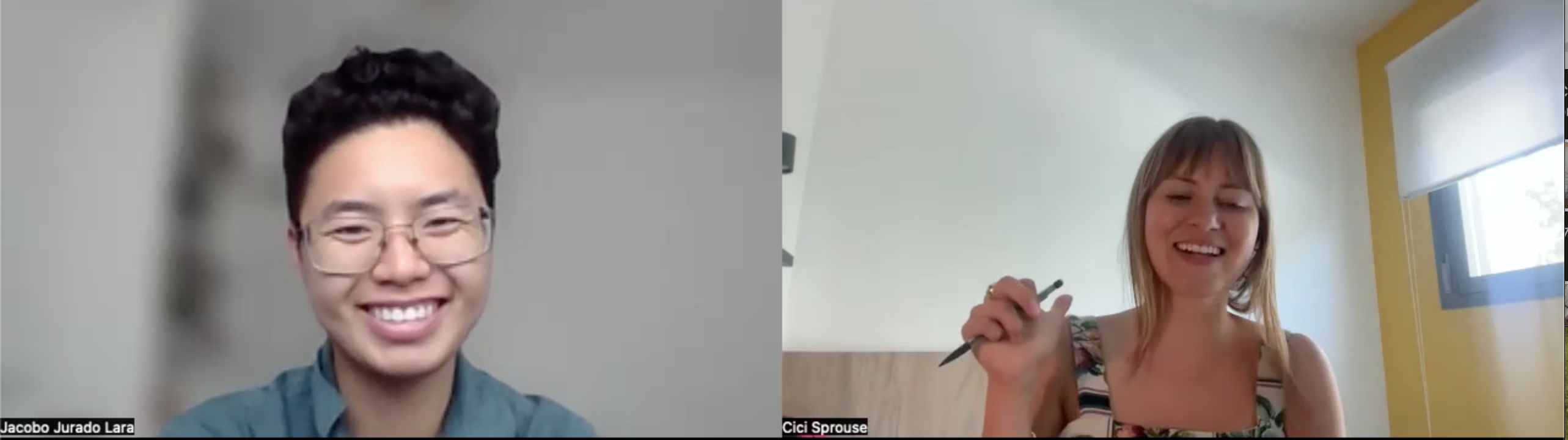
Figure 10: Split-screen image of two people smiling during a video call: interviewee Jacobo Jurado Lara on the left and researcher Cici Sprouse on the right. (Source: Cici Sprouse's personal photos)
Findings and Institutional Significance
The experiences shared during my interviews reveal three meaningful dimensions of growth: social-emotional transformation through stepping outside comfort zones and building authentic relationships across cultural boundaries, academic and professional development by connecting classroom theory to real-world practice, and the embodiment of SED’s institutional values that guide student formation.
The resounding praise that interviewees had for SED’s volunteer programs demonstrates that these experiences extend far beyond just two hours of weekly service. By creating personalized matches between volunteers and organizations, SED has built a program that achieves what it has set out to do: to cultivate a learning environment of reflection and development. These volunteer experiences allow students to encounter and deeply engage with new and unfamiliar contexts, crossing the "window" that separates them from the struggles and reality of our complex society. As volunteers reflected on their experiences, they consistently identified growth that would shape them long after graduation, such as greater confidence, deeper empathy, clearer career direction, and a lasting commitment to social impact. In this way, SED fulfills its mission of enriching the Loyola community while demonstrating the potential value of service learning for all institutions.
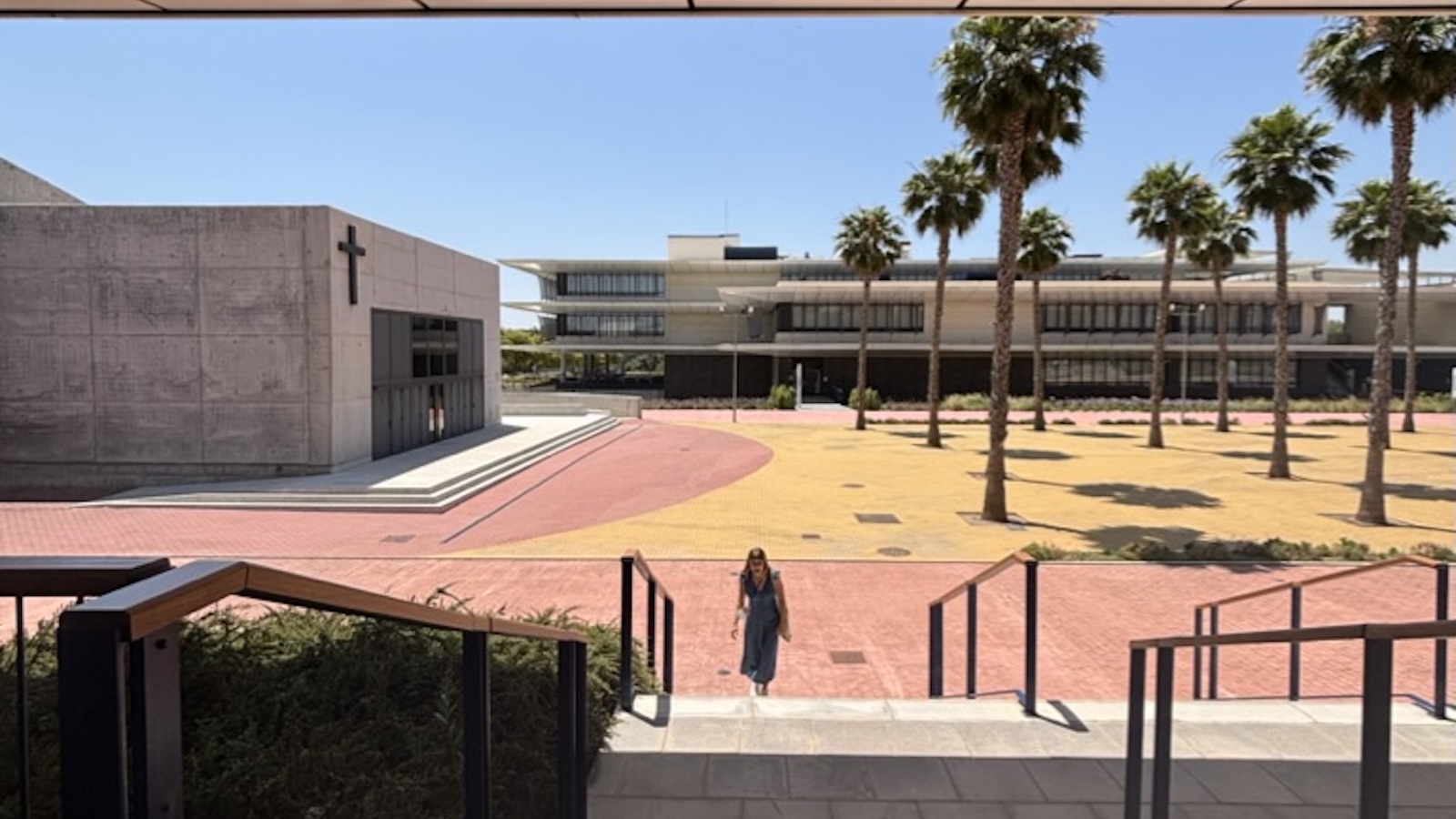
Figure 11: Cici Sprouse, wearing a long dress, stands at the bottom of an outdoor staircase in a modern university or campus setting, which is that of Loyola University in Seville, Spain. Behind her are red and yellow tiled paths leading to a gray, concrete chapel with a cross on the left and a large, multi-story glass and stucco building on the right, surrounded by palm trees under a blue sky. (Source: Stella Vance's personal photos)
The views expressed in this student research are those of the author(s) and not of the Berkley Center or Georgetown University.