Ukraine
A Religion, Peace, and Conflict Country Profile
By: Aidan Houston, Tetiana Kalenychenko, Denys Brylov, and Peter Mandaville
June 12, 2026
While religion has not been a primary driver of conflict in Ukraine, its distinctive history and recent politicization have ensured that it remains an important aspect of the broader context surrounding the current war. Religion has contributed to the formation of lines of division and conflict narratives, as well as understandings and perceptions of the war within different communities. Misunderstandings of, and indifference to, the role of religion in society can significantly exacerbate conflict dynamics. At the same time, the peacebuilding potential of religious communities can shape interventions and create opportunities for future stability and social cohesion.
Demographics
Religious Demographics in Ukraine
Legend
- Orthodox - 78%
- Catholic - 10%
- Other Christian - 4%
- Other Religions - 1%
- Unaffiliated - 7%
Source: Pew Research Center. Religious Belief and National Belonging in Central and Eastern Europe (2017)
Ukraine is predominantly an Orthodox Christian country, with a few notable religious minority populations. Religion has played a fundamental role in Ukraine for the entirety of its history. It came to be seen as the birthplace of Russian Orthodoxy when Volodymyr—the knyaz (king) of the proto-Russian kingdom Kyivan-Rus’ centered in modern Kyiv—adopted Eastern Christianity in the tenth century and required the same of his people. Despite attempts under the rule of the Soviet Union to repress religion, Ukraine remains a highly religious country today.
Perhaps the most important religious dynamic to understand in Ukraine, especially as it relates to the ongoing conflict, is the longstanding tension between the Ukrainian Orthodox Church (UOC) and the Orthodox Church of Ukraine (OCU). Further information on this complex dynamic is provided in Part II of this profile.
The largest Catholic communities in Ukraine are the Ukrainian Greek Catholic Church (UGCC) and the Roman Catholic Church (RCC). UGCC is the largest Eastern Catholic Church and is in full communion with the Holy See. Though it is subordinate to the pope, it follows uniquely Byzantine rites and has had strained relations with both the Synod (the governing body of the Orthodox Churches) and the Vatican. The majority of Ukrainian Catholics are to be found in the western regions of the country (mainly Galicia), such as the cities of L’viv, Ternopil’, and Ivano-Frankivs’k, which were once under the control of Polish and eventually Austro-Hungarian Catholic empires.
There are a variety of religious minority communities in Ukraine, though considerably less than many other European states. The Crimean Tatars are a Muslim ethnic group indigenous to the Crimean Peninsula. They were systematically deported under the Soviet Union, but have nonetheless maintained the largest Muslim population in Ukraine. Together with Volga-Ural Tatars and small numbers of Caucasian and Central Asian immigrants, Muslims make up about 0.9% of the population, according to the most recent census.
Ukraine was a flourishing center of medieval Judaism, home to several key Jewish sites and the birthplace of major Jewish theologians. Widespread pogroms under the Russian Empire, Soviet persecution, and the Holocaust all contributed to the near annihilation of the Jewish population by the mid to late twentieth century. The Jewish community has since experienced regrowth. Current estimates indicate a Jewish population in Ukraine between 56,000 and 140,000. Prominent synagogues are a central feature of the cities of Kyiv and Dnipro.
Protestantism began to spread in Ukraine during the second half of the sixteenth century, but with a particularly significant increase in numbers following the collapse of the Soviet Union. Numerous congregations of every major Protestant tradition exist in contemporary Ukraine. In terms of organized communities, Protestants—with more than 10,000 church groups—are second only to the Orthodox in this regard. There is also some presence of non-Protestant Christian churches such as the Jehovah’s Witnesses and the Church of Jesus Christ of Latter-day Saints.
At the interfaith level, the most prominent group is the All-Ukrainian Council of Churches and Religious Organizations (AUCCRO). Established in 1996 and legally registered as an NGO since 2019, UCCRO unites the major Orthodox, Catholic, and other Christian denominations in Ukraine with their Jewish and Muslim counterparts. Primarily focused on issues such as preserving freedom of religion and belief in Ukraine as well as coordinating the charitable work of faith-based groups, AUCCRO has also served as a platform for Ukraine’s various religious groups to speak with a common voice in condemning Russian aggression towards their country.
Key Religious Actors in Ukraine
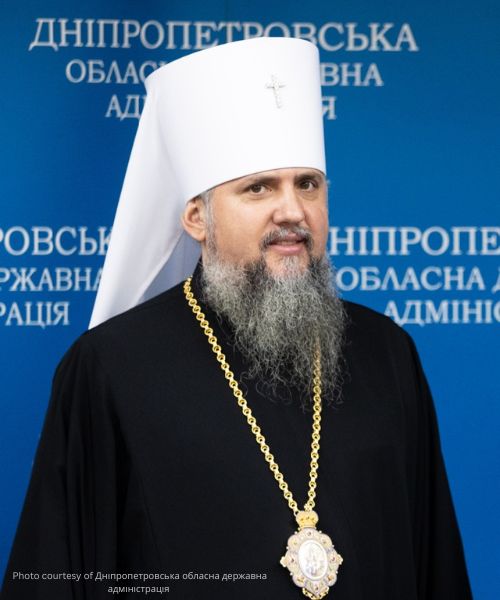
Epiphanius I, Metropolitan of Kyiv and All Ukraine
Orthodox Church of Ukraine
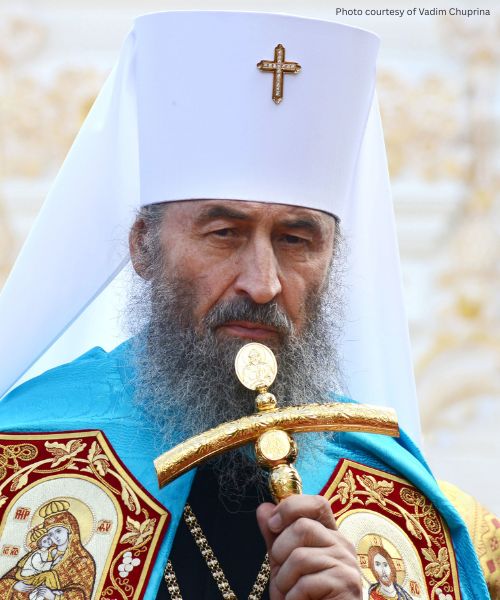
Onufriy I, Metropolitan of Kyiv and All Ukraine
Ukranian Orthodox Church - MP
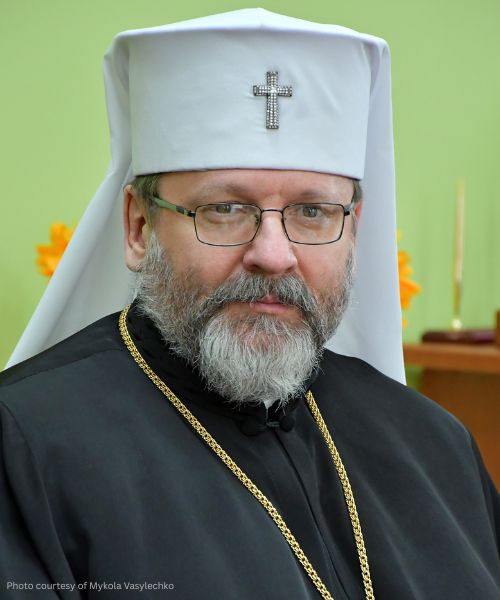
Sviatoslav Shevchuk, Major Archbishop of Kyiv and Galica
Ukranian Greek Orthodox Church
Religion in Public Life
Since the collapse of the Soviet Union, religion immediately reestablished itself as a fundamental part of Ukrainian public life and national identity. Along with many other Eastern European countries, some public opinion polls have suggested that Ukrainians are significantly more religious than their counterparts in the West. The relationship between the state and the church is highly public and often politicized.
Orthodox Christianity is also closely intertwined with the idea of Ukrainian national identity. Most Ukrainians say that it is at least somewhat important for someone to be Orthodox to be truly Ukrainian. About half of Ukrainian respondents agree that Orthodox religious leaders have influence over national politics. Ukrainian churches played visible and prominent roles in both the Orange Revolution of 2004 and the Euromaidan Revolution of 2014. Their prominence is indicative of the central function of religion in national affairs.
Legal Status of Religion
The Ukrainian Constitution provides for the free expression of religious belief and asserts “the separation of church and religious organizations from the state.” In practice, some contemporary Ukrainian national leaders have aligned themselves closely with the UOC, while others have leaned towards the OCU, which has tried to position itself as a national church since gaining autocephalous status in 2019. However, there is no formal legal association between the Ukrainian state and any religious body.
Ukraine has made a concerted effort to distinguish itself from the behavior of the Russian government, as leaders in Moscow have exerted significant legal pressure on religious minority groups in order to exercise control over them and/or force them out of the country. Conversely, religious minorities enjoy a certain amount of legal protection in Ukraine. Domestic law asserts that the objective of religious policy is to foster the creation of a tolerant society and provide for freedom of conscience and worship. Equal protection under law is not always uniform, however. In 2020, the European Court of Human Rights investigated hate crimes against foreign religious organizations (particularly Jehovah’s Witnesses) and administrative discrimination against minority groups.
Ukraine remains a highly religious society, and religion continues to play a central role in the country’s legal, cultural, and political life. Religious institutions have traditionally enjoyed very high levels of public trust—typically between 60% and 70%. However, this trust has declined in recent years, falling to around 44%, partly because of internal tensions and competition between the Ukrainian Orthodox Church and the Orthodox Church of Ukraine. Because Orthodox Christianity in Ukraine is closely tied to state authority and national identity, religion cannot be separated from contemporary political and social developments. It is therefore deeply intertwined with the ongoing war in Ukraine.
Part II: Religion and Conflict in Ukraine
Joint Histories
In order to understand the relationship between religion and framings of the Russia-Ukraine war, we must first understand two essential histories and the relationships between them. First is a brief political history of Ukrainian independence. Second is a brief religious history of the Russian and Ukrainian Orthodox churches.
The Ukrainian State and the History of Conflict
The modern Ukrainian and Russian states have directly intertwined histories that contribute to their complex relationship today. Both states have their origins in the medieval kingdom of Kyivan Rus’, the capital of which was Kyiv. The kingdom eventually dissolved into separate principalities that became modern Ukraine and Russia. During the Russian Empire period, Eastern and Central Ukraine was controlled by Russia while the western regions were divided under various European empires. This East versus West cultural divide is still somewhat relevant in Ukraine today.
Ukraine declared independence in 1917 as the democratic Ukrainian People’s Republic (UPR). It was then conquered by the Red Army in 1922 and incorporated into the Soviet Union. The Ukrainian Soviet Socialist Republic added more territory in the west and Crimea until it reached the boundaries of the modern state. Ukraine declared independence again in 1990 as the USSR dissolved. In 1994, it surrendered its leftover nuclear weapons arsenal in the Budapest Memorandum on the condition of a guarantee from the United States, United Kingdom, and Russia that its territory and security would be protected. Ukraine maintained its full territorial integrity for the next 30 years.
In 2014, a popular pro-Western movement ousted the pro-Russian president Viktor Yanukovych after he cancelled an association agreement with the European Union. The consequences were twofold. First, Russia illegally seized Crimea in a rapid invasion. Second, separatist paramilitary groups in the far east Donbas region seized control of Donetsk and Luhansk, establishing breakaway republics. The Russian military quickly began to offer support to the separatists through supplies and personnel. The conflict between the Ukrainian military and the Russian-backed separatists has been ongoing in the years since. From 2014 to 2022, the conflict took 13,000 lives, displaced 1.5 million Ukrainians, and established an active front line of 280 miles.
In 2022, President Putin began to increase the number of troops along the border in response to Ukraine’s application to join NATO. In February, he moved a substantial number of troops into the separatist-controlled Donbas and recognized the independence of the breakaway republics. Just a few days later, he launched a full-scale invasion of Ukraine.
The Ukrainian and Russian Orthodox Churches
Ukraine and Russia have both been major centers of Orthodox Christianity since the baptism of Volodymyr in 988 and the subsequent Christianization of Kyivan Rus’. The Russian Orthodox Church (ROC) has the largest population of Orthodox adherents in the world, totaling around 101 million. It is also the largest autocephalous Orthodox Church in the world—a status indicating that its head bishop does not report to any other higher-ranking ecclesiastical official. The original seat of the church that would become the ROC was in Kyiv, which was a major center of medieval Christianity. After the Mongol invasion and the decline of Kyiv, the bishopric relocated to Moscow in 1325. In 1439, several Byzantine bishops from the Orthodox capital of Constantinople developed a plan to sign a union with the Roman Catholic Church and come under the jurisdiction of the pope. When the decision was brought to Moscow, the Grand Prince Vasilii II rejected it outright.
Having defied the authority of Constantinople, Moscow appointed its own head bishop as the “Metropolitan of Kyiv and all Russia,” the office which would become the patriarch of the Russian Orthodox Church. A few short years later, Constantinople fell to Ottoman invaders. The new Muslim rulers rooted out Christianity and established it as a center of Islam, renamed Istanbul. As such, the new Russian Orthodox Church began to consider itself the “Third Rome,” the only remaining seat and ultimate authority of the one true Christian religion. From then onwards, the Russian Orthodox Church considered itself subject to no higher authority—not in Constantinople or elsewhere.
Autocephaly
In Orthodox Christianity, an autocephalous church is one whose leader reports to no higher episcopal authority. The question of autocephaly for the Orthodox church in Ukraine has been hotly disputed. The Ecumenical Patriarch in Istanbul claims that it possesses the authority to bestow the status of autocephaly on Ukraine—as it did in 2019—a position rejected by the Russian Orthodox Church, which argues that Istanbul transferred full control of the Kyiv Metropolitanate to Moscow in the seventeenth century.
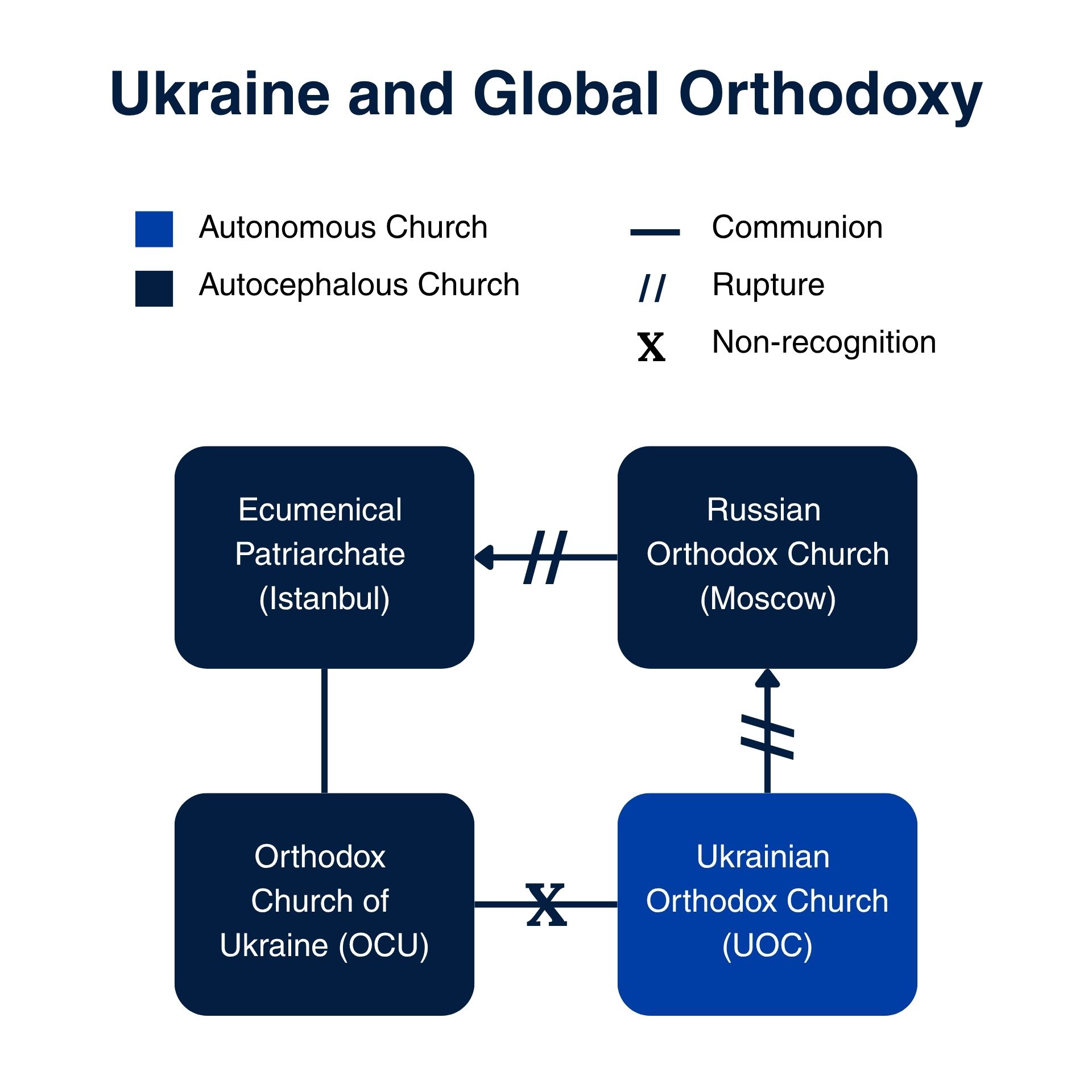
This flowchart illustrates the fractured relationships between four major Eastern Orthodox church bodies arranged in a square. While the Ecumenical Patriarchate in Istanbul shares a connection with the Orthodox Church of Ukraine (OCU), both have experienced severe divisions with their counterparts, resulting in a formal rupture between Istanbul and the Russian Orthodox Church in Moscow, a rupture between the Ukrainian Orthodox Church (UOC) and Moscow, and a complete lack of recognition between the two Ukrainian churches.
Religion at War Today
The UOC has often acted as a tool for Russia to exercise soft power influence in Ukraine; however the jurisdiction is diverse and divided inside. Disinformation campaigns orchestrated by the Russian government have continued to stoke conflict between the OCU and UOC. Politician and former Ukrainian president Petro Poroshenko actively encouraged the creation of the OCU as well as the process of transferring UOC parishes to the newly created jurisdiction. Competition for dominance has been fierce.
When President Volodymyr Zelensky took office, he sought to de-politicize the question of religion by discouraging parish re-registration and by trying to promote coexistence between the rival churches. However, the ROC continues to label the OCU as a schismatic church and discourages its formal recognition abroad.
These tensions have also had implications for the conflict that broke out in 2022 following Putin’s full-scale invasion of Ukraine. Ecumenical Patriarch Bartholomew of Constantinople immediately condemned the Russian attacks. Interestingly, Metropolitan Onufriy of the UOC also spoke out against the invasion, saying:
"Defending the sovereignty and integrity of Ukraine, we appeal to the President of Russia and ask him to immediately stop the fratricidal war. The Ukrainian and Russian peoples came out of the Dnieper Baptismal font, and the war between these peoples is a repetition of the sin of Cain, who killed his own brother out of envy. Such a war has no justification either from God or from people."
Several months later, the UOC went even further, with its General Council declaring on May 27, 2022, that it was breaking ties with Moscow—although the concrete implications of this move remain unclear.
In December 2022, President Zelensky announced that in the name of ensuring Ukraine’s “spiritual independence” he was ordering parliament to consider a new law that would prevent religious organizations affiliated with centers of influence in Russia from operating in Ukraine. This action followed a series of investigations carried out by Ukraine’s internal security service against several religious institutions and facilities connected to the UOC that had been suspected of producing pro-Russian propaganda.
In August 2024, the Ukrainian parliament adopted Law No. 3894-IX, On the Protection of the Constitutional Order in the Sphere of Activity of Religious Organizations (previously known as Bill No. 8371). President Volodymyr Zelenskyy signed the law on August 24, 2024, Ukraine’s Independence Day, and it entered into force in late September. The law explicitly banned the activities of the Russian Orthodox Church (ROC). Ukrainian religious organizations—primarily the Ukrainian Orthodox Church (UOC)—suspected of affiliation with the ROC were given a nine-month transition period to sever canonical and administrative ties with Moscow; this period expired at the end of June 2025.
The law intensified criticism of Ukraine’s religious policy from experts at the Office of the UN High Commissioner for Human Rights, who argued that Law No. 3894-IX “creates a framework for state control that is incompatible with international human rights standards.” Following both the law’s adoption and the end of the transition period, state pressure on the UOC increased. In August 2025, the State Service of Ukraine for Ethnopolitics and Freedom of Conscience (DESS) filed suit to revoke the legal status of the Kyiv Metropolis of the UOC. According to DESS head Viktor Yelensky, this would strip the Kyiv Metropolis of legal capacity and deprive UOC parishes of a governing center.
Regional and municipal authorities also accelerated efforts to terminate leases for land occupied by UOC churches. Legal proceedings were initiated to revoke the UOC’s use rights over several historic religious sites. The UOC lost access to churches within the Kyiv-Pechersk Lavra National Reserve, the Transfiguration Cathedral in Chernihiv, the Yelets Dormition Monastery, and parts of the Pochaiv Lavra.
Under Ukrainian law, clergy are subject to military mobilization unless their religious organization is designated by the DESS as part of the country’s “critical infrastructure.” By declining to grant this status to the UOC and its parishes, the DESS effectively denied UOC clergy exemption from mobilization.
Rising state pressure also contributed to increased activity within the Western European Vicariate of the UOC, which serves Ukrainian Orthodox communities in countries such as Germany, Spain, and Italy. In February 2026, clergy meeting in Bari, Italy, adopted a document titled “About the Ministry of the Western European Vicariate of the Ukrainian Orthodox Church,” formalizing the vicariate’s activities.⁶ The document also stated that the UOC would not establish its own parishes in countries already under the jurisdiction of other local Orthodox churches, including Poland, Greece, Serbia, Romania, and Cyprus. The growing influence of the UOC in Europe led to Bishop Veniamin (Voloshchuk), head of the Western European Vicariate, being admitted as an observer to the Conference of Orthodox Bishops of Germany. The UOC’s expanding presence in Europe has heightened tensions, with both Ukrainian churches competing for the allegiance of post-2022 Ukrainian refugees—notably the Ukrainian Greek Catholic Church and the Orthodox Church of Ukraine—and with external actors such as the Ecumenical Patriarchate and the ROC, for whom the large Ukrainian refugee population represents an important constituency. At the same time, the UOC continues to stress that it has no ties to the ROC and does not use Russian Orthodox churches for worship services.
Relations between the OCU and the UOC remain tense, although the open conflict has largely frozen since 2023, when the largest wave of parish transfers from the UOC to the OCU took place. Despite sustained state pressure—including the revocation of Ukrainian citizenship from UOC leader Metropolitan Onufriy—the UOC has retained its organizational cohesion, while the number of parishes transferring to the OCU has declined (191 transfers in 2024 and 157 in 2025). In February 2026, the OCU’s Synod established a Synodal Commission for Dialogue with the UOC, headed by Metropolitan Simeon (Shostatsky) of Khmelnytskyi and Shepetivka. Simeon was one of only two UOC bishops who joined the OCU at the 2018 Unification Council that created the new church with the support of the Ecumenical Patriarchate. However, his appointment underscores the largely symbolic nature of the commission, since he is viewed as unacceptable by the UOC and is unlikely to facilitate meaningful dialogue.
Russia’s war against Ukraine has further complicated relations between churches and the state, blurring traditional boundaries and deepening uncertainty. At the same time, it has revealed the persistence of a Soviet-style repressive approach in Ukrainian religious policy. On the one hand, this approach has proven ineffective: pressure on the UOC has neither destroyed the church nor significantly reduced its congregations. On the other hand, repression directed at one of the country’s largest religious communities—even one as controversial as the UOC—does little to strengthen wartime social cohesion. Yet it remains unclear whether revising religious policy under current conditions would reduce tensions or instead further radicalize opponents of the UOC.
Paradoxically, the UOC’s declining influence inside Ukraine may increase its geopolitical importance abroad. Before 2022, the UOC largely functioned geopolitically as part of the ROC. Since the war, however, the rapid growth of the new Ukrainian diaspora has created the possibility that the UOC could emerge as a counterweight to the ROC. This dynamic would become even more significant if the UOC leadership succeeded in establishing informal channels of communication with Patriarch Bartholomew, thereby strengthening the Ecumenical Patriarchate in its dispute with the ROC.
Alongside these intra-Orthodox struggles, broader changes have reshaped religion-state relations under wartime conditions. In occupied territories, Russian authorities and occupation forces have targeted Ukrainian religious leaders, seized religious property, and persecuted believers. At the same time, Ukraine has expanded cooperation with most religious communities domestically. Clergy from all major confessions except the UOC were granted limited exemptions from mobilization through quota systems. Ukraine has also developed a more formalized system of military and medical chaplaincy, institutionalizing relations between religious organizations and the state. Nevertheless, President Zelenskyy’s broader call for “partnership” between church and state remains vague and underdeveloped. The prolonged war has therefore generated both new threats and opportunities for restructuring religion-state relations.
Russia’s invasion has also highlighted the social capacity of Ukrainian religious organizations, many of which have compensated for weaknesses in the state’s humanitarian response. Religious groups have played a major role in supporting internally displaced persons, refugees, veterans, and other vulnerable populations, while also engaging in charitable and international advocacy efforts. These activities have encouraged religious organizations to rethink their role within the broader state–society–religious organizations relationship. At the same time, the war has exposed important weaknesses, including shortages of personnel, growing public criticism—particularly after religious organizations were classified as “critical infrastructure” alongside defense enterprises—and the risk of excessive entanglement with the state apparatus.
The situation in Ukraine and its consequences for the wider global community is evidence of the fact that religion and the social, cultural, and political developments in the world today are not separable—in fact, they are all fundamentally intertwined.
This profile originally appeared on the USIP website in 2023 and was drafted by USIP Religion & Inclusive Societies Research Analyst Aidan Houston, with input from Drs. Tetiana Kalenychenko and Denys Brylov from Dialogue in Action as well as Berkley Center Senior Research Fellow Dr. Peter Mandaville. It was updated in May 2026 by Drs. Kalenychenko and Brylov to reflect developments since original publication.
Religion and the Russia-Ukraine War: A Primer
Denys Brylov, Tetiana Kalenychenko, and Peter Mandaville
The war between Russia and Ukraine is not religious in origin, but religion figures prominently in several of its domestic and international dimensions, including identity formation, social cohesion, and international advocacy. For policymakers, understanding these dynamics is essential to assessing risks of social fragmentation, evaluating claims made in international forums, and anticipating how religious issues may surface in future diplomatic and negotiation processes. This working paper by Denys Brylov and Tetiana Kalenychenko with Peter Mandaville summarizes these dynamics and key religious actors, both inside and outside Ukraine.
“Whoever saves one life saves the world entire”: Ukrainian Religious Denominations During the War
Tetiana Kalenychenko and Denys Brylov
An article from the Paris-based Observatoire International du Religieux on faith-based organizations in Ukraine working on the front lines of humanitarian relief following Russia’s full invasion of Ukraine in 2022.
An episode of The Commonweal Podcast
Experts on contemporary Orthodoxy and church politics discuss the broader global context surrounding Christian responses to Russia’s war in Ukraine in this podcast from the Catholic magazine Commonweal.
PAX
A 2017 report from the Dutch peacebuilding organization PAX assesses the potential contributions of religious communities to building enduring peace in Ukraine.
Religion and the Russia-Ukrainian Conflict
BYU Law interview with Dmytro Vovk
A noted Ukrainian expert on religious freedom discusses the religious context of the Russia-Ukraine war in a web interview with Brigham Young University’s law school.
How is Russia-Ukraine War Linked to Religion?
Religion News Service explainer
A primer on the religious dimensions of the war between Ukraine and Russia.
Russia’s War on Ukraine: The Religious Dimension
European Parliament
A brief summary by the European Parliamentary Research Service of the religious dimensions of Russia’s war in Ukraine.
Russia, Ukraine, and the Orthodox Church: Where Religion Meets Geopolitics and War
Engjellushe Morina and Andrew Wilson
An analysis from the European Council on Foreign Relations of how the political alliance between the Kremlin and the Russian Orthodox Church manifests in the context of its war with Ukraine.
Featured People: Denys Brylov Person Tetiana Kalenychenko Person Peter Mandaville Person