The Intersection of Democracy and Non-Formal Education: The Creation of Agency
By: Julianne Meneses (C'25)
February 27, 2026
This project examines the John Paul II Youth Pastoral Center’s youth programming, including the Vision is Decision project, and the impacts of teaching students about democracy through non-formal education.
The John Paul II Youth Center: Its Founding Purpose and Relation to Democracy
Nadbiskupijski centar za pastoral mladih “Ivan Pavao II,” or the Archdiocesan Center for Youth Pastoral "John Paul II" (NCM), is a Catholic youth center for all Bosnian youth, regardless of ethnic and religious background, in Sarajevo, the capital of Bosnia and Herzegovina (BiH). In 2007, Reverend Šimo Maršić, Ph.D., doctor of pastoral theology and current director of the youth center, created NCM to serve as a safe space for young people across the country to come together after being separated by the war. NCM continues to foster relationship building and interpersonal interactions in the face of current perpetuations of ethnic divisions in Bosnian society. The center aims to guide its participants to mature into responsible adults who contribute to the development of their local communities and society at large. Although a Catholic organization, NCM transcends the boundaries of religion and welcomes anyone who enters its doors, committing itself to the mission of interfaith dialogue and peacebuilding.
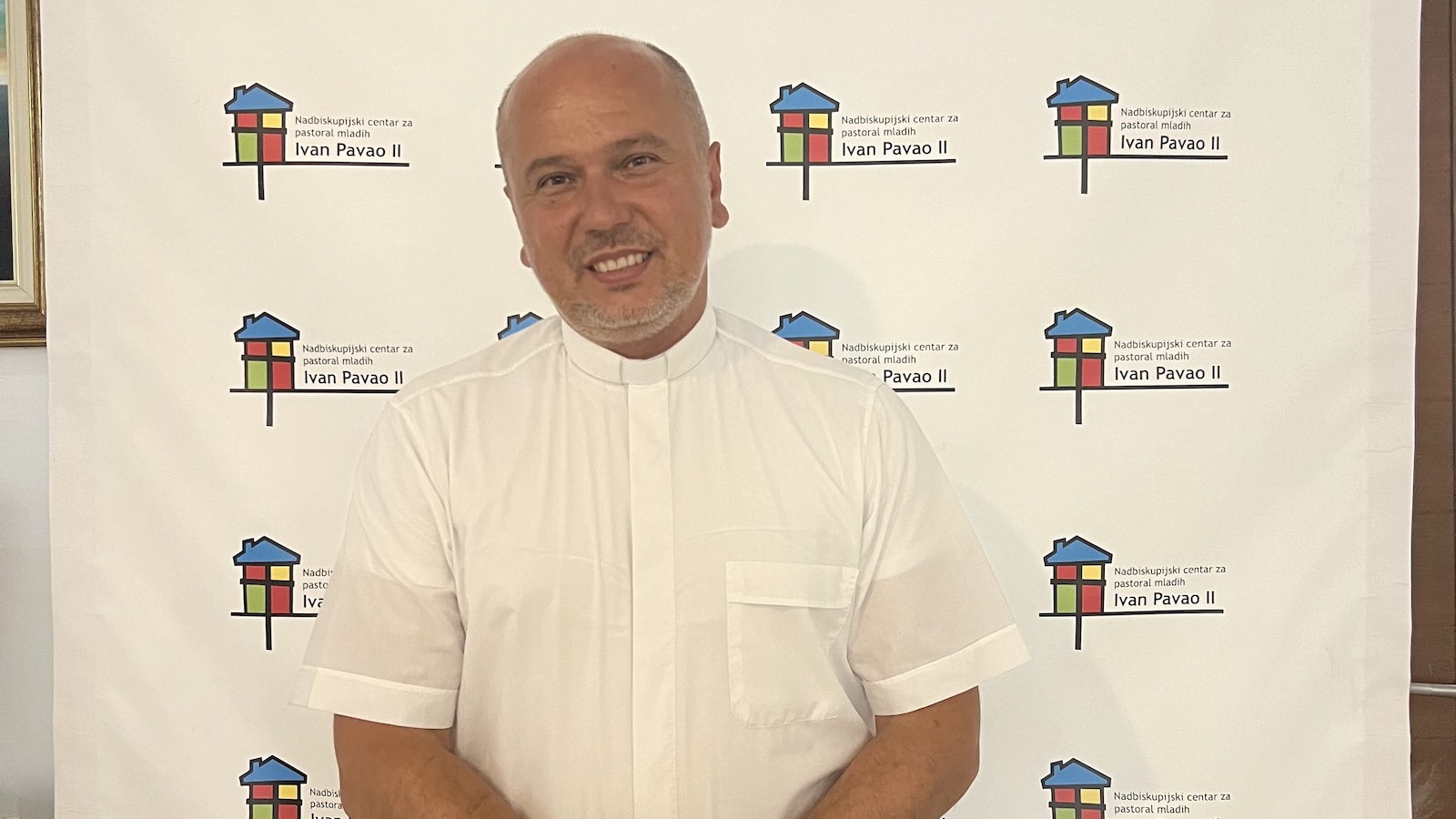
Figure 1: NCM Director Reverend Šimo Maršić, a tan-skinned man wearing a white clerical shirt standing in front of a backdrop printed with NCM’s colorful house-shaped logos with the text “Ivan Pavao II.” He has short hair and is standing with his hands clasped in front of him (Source: Julianne Meneses's personal photos).
As the center’s framework, every aspect of NCM is guided by three core principles: 1) Faith, the incorporation of Christian values in its activities; 2) Education, the expansion of knowledge beyond everyday experiences; and 3) Meeting Place, the creation of a singular space for youth to encounter and connect with one another. These three principles build off of the work of the center’s namesake and patron, Pope John Paul II, who strongly emphasized the vitality of empowering young people, especially in propelling growth and progress in society.
In 2019, NCM established Vision is Decision, an educational initiative geared towards 15- to 18-year-old students for the promotion of democracy and youth participation in politics. While an addendum to the participants’ existing education, the program differentiates itself from the formal curricula and school structures. Vision is Decision consists of three weekend modules throughout the academic year, bringing together approximately 50 students from five different high schools. While the topics may vary year to year, the core of the lectures and activities is uplifting youth voices in Bosnian politics and broader society. Above all, the program aims to build on the initiative shown by participants in attending these modules, fostering skills that will enhance their social, academic, and professional success. By nurturing this proactive spirit, the program seeks to equip participants with practical tools and strategies that support both personal growth and long-term achievements in diverse areas of life.
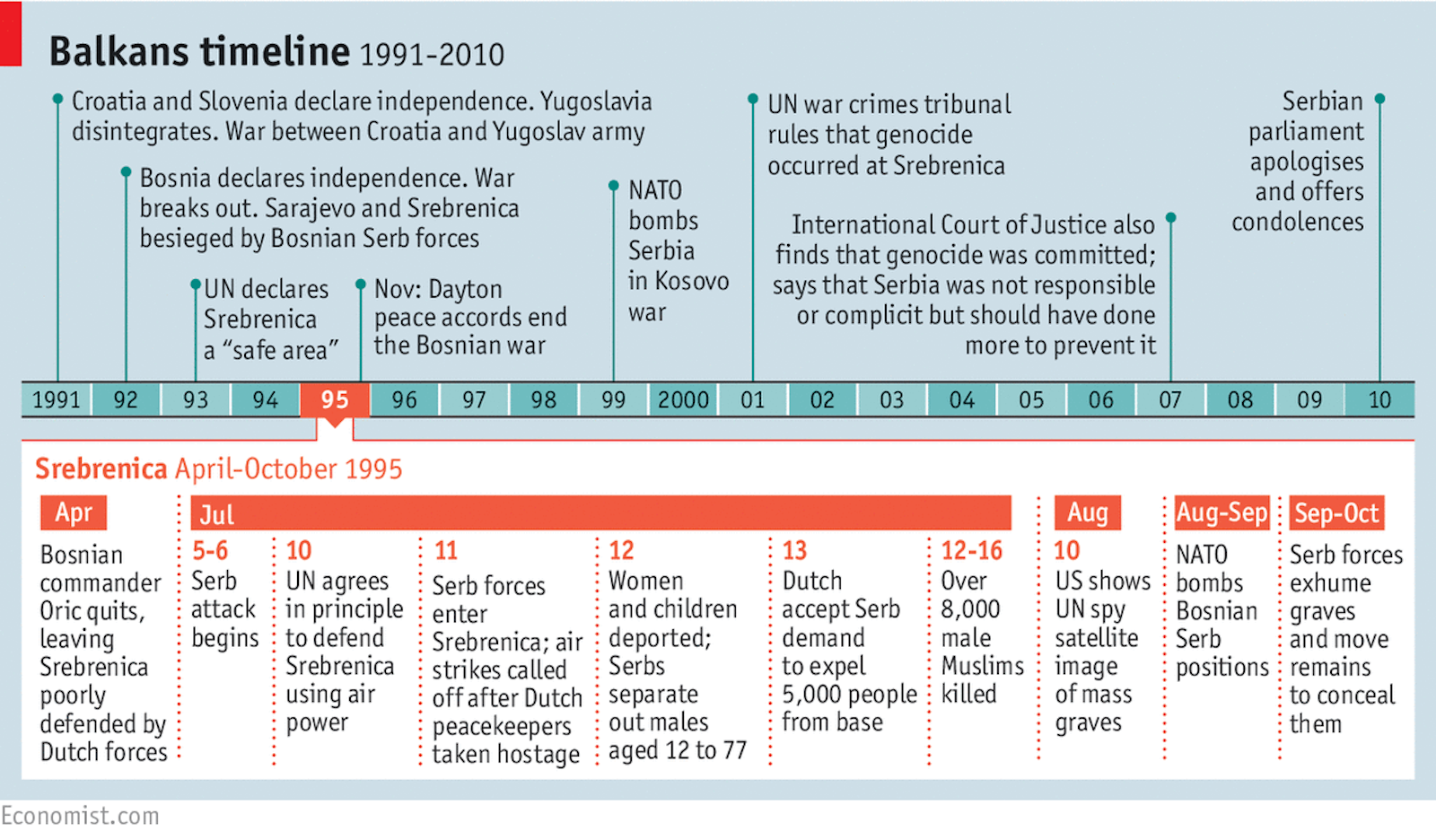
Figure 2: An illustrated timeline titled “Balkans timeline 1991–2010” shows major events from the breakup of Yugoslavia through the aftermath of the Srebrenica genocide. The top section marks key moments such as Croatia and Slovenia’s independence (1991), Bosnia’s independence and siege (1992), the UN declaring Srebrenica a “safe area” (1993), the Dayton peace accords (1995), NATO bombing in Kosovo (1999), UN and international court rulings recognizing the Srebrenica genocide (2001–2007), and Serbia’s parliamentary apology (2010). The lower section details events in Srebrenica from April to October 1995, including the Serb assault, the UN’s failed defense, forced deportations, the killing of over 8,000 Bosniak men and boys, U.S. satellite images revealing mass graves, and subsequent attempts by Serb forces to hide evidence. (Source: https://www.economist.com/europe/2015/07/11/amid-the-solemnity-squabbling)
As part of the breakup of the Socialist Federal Republic of Yugoslavia, BiH sought independence, holding a referendum on the issue in 1992 with strong support from Bosnian Muslims (Bosniaks) and Bosnian Croats. However, the question of independence intensified ethnic tensions as Bosnian Serbs heavily opposed secession. This opposition escalated into a military campaign primarily targeting Bosniaks, as well as Bosnian Croats. From 1992 to 1995, Bosnian Serb forces carried out a series of attacks and ethnic cleansings on civilian populations, including the Srebrenica massacre—a genocidal act that killed more than 8,000 Bosniak men and boys.
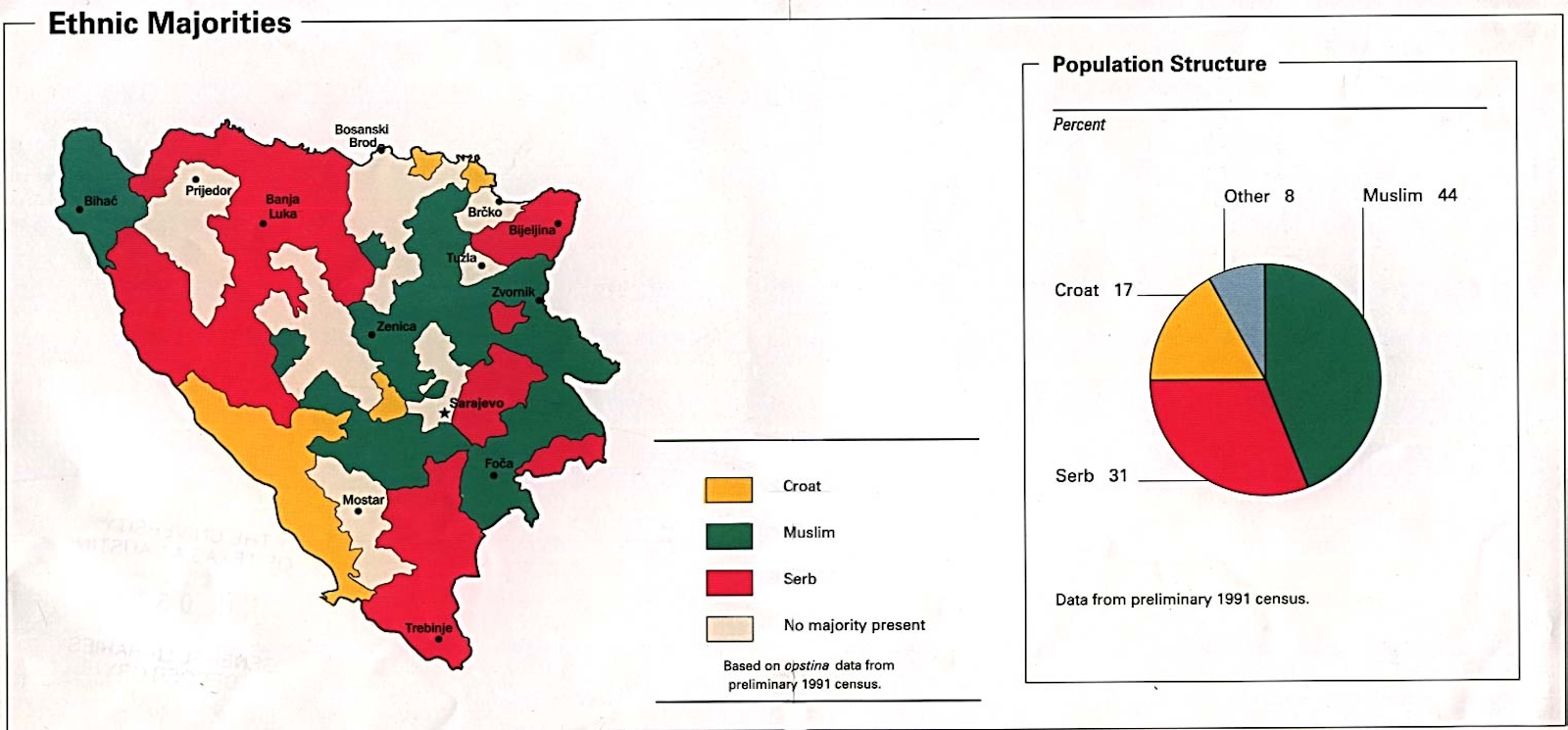
Figure 3: A map of Bosnia and Herzegovina shows ethnic majorities by municipality based on preliminary 1991 census data. Areas are color-coded: green for Muslim majorities, red for Serb majorities, yellow for Croat majorities, and beige for places with no majority. Major towns such as Sarajevo, Tuzla, Mostar, Prijedor, and Banja Luka are labeled. To the right, a pie chart titled “Population Structure” shows the overall demographic breakdown in 1991: 44% Muslim, 31% Serb, 17% Croat, and 8% other. (Source: https://maps.lib.utexas.edu/maps/bosnia.html)
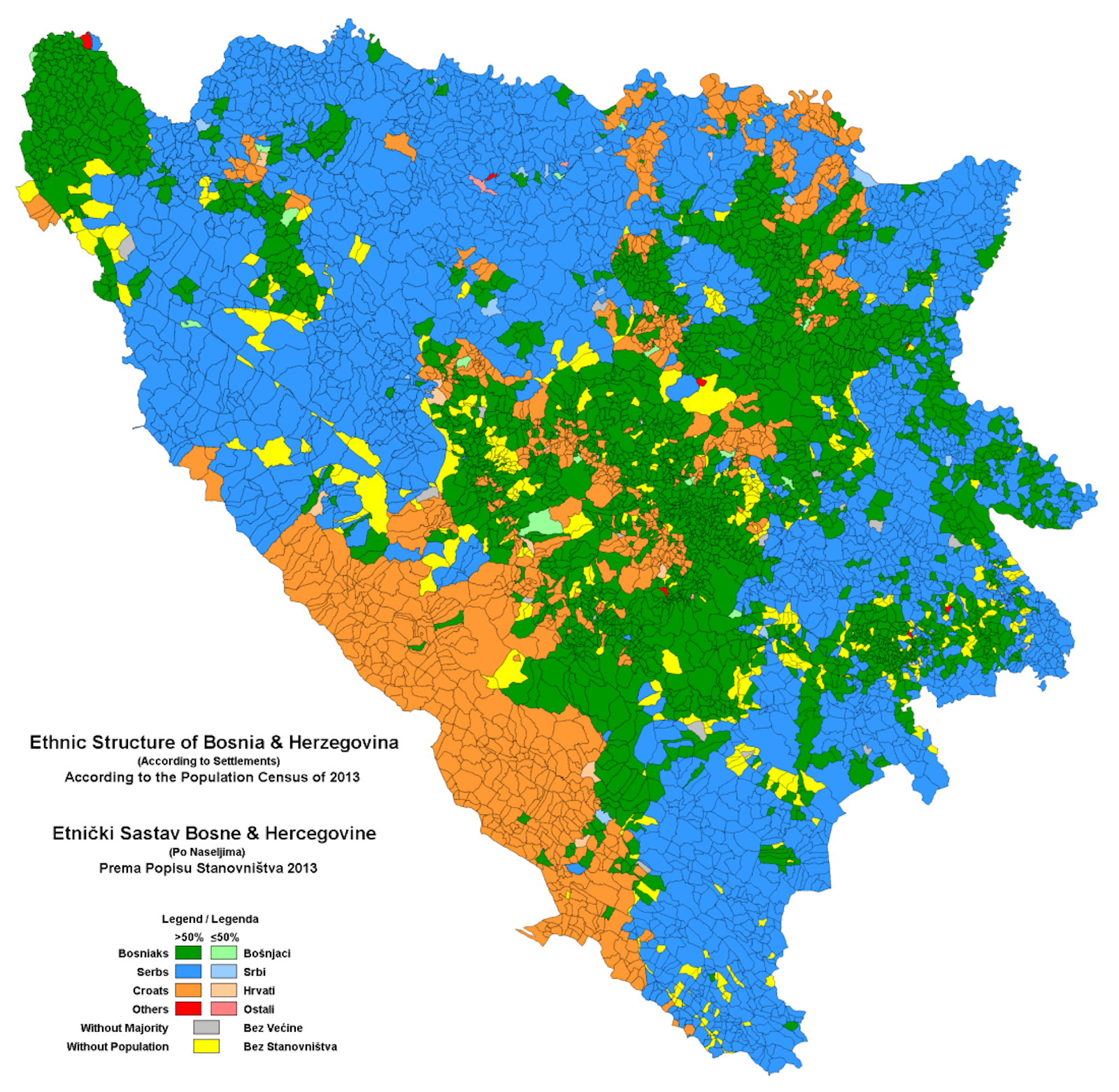
Figure 4: Ethnic map of Bosnia and Herzegovina showing settlement-level majority populations based on the 2013 census. Each area is color-coded: green for Bosniaks, blue for Serbs, orange for Croats, red for Others, yellow for settlements without a majority, and white for unpopulated areas. The map highlights post-conflict demographic patterns across the country. (Source: https://commons.wikimedia.org/wiki/File:Bosnia_Herzegovina_Ethnic_2013.png)

Following the signing of the Dayton Peace Accords in 1995, Bosnia and Herzegovina was established as a single state, consisting of two autonomous entities, the Federation of Bosnia and Herzegovina and Republika Srpska, and one self-governing administrative unit, the Brčko District. The federation is an ethnically mixed region, primarily home to Bosnian Croats and Bosniaks, with ethnic majorities evident in its smaller administrative units known as cantons. Although these cantons fall under the broader jurisdiction of the federation, each operates independently, with its own constitution, parliament, government, and judicial system. In contrast, Republika Srpska is a predominantly Bosnian Serb region divided into municipalities that function under a unified local self-government system.
Current State of Formal Education in Bosnia and Herzegovina
The program’s focus on developing individual skills arises from a combination of the general lack of skill-building in formal education and the pervasive influence of political propaganda, both of which were noted by interviewees. Although not singular to Bosnia, the country’s formal education system relies on a teacher-centered approach, where memorization and recalling of facts are emphasized rather than critical engagement with the material. This issue is exacerbated by the highly politicized nature of education in the country. Since education is governed at the cantonal level, this decentralization leads to significant variations in curricula. In monoethnic communities, this increases the risk of promoting ethnocentric narratives, as evident in the selection of approved textbooks by each canton. The “two schools under one roof” system remains a bastion of ethnic division in the country. The lack of a unified Bosnian identity is also shown through the decision of some schools to follow the Croatian curriculum, where Croat students learn about their ethnic country of origin rather than their national identity. With these inequalities in education, many young people leave Bosnia to pursue their studies and jobs abroad. However, the goal of Vision is Decision is to show youth that they all have a meaningful place in Bosnian society and that opportunities for growth and success can be found at home, together.
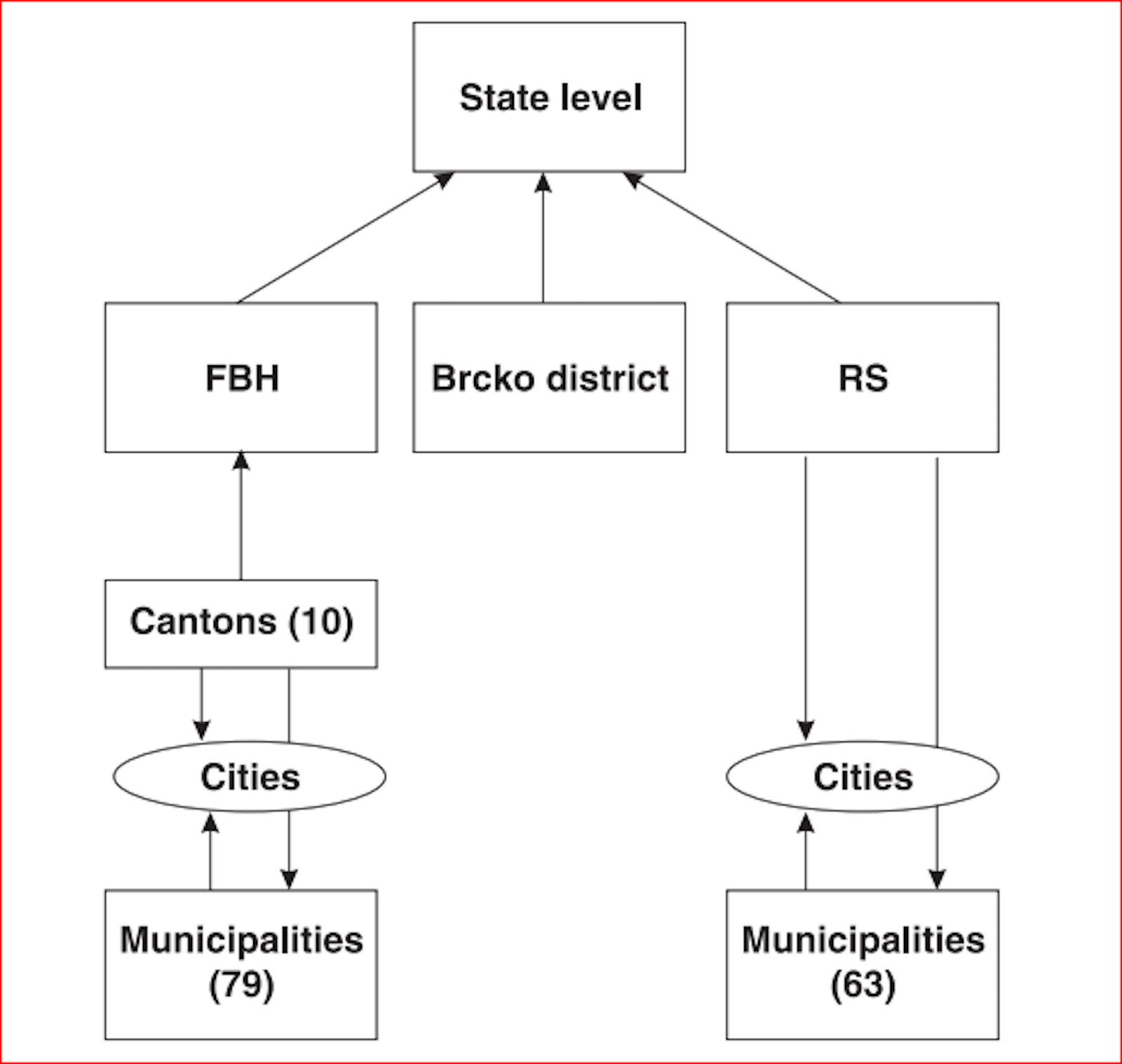
Figure 5: Organizational chart of Bosnia and Herzegovina’s administrative structure. At the top is the State level, branching into three entities: Federation of Bosnia and Herzegovina (FBH), Brčko District, and Republika Srpska (RS). FBH contains 10 Cantons, which further divide into 79 Municipalities and Cities. RS includes 63 Municipalities and Cities. Brčko District stands alone without subdivisions. The chart shows how governance is layered and distributed across regions. (Source: https://www.researchgate.net/figure/Structure-of-administrative-and-political-system-of-Bosnia-and-Herzegovina-BiH_fig1_354792230)
Challenging, Growing, and Leading Together: Youth Empowerment through Vision is Decision
The Cultivation of Democracy Through Non-Formal Education
Recognizing how formal education in BiH upholds ethnic divisions and prejudices, NCM deliberately steps outside such structures. Creating a countercultural pedagogy, NCM spurs youth to generate change within Bosnian society. As stated by Vision is Decision’s project coordinator, Žaklina Brnadić, the program was created “for youth to develop critical opinions and to learn how to manage this world we live in” (interview, June 19, 2024). Participants come to the realization that politics is not distant or separate from their lives—it directly involves and affects them. Overall, the center hopes to shape future leaders who will contribute to the growth and development of the country, stemming from their personal choice to become active citizens.
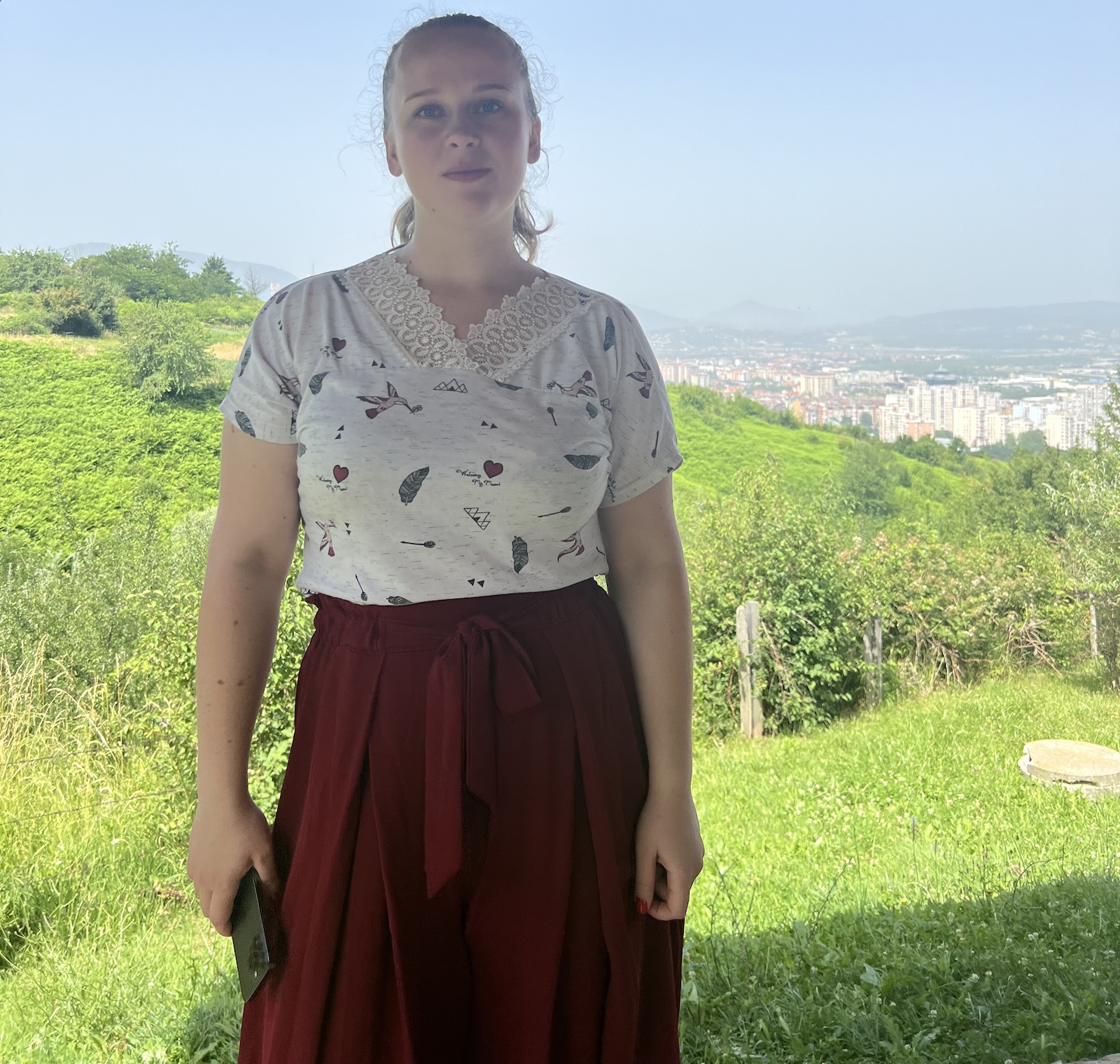
Figure 6: Vision is Decision project coordinator, Žaklina Brnadić, a white woman with blonde hair wearing a white shirt with lace detailing and printed designs, paired with a maroon skirt tied at the waist, standing under a wooden shelter at a scenic overlook. The wooden beams above are marked with graffiti. (Source: Julianne Meneses’s personal photos)
First and foremost, it is well-understood along the verticality, from faculty to participant, that the focus on the youth is exactly what makes Vision is Decision successful. The center’s reliance on participant feedback emphasizes the central role of youth agency, allowing youth to create their own curriculum to suit their needs and wants. Put simply in the words of Stefan Kukric, an NCM project coordinator: “We are here for them; they are not here for us” (interview, June 25, 2024). Thus, the structure of Vision is Decision is intentionally flexible and faculty use evaluations to ensure that NCM continually meets the evolving needs of its participants.
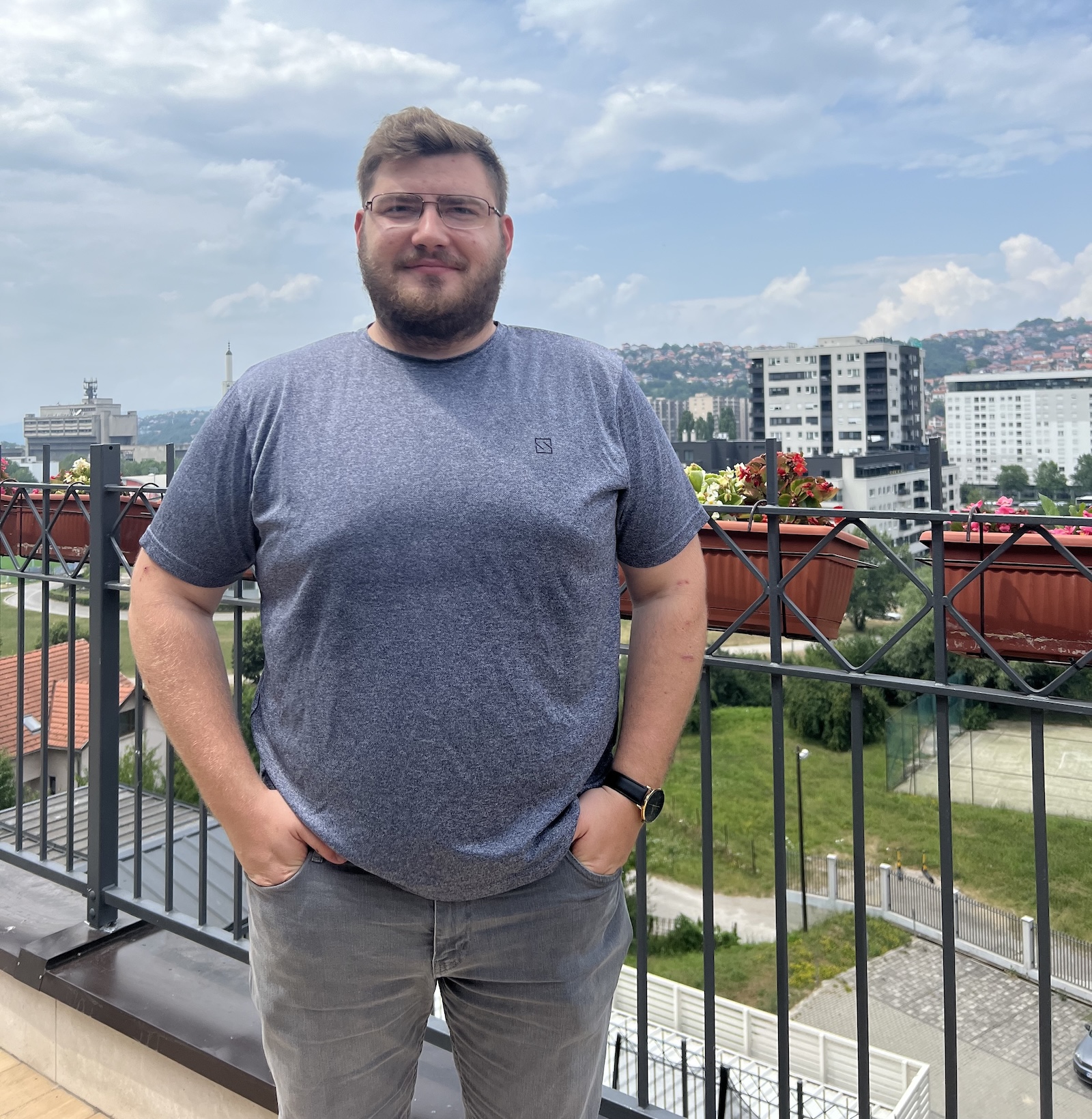
Figure 7: NCM project coordinator, Stefan Kukric, a white man with blonde hair wearing a grey t-shirt, grey pants, glasses, and a wristwatch, standing on a balcony. The background features apartment buildings and a hilly landscape under a partly cloudy sky. (Source: Julianne Meneses’s personal photos)
Through the employment of and adherence to a student-centered educational approach, Vision is Decision has participants exercise their individuality and freedom in the classroom, something unfamiliar to them in traditional school settings. Rather than positioning themselves as authority figures, lecturers uplift participant voices by creating a peer-to-peer dynamic. This relationship fosters a neutral learning environment that encourages open expression, sharing opinions, and asking questions. Dr. Oliver Jurišić, a philosophy professor in the program, highlighted the effectiveness of being "politically incorrect" in his lectures.
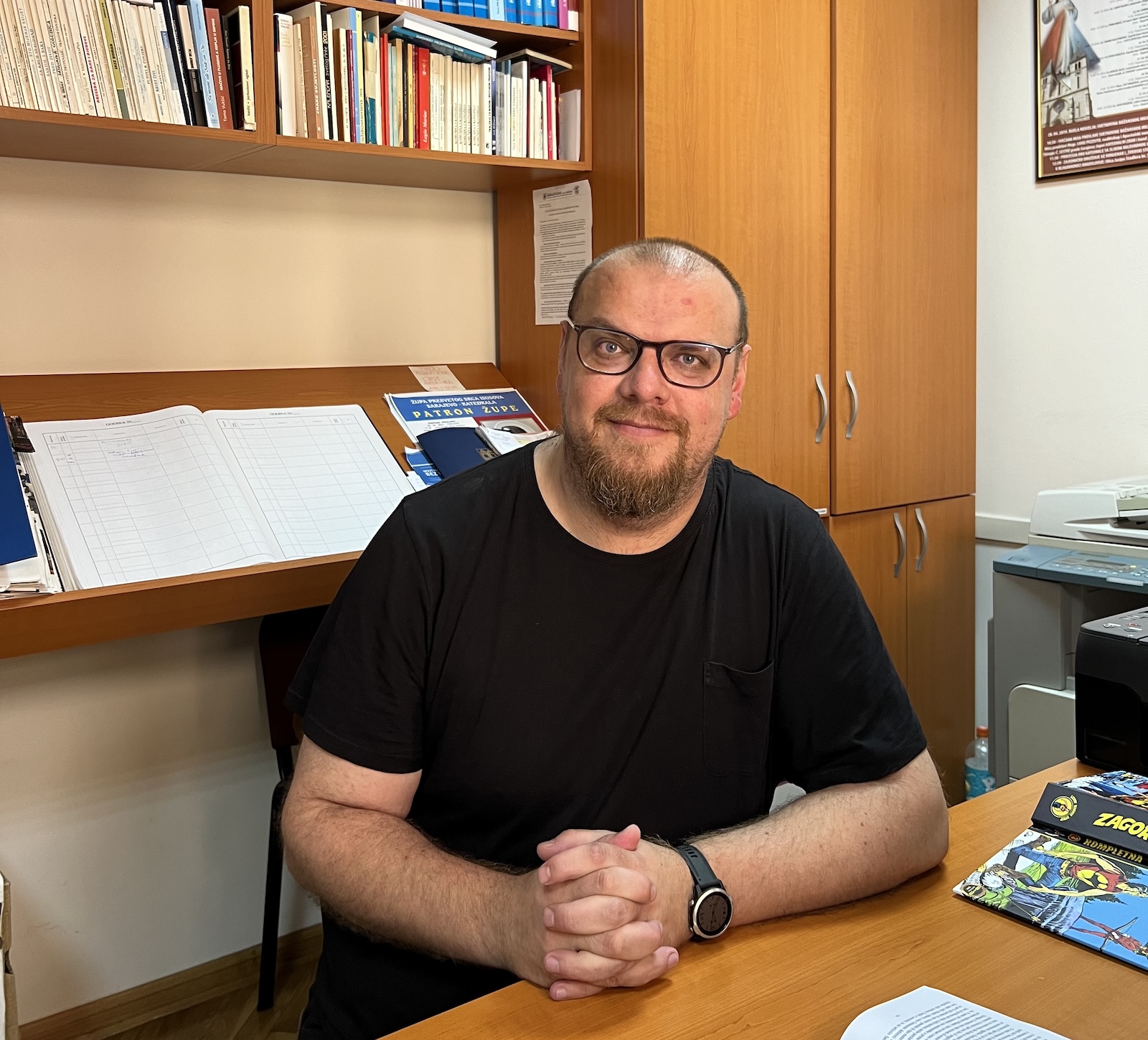
Figure 8: Philosophy professor, Dr. Oliver Jurišić, a white man wearing a black t-shirt and glasses, with a beard and clasped hands, sitting at a desk in an office. Behind him is a wall-mounted bookshelf filled with books and documents, and to his left is a wooden cabinet with storage boxes. (Source: Julianne Meneses’s personal photos)
You have to provide an environment which is not offensive. It's not like, "Let's go curse now." But you have to provide a space where they can speak freely and express their disagreement (Dr. Oliver Jurišić, interview, June 18, 2024).
As noted by Dr. Jurišić, this freedom of expression is not without structure or guidance. The ability to share their true thoughts are funneled into small group activities, such as debates and simulations, and participants learn how to have open yet constructive conversations. Through these collaborative exercises, participants not only build tolerance but also expand their existing knowledge by building on the insights of fellow peers. Unlike the publicized arguments between politicians, participants learn how to work with differing perspectives. Practicing respect for one another results in them coming out of the activity with a fuller understanding of the topic. Furthermore, since these exercises are so detached from formal education settings, participants do not view them as work but rather a fun activity to do with friends. There is no one right way to participate, allowing them to get involved in a way that is personally meaningful.
They have rights over what they create. School gives you a subject, they teach you, and then you have to accept it as is. Here, we have debates, and we can say, 'Okay, we agree or disagree.' Then, you have small groups working together. In school, you sit there and there's a professor. I think the power of coming together and discussing is underrated because, in a small group, nobody is teaching you. You're discussing, and then you create a group version of something (Alen Gulado, interview, June 21, 2024).
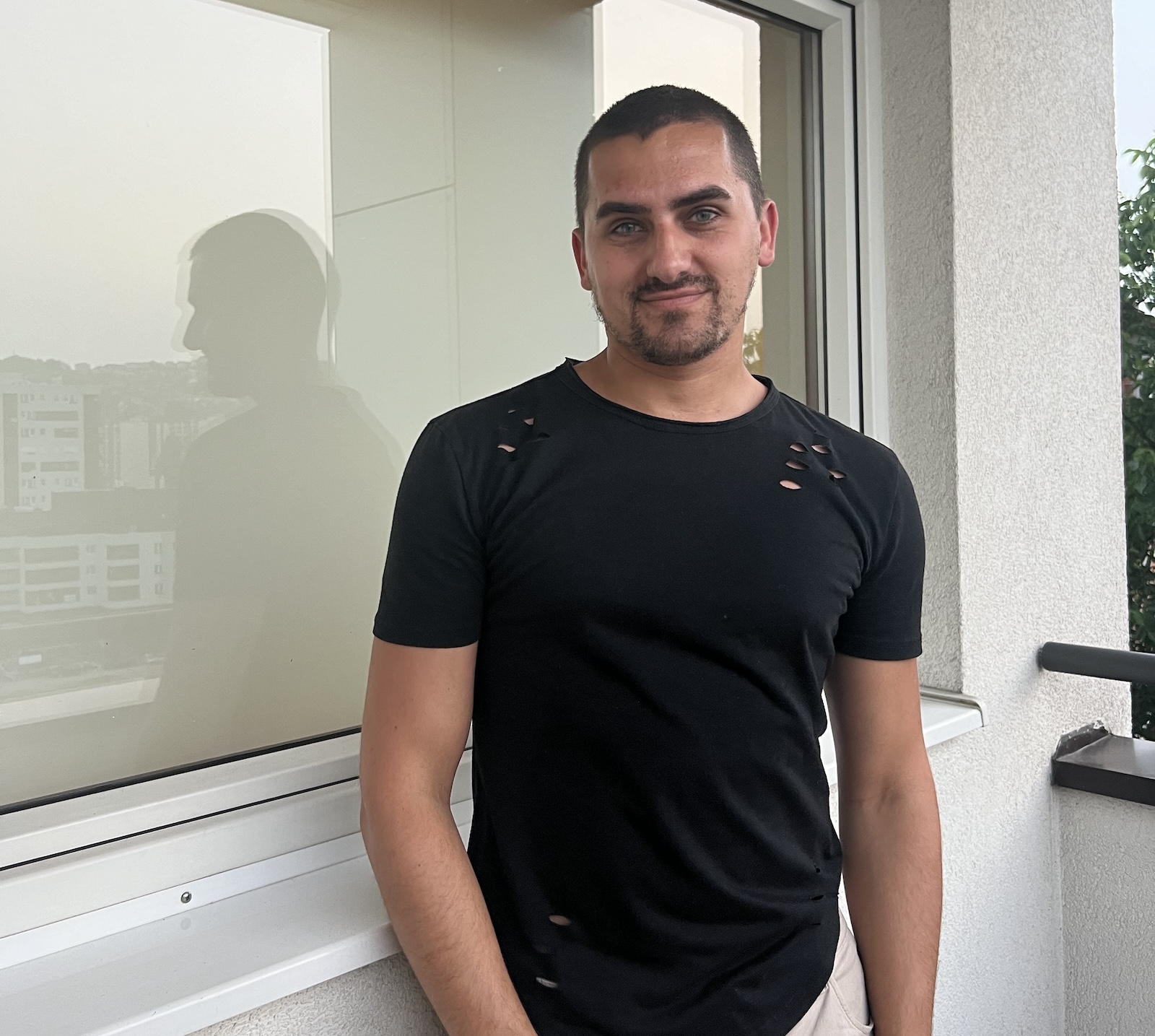
Figure 9: Political science lecturer, Alen Gulado, a tan-skinned man with dark hair wearing a black t-shirt with small holes and light-colored pants, standing on a balcony beside a large window. His reflection is visible in the glass behind them. (Source: Julianne Meneses’s personal photos)
With such agency in choosing how to engage with others and decreased academic stress, participants become active agents in the learning process. They become more invested and attached to their learning because “it's their property rather than some external product that somebody has given to them” (Alen Gulado, interview, June 21, 2024).
Beyond personal development, experiential group learning in non-formal education allows participants to gain a better understanding of how their government works and model what they believe should happen in government. Unlike in school settings, where they learn about their government strictly through definitions, which removes the personal component of politics, NCM fully immerses participants in the political process. As a result, they are able to reflect on and critique the actions of current politicians and other political leaders based on what they learned from Vision is Decision.
So, we had the chance to recreate that, and we held our own little elections in the center. That really helped me understand the purpose of it and how, with elections, we’re not supposed to sabotage other people, because that’s what’s mostly happening here (19-year-old female peer educator, interview, June 15, 2024).
The cultivation of agency is made even stronger with NCM as a constant presence in each participant’s academic development. It is vital that the center is fully integrated in their learning process, dispelling fear and providing support when needed, as they navigate a new academic territory. As Manuel aptly put it, “We need to be involved in politics somehow, and we need someone to guide us because we're new to this,” (interview, June 21, 2024).
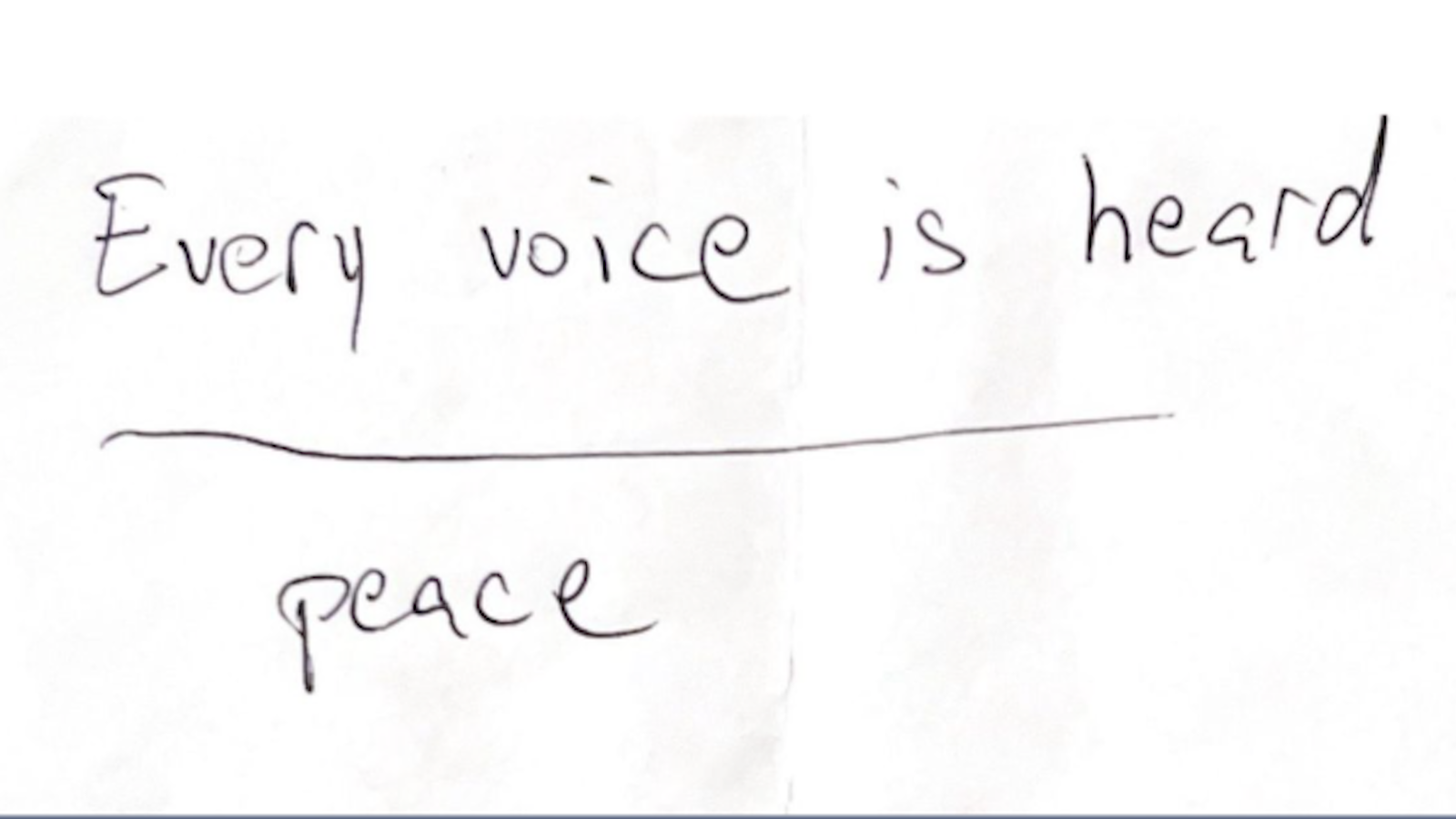
One way that Vision is Decision prepares participants for Bosnia’s political landscape and encourages informed political participation is by nurturing critical thinking skills. With developed reasoning and analytical skills, participants are less likely to be persuaded by political falsehoods and more likely to take appropriate action when they do hear them. Throughout the program, lecturers emphasize the importance of conducting proper research such as fact-checking information shared online and finding credible sources. What is more crucial is that participants demonstrate a retention of the skills and knowledge they acquired through Vision is Decision. After completing Vision is Decision, participants noted a deeper understanding of what democracy and how it should function. When asked during focus groups, "What does democracy mean to you?" Their responses highlighted the importance of personal freedom of expression, alongside a strong emphasis on love and respect for others—values that are consistently modeled throughout the program. With a more concrete definition of democracy, participants have a clearer picture of what Bosnian society should look like and feel more prepared to participate in civic life and actualize their visions.
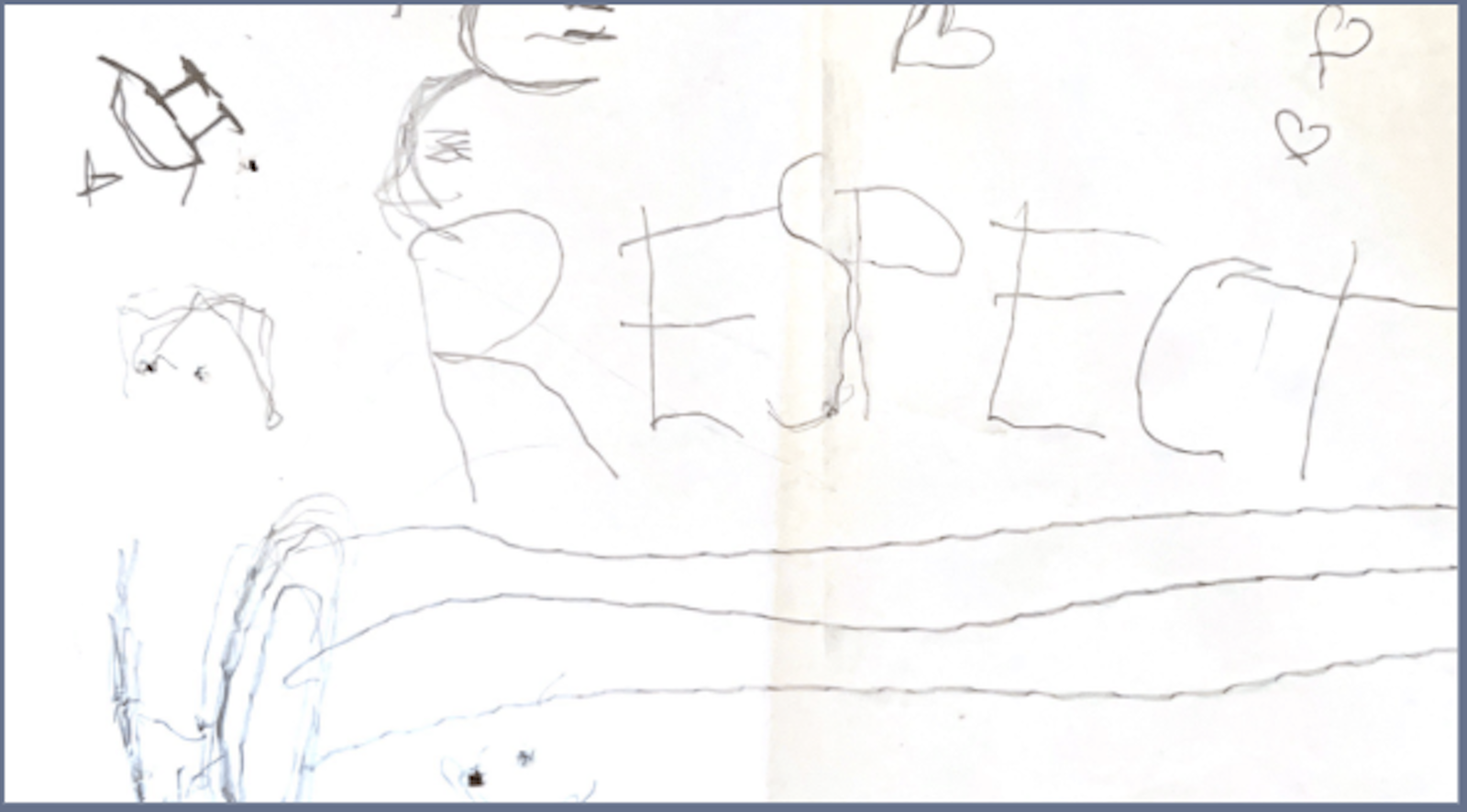
Figure 10: A handwritten note expressing personal views on democracy. This note says, "Respect" with designs drawn around it. (Source: Julianne Meneses’s personal photos)
Figure 11: A handwritten note expressing personal views on democracy. This note says, "Every voice is heard" and "peace," (Source: Julianne Meneses’s personal photos)
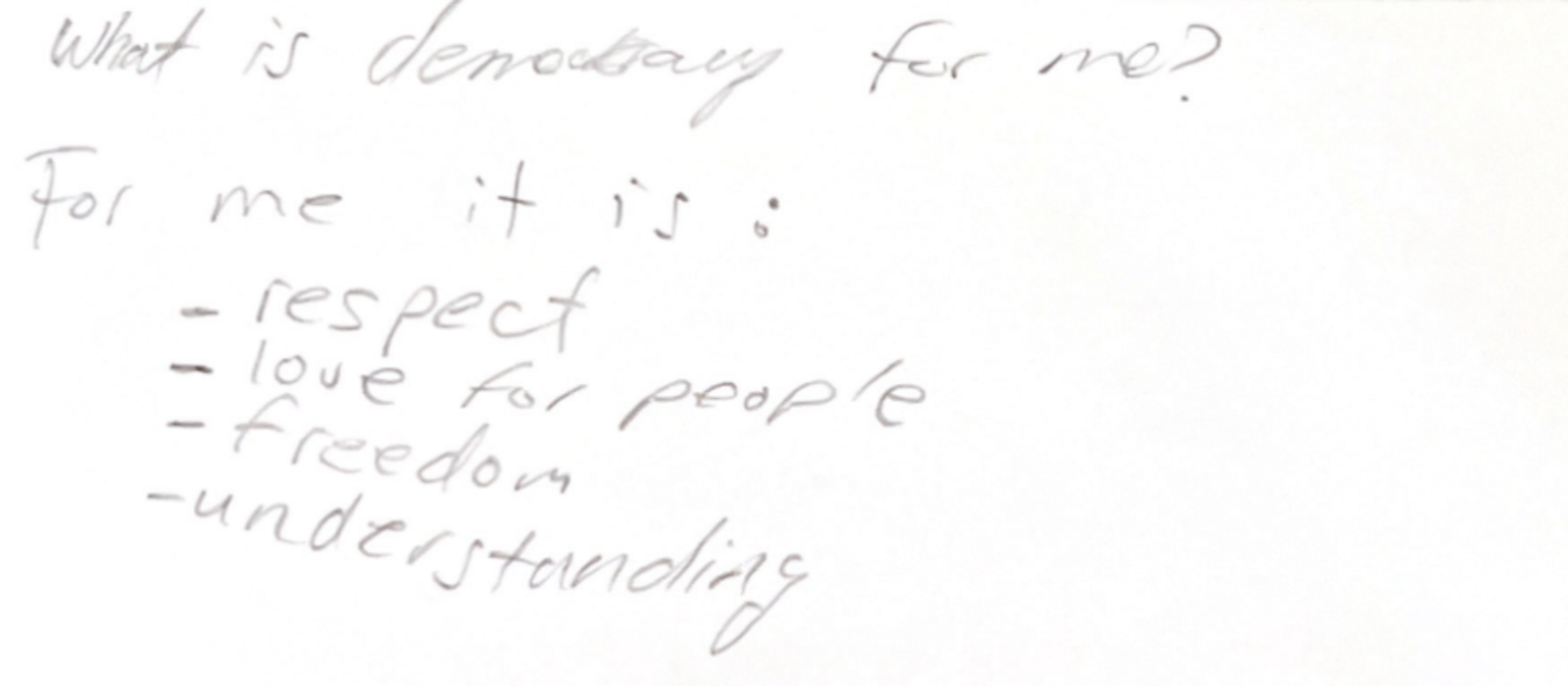
Figure 12: A handwritten note expressing personal views on democracy. This note says, "What is democracy for me?" and lists, "respect, love for people, freedom, understanding," (Source: Julianne Meneses’s personal photos)
One avenue of political engagement that Vision is Decision heavily stressed is voting. In the 2022 presidential election, 51.45% of the voting-age population casted their ballot. Thus, the program’s education model strives to instill the message that their vote is their voice, and to use it to their advantage. Almost all former participants highlighted their gained understanding of the importance of casting their ballot due to their involvement in Vision is Decision. Moreover, not only just the act of voting but also developing their own reasons behind who they are voting for.
I've learned a lot in the last year about democracy. I want to educate myself more. And once I get the chance to vote, I want to vote for my own reasons, and have my own opinion, and not just ask my parents (19-year-old female peer educator, interview, June 15, 2024).
Building on their agency, participants step outside of the opinions and narratives of their family, religious leaders, and society as a whole. They see voting as a tangible way to translate their own political values to political action. Thus, Vision is Decision starkly contrasts itself from the formal education systems with its real-life application of skills and knowledge. Not only do participants understand the structures of their government but they actively participate in it.
With the center’s unwavering support, the program nurtures participants’ potential, embedding in them a stronger sense of self. Youth come to understand that if they don't take action, someone else will act on their behalf. More importantly, they do not view the political corruption they see as a permanent facet of Bosnian society, but rather, something they have the power to change in their lifetime. By developing critical thinking skills, such as communication and online literacy, participants make educated decisions based on their own research and experiences. This increased confidence in reasoning also strengthens their resilience against political manipulation. The impact of Vision is Decision ultimately combats political disillusionment among youth, instilling hope for the development of democracy and the future of their country. However, it is important to note that while democracy is the central theme of Vision is Decision, participants are able to branch out to topics not directly related to politics and continue to refine their skills. The success of the program lies in part of the participants’ application of what they have learned to other parts of their lives, outside of politics.
The Creation of Community and a Unified Bosnian Identity
While the goal of Vision is Decision is to bring young people closer to politics and the development of democracy, there is an even greater focus on fulfilling the center’s founding purpose: to bring young people together within the same space. Through an emphasis on and lived practice of relationship-building, participants are able overcome ethnic divisions sustained through formal education, politics, and greater society. Without external influence or pressure, participants have the agency to choose whom to build relationships with—an opportunity they might not typically have in their daily lives. Through interethnic connections built at the center, participants can carry that open-mindedness and care for others into their own communities. Reverberations of tolerance and acceptance move outside of the center.
Understanding that education can be utilized as a tool of division, formal education institutions feed into ethnocentric narratives through utilization of different textbooks and language policies. Within the federation, each canton’s Ministry of Education has the power to decide which textbooks are acceptable to include in a school's curriculum within its jurisdiction. While Republika Srpska is a much more centralized region, due to its majority Bosnian Serb population, education serves its own ethnic interests. A shared identity is often predicated on a common understanding of a country’s history, especially in regards to times of great conflict like the war in the 1990s. With three different versions of fact being presented to Bosnian youth, and each version contradicting one another, it is much more difficult to establish a unified identity. As Dr. Jurišić strikingly pointed out during his interview, “Is it Croatian? Or Bosnian? Or Serbian? What kind of history do we have?” (Dr. Oliver Jurišić, interview, June 18, 2024).
Thus, the center combats issues of division by fostering a Bosnian identity on a localized level through its programs and activities. Once establishing close bonds with other participants, youth feel more inclined to return to the center. As NCM is one of the few places where they can meet up with their newfound friends, participants begin to take part in its other programmatic activities, deepening their connection to NCM and feeling more committed to its mission. In the case of Vision of Decision, faculty of NCM have even noted their belief that the success of the program is less on if the participant fully engages in the educational components and more on if the participants fully engage with each other. Above all, the center focuses on creating interpersonal relationships between youth.
When you ask them, they don't care about politicians, they don't care about parties, they don't care. They just want to hang around. That's fine. We emphasize that they are here together, making new friendships (Žaklina Brnadić, interview, June 19, 2024).
The creation of community within the center transcends the boundaries of ethnicity and religion. This is not to say that participants feel the need to hide their ethnic and religious background but rather they do not reduce themselves to only those identities. As Manuel stated in a focus group, “I ask you for the person,” (focus group, interview, June 21, 2024). In other words, it is more important for participants to know that their potential friends share similar values and beliefs rather than solely ethnic and religious identity. They are pushed to look beyond the surface and find commonalities with others they might be taught to believe are different from them.
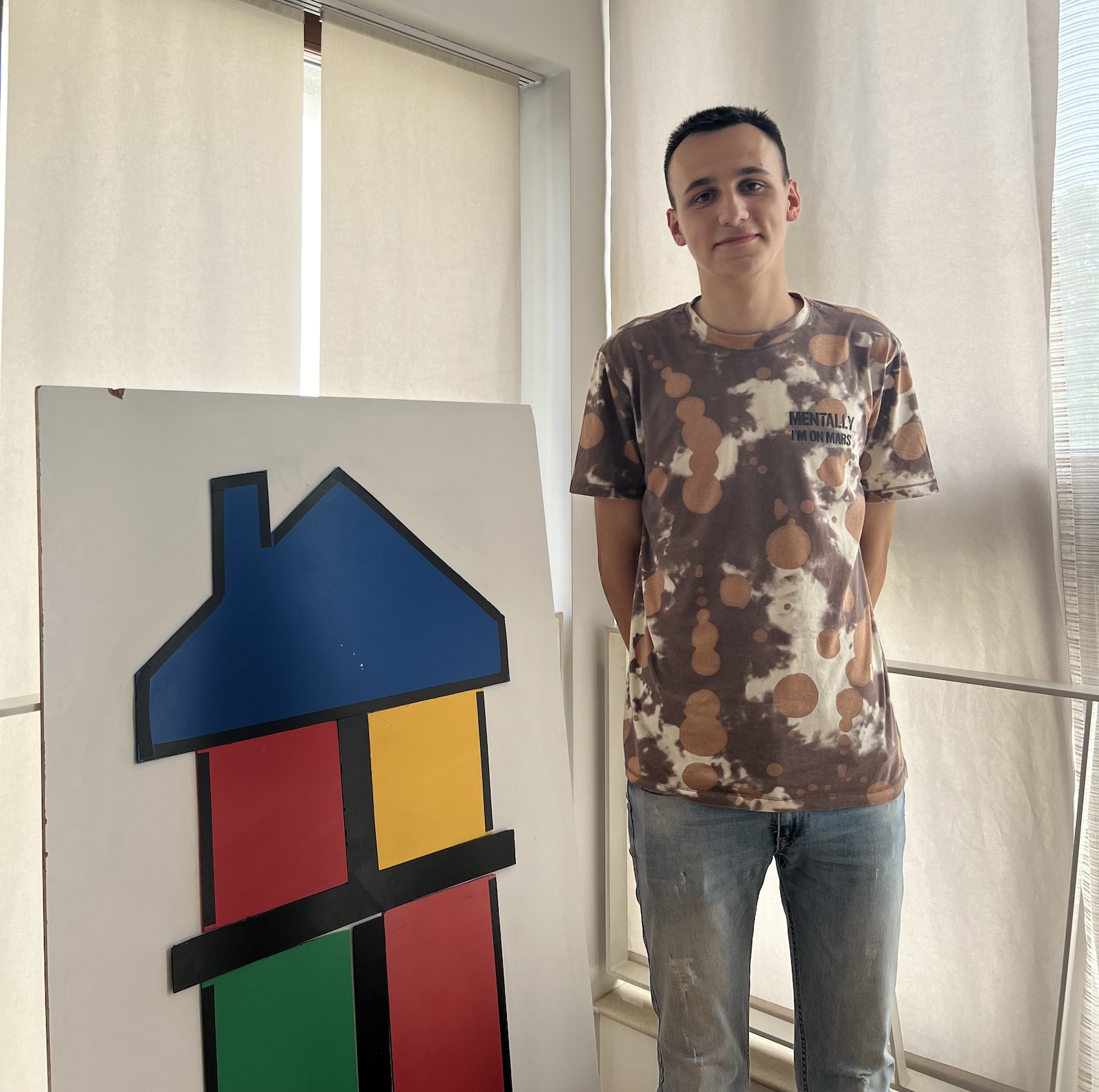
Figure 13: Former participant, Manuel, a tan-skinned man with dark hair wearing light blue jeans and a brown-and-white patterned t-shirt that reads “MENTALLY I’M ON MARS,” standing indoors beside a large board featuring NCM’s logo of colorful geometric design resembling a stylized house, with a blue triangle as the roof and red, yellow, and green rectangles below. (Source: Julianne Meneses’s personal photos)
The unified microcosm of Bosnian community at NCM actively fights against the global perspective of Bosnia and Herzegovina that many youth wish to change. Instead of being viewed as a country marred by war and permanent ethnic division, youth are writing a new narrative of peace and love. Those participating in Vision is Decision understand the impact they have by the simple act of being friends with one another. It is a visual demonstration of resilience and national identity; that they will not be swayed by political falsehoods that seek to separate them. As a former participant stated in a focus group, “We are doing peacemaking. So, we will actually show the world what Bosnia is—the true side of Bosnia,” (focus group, interview, June 24, 2024).
Passing Knowledge and Experience to the Next Generation: Giving Back Through NCM
Not only does the center emphasize the importance of bringing youth together but also to make the time they spend together meaningful. Through cultivating positive transformative experiences, NCM instills a strong sense of gratitude in participants towards the center, to the point where they do not always return as participants, but as peer educators. Above all, the act of volunteerism inherently connects you to others by being in service to others. Rather than deriving fulfillment from financial repayment, they find fulfillment in the relationships they form with new participants.
Through a culture of mentorship, NCM ensures the success of not only their individual programs, but the center as a whole, by encouraging current and past participants to return to the center in a leadership capacity and invest in the next generation. Peer educators are an essential role to the functioning of the center. Beyond faculty and adjunct lecturers, peer educators supervise participants in their daily programming, sometimes leading workshops themselves. It is important to have former participants fill these positions, following the sentiment of having “young people working with young people,” (18-year-old female peer educator, interview, June 15, 2024). The three peer educators interviewed for Vision is Decision were former participants, either of Vision is Decision itself or of other programs at NCM.
I'm here at the center for two or three years. I started as a participant in Vision is Decision, everything was great. They also invited me to become an educator. So, now I have the chance to share my knowledge and my knowledge of these themes with other participants (Una Kovachevich, interview, June 15, 2024).
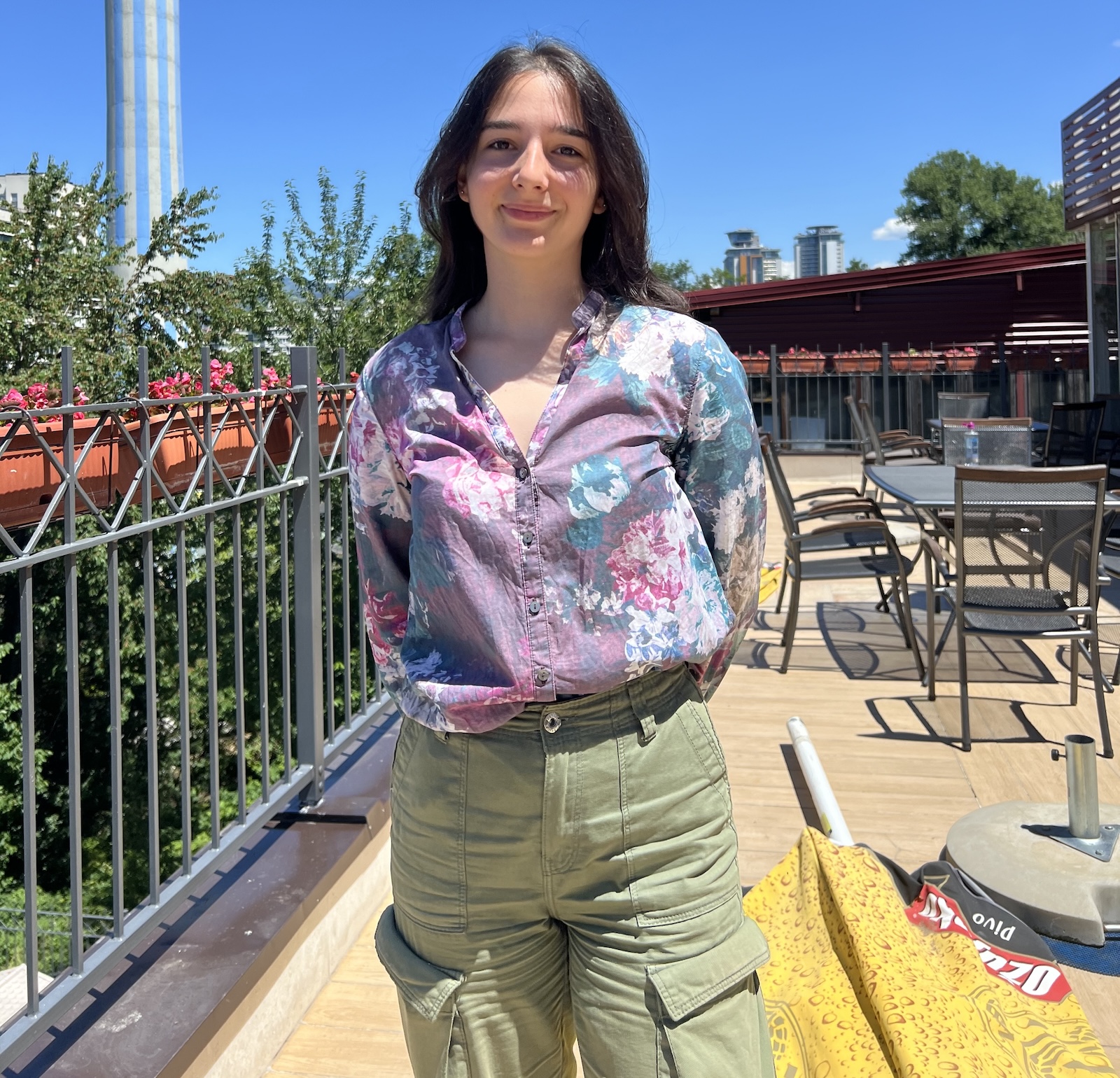
Figure 14: Peer educator, Una Kovachevich, a white woman with brunette hair wearing a floral-patterned shirt and green cargo pants, standing on a sunny rooftop terrace. The background features a tall red-and-white striped industrial chimney with a green emblem, trees, and nearby buildings. (Source: Julianne Meneses’s personal photos)
I was at democratic project, but I was just enrolled as an educator, not a participant. I've been here at the center for seven years as a participant, but three years as an educator (Ana, interview, June 15, 2024).
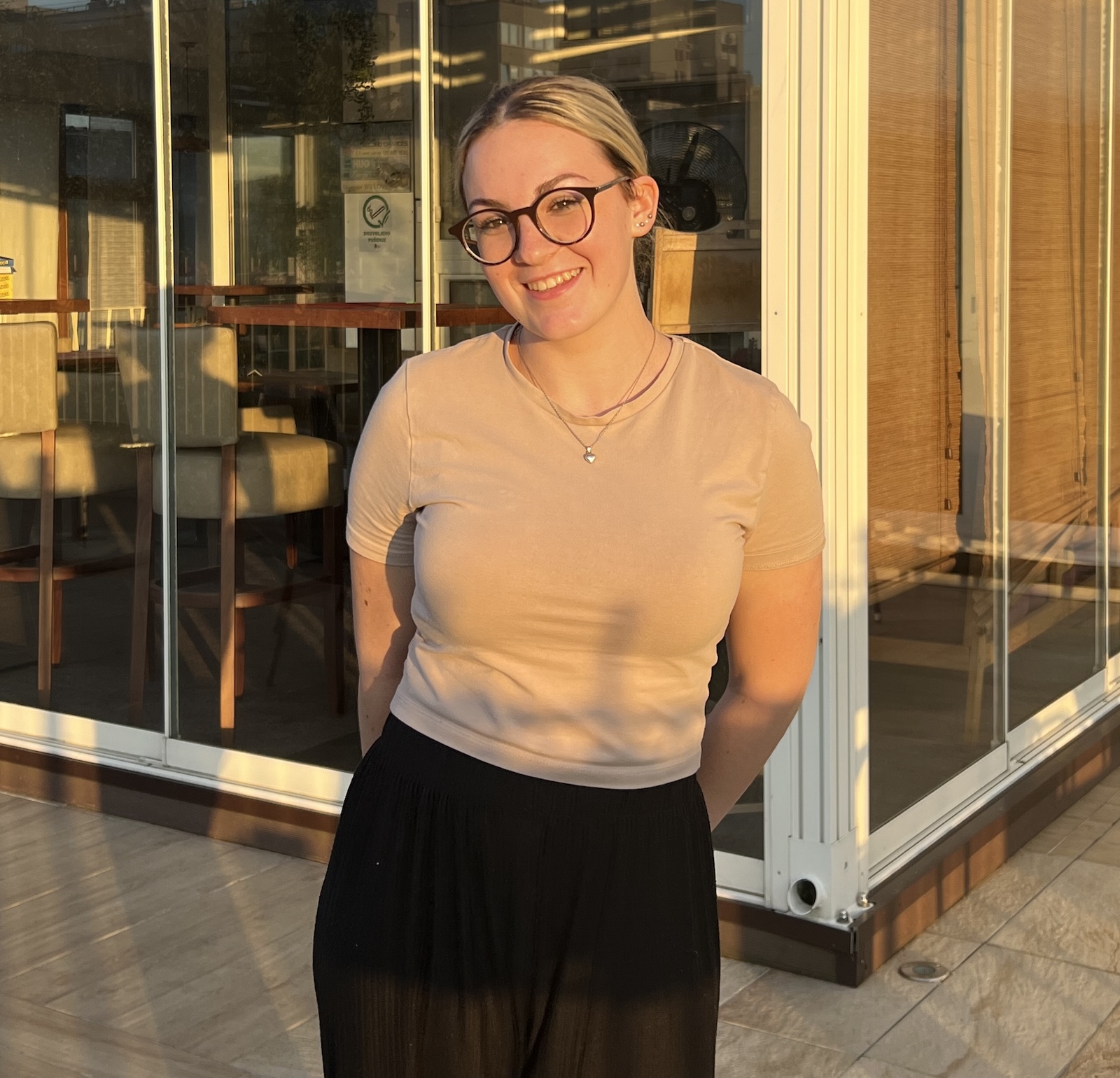
Figure 15: Peer educator, Ana, a white woman with blonde hair wearing a light beige t-shirt, black pants, round glasses, and a necklace, standing outdoors in front of a modern glass-walled building during sunset. (Source: Julianne Meneses’s personal photos)
All three noted how they were personally asked to become peer educators by Žaklina due to their involvement in NCM in years prior and leadership abilities they demonstrated in their participation. This recruitment process was heavily highlighted in the interview with Manuel who excitedly talked about his steps towards becoming a peer educator. He stated: “[Žaklina] saw potential in me and said, ‘I'm going to sign you up to be a peer educator here at the project,’” (interview, June 21, 2024). Even in his participation in the focus group, Manuel explicitly mentioned that he could see himself working at the center for some time after his studies. The identification of potential and recruitment of peer educators is not a new phenomenon but rather an intentional cyclical process.
Current faculty members of NCM also noted their connection to the center started in their youth which they happily continued well into their adulthood. Even Žaklina, the project coordinator of Vision of Decision, who has been working at the center for the last year and a half, had her start with NCM volunteering as a peer educator while in university. A similar story was shared by other project coordinators interviewed, like Martina and Stefan, who first came to NCM as participants, continued to volunteer at the center during their studies at the University of Sarajevo, and then became full-time employees for the center.
I stayed after I graduated from high school. I came here to study at university, and then I became a peer educator of the Youth Center in the interreligious project. More or less, during my bachelor's, I stayed and did some summer camps as well (Martina Vidovic, interview, June 25, 2024).
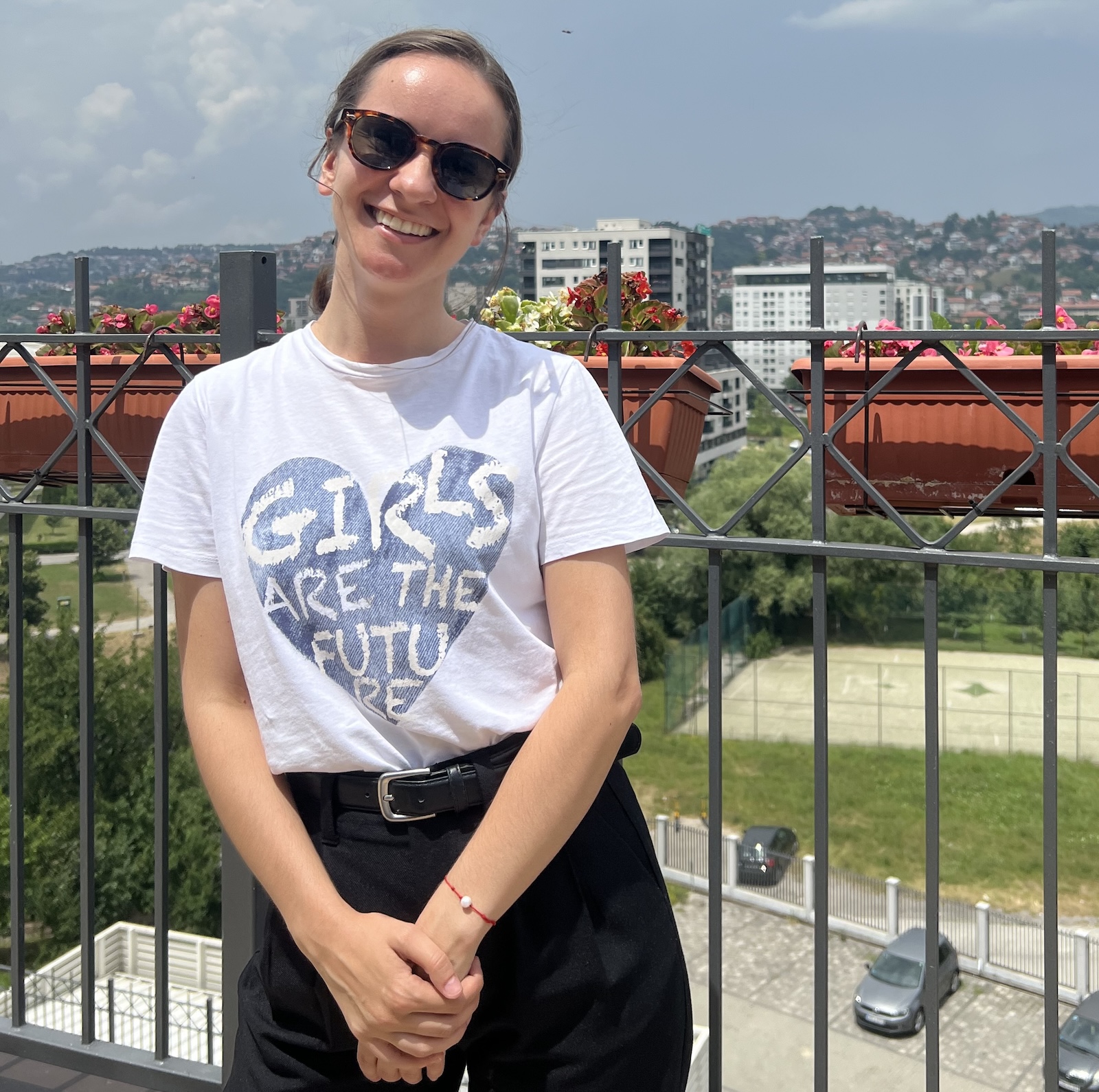
Figure 16: NCM Project coordinator, Martina Vidovic, a white woman with brunette hair wearing sunglasses, a white t-shirt with a blue heart and the words “GIRLS ARE THE FUTURE,” and black pants with a belt, standing on a balcony. Behind her, flower boxes line the railing. (Source: Julianne Meneses’s personal photos)
I started with the youth center 10 or more years ago in primary school and then in high school as a volunteer. And then, I went to some activities and like that, and in my faculty, Don Simo, he was my professor. I started here as a volunteer to see everything, and when I left seminary, I started to work here because Don Simo told me that they needed more people here. So, I asked him if I can start work, and I started actually in the kitchen. And then, here in the restaurant, and after a few months, I started projects (Stefan Kukric, interview, June 25, 2024).
The culture of mentorship transforms individual responsibility into collective action where past members use what they have learned and apply it in their leadership role to help future generations of participants. Dr. Jurišić opined that Bosnian society, as a whole, lacks a profound understanding of the “common good,” meaning to contribute to the development of a society without compensation or other extrinsic motivations (interview, June 18, 2024). By paying it forward, peer educators reinforce and institutionalize the pedagogy and values set forth by the center. Lastly, the skills they build as peer educators—public speaking, event management, and conflict resolution—allows them to serve as peer educators in an informal setting within their own communities. Not every young person will be able to come to NCM; thus, it is evermore important that participants can bring the center to their own peer circles.
Religion’s Role in Democratic Education and Engagement
Although NCM is explicitly a Catholic youth center, the level of direct incorporation of its religious values varies from program to program. To move past the pervasive influence of religion within government, it may be intentional of the center to have less of an emphasis on religion for Vision is Decision, especially as BiH is officially a secular country.
I'm not sure, when they have some public speech, and they use quotes from Bible or Quran. It's devastating for me. That's not democratic society. We live in a secular country, so there is no space for religion during your public speech (Žaklina Brnadić, interview, June 19, 2024).
In fact, many former participants noted that they do not see connections between politics and religion, or believe that they should have any connections, viewing the two as separate entities. However, on a foundational level, the general values of the three major religions present at the center—Orthodox Christianity, Roman Catholicism, and Islam—heavily intersect with the general goals of democracy. For example, it is a Christian duty to be in service of others, not only to those around you, but to society as a whole. One way to be a responsible steward to God’s creations is through civic engagement, such as voting, ensuring wellbeing and care for all.
Many participants noted a study where it concluded that “the religious bodies in the countries are among the bodies that have the highest trust among citizens,” (Alen Gulado, interview, June 21, 2024). While religious institutions should not endorse specific political candidates, they can play a vital role in encouraging democratic action among their followers, having them exercise their agency in a way that aligns with the values of their chosen faith.
This finding should be further explored in future research to understand the current role of religion in today’s Bosnian society and if it meets the expectations of current generations in Bosnian society.
Beyond Education: Vision is Decision and the Future of Bosnian Youth
Through Vision is Decision, NCM is playing its role in shaping the minds of youth in Bosnian society. Model-based instruction allows participants to explore on their own terms, enriching their minds to include the possibilities of their country and their role in its development. While its mission is not to replace the formal education system, the center seeks to supplement such existing systems. Vision is Decision allows participants to navigate their multiple identities, whether it be ethnicity, religion, political affiliation, in a post-Dayton country, forging their own path. Above all, NCM not only creates a strong sense of agency but provides tangible avenues for participants to exercise their agency.
Youth Center "John Paul II": You are a masterpiece!. Video 1: Youth Center "John Paul II": You are a masterpiece! Video 1: 9:10 - 10:20: The celebration of the thirteenth anniversary of the Youth Center in 2020. The video features a studio conversation with guests discussing the center’s development over the past 13 years, highlighting volunteerism and various youth-led projects. (Source: The John Paul II Youth Pastoral Center YouTube channel)
The views expressed in this student research are those of the author(s) and not of the Berkley Center or Georgetown University.
Featured Person: Julianne Meneses Person