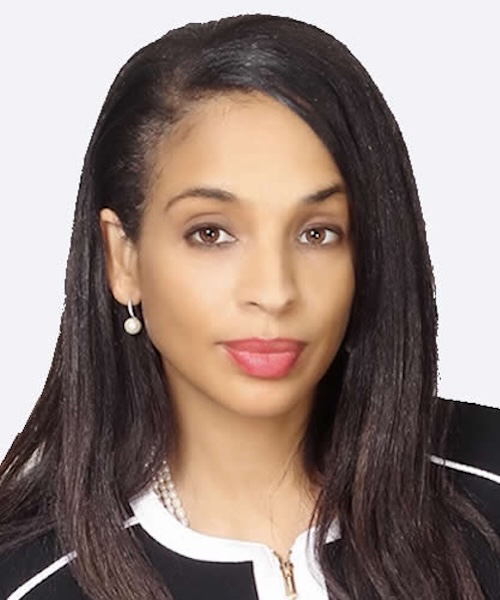
A Discussion with Ndidi Okonkwo Nwuneli, President/CEO of the ONE Campaign
With: Ndidi Okonkwo Nwuneli Berkley Center Profile
March 16, 2026
Background: As the leader of ONE, Ndidi Okonkwo Nwuneli brings a deep commitment to development and a confidence in human potential, particularly in Africa. She and the ONE team have always seen critical roles for faith communities as advocates and actors. In this March 2026 discussion (by Zoom) and subsequent exchanges with Katherine Marshall, she highlights ONE’s commitment to engaging faith communities and determination to shift the narrative on Africa towards one that recognizes its potential. In the discussion, she traces her trajectory from a childhood in Nigeria to college in the United States, then business school and a career in consulting and as a social entrepreneur, focused on agriculture. A referral from a devoted Board member brought her to leadership at ONE, and that in turn brought her to the G20 Interfaith Forum in Cape Town South Africa in August 2025.
Can we start with ONE’s central focus and your role in driving that forward?
I was drawn to ONE’s history of fighting for justice and equity and to the conviction of its co-founders (including Bono) that “where one is born should not determine whether they live, and that none of us are equal until all of us are equal.” I take pride in advancing the vision, passion, and values of the founders, as well as the brilliance, creativity and commitment of the team. Bono’s commitment to the Christian faith and the example of his life have also been deeply inspiring. All of this made ONE a compelling place for me.
When I was appointed as the first African President/CEO of ONE in early 2024, I recognized that, at this critical time in Africa’s history, leading the organization would require forging new local and global partnerships, mobilizing catalytic and innovative financing to ensure healthy livelihoods for the most vulnerable, drive sustainable and equitable growth in Africa, and ensure transparency and accountability in the deployment of resources at every level. ONE’s co-founders, staff, and board have worked tirelessly over the past two decades, and its mission has never been more important. “I am honored to lead the organization in this next chapter of growth and impact.”
Over the past two years, my role has focused on building upon ONE’s strong foundation to position the organization for the future. I have worked to ensure a deeper partnership between African nations and G7 countries, fighting for life-saving medicines and humanitarian support, pathways to sustainability, and a future where African countries can fully finance their own health systems, while reducing under-five mortality and poverty, driving inclusive growth and good governance.
As a champion for the World Bank IDA21, and the African Development Fund of the African Development Bank, I have fought alongside colleagues to secure successful replenishments. ONE also actively supported the Gavi and Global Fund milestone 2025 replenishment by demonstrating a strong return on investing in life-saving medicines. In 2025 when the African Union hosted the G20 for the first time in history, ONE galvanized key stakeholders around the cost of capital and the opportunity to address the unfair risk premium placed on African debt, and with the flattening of USAID, has focused on the future of health financing in Africa, and pathways to sustainability—starting in Senegal and Sierra Leone and deepening our credibility across the Continent.
It was wonderful that you came to the G20 Interfaith Forum in Cape Town last August, bringing this context and background. You know full well what a heroic effort is involved: to bring the best of the religious voice into the global agenda. I'm curious as to how you imagine this work in the future.
Many congratulations to you and the team! I am so glad I came to such a wonderful event. It was powerful to sit with different faith communities and talk about what matters to us. Right now, more than ever, faith voices in America are powerful, so we can’t let the US G20 presidency in 2026 pass without a strong faith voice that conveys ideas and experiences from the vast array of communities. And it’s time to look ahead to the 2027 UK presidency. ONE is invested in both the G7/8 and G20 processes as opportunities to take stock of what is happening at the grassroots level and to convey that to global leaders.
How does ONE engage with the complex world of religious communities?
We've seen with ONE's Faith Summit that bringing together people of faith who have not traditionally been in the public square or seen themselves shaping policy gives them the opportunity to use their voices. It empowers them and shifts their worldview. They go back to their congregations more rooted in reality, able to be more effective in their roles. We find that the grassroots engagement within faith communities allows important issues to surface and gain momentum.
We've built that out quite well in the US and we are partnering with key stakeholders to do the same in the UK.
What do you see as leading issues for 2026 and 2027?
ONE focuses is on fair financing, because we believe that drives growth. We believe debt restructuring is fundamental. The Jubilee year was last year, but we've not given up on debt restructuring as a pivotal piece of what we must do at this time. We thank the Pope for his leadership and the entire Jubilee community—including Jubilee USA and partners worldwide. Twenty-five years ago, we secured $110 billion in debt relief. There are still opportunities for debt-for-health, debt-for-climate and debt-for-education swaps, as well as broader debt restructuring across many parts of the world.
Another priority is fighting for healthier lives and life-saving medicines. We've seen the power of innovation and the power of engagement to reduce under-five mortality by 50% in the last two decades. We believe that by leveraging innovation, data and political will, we can reduce it even further. Across faiths, there is a shared belief that children should not bear the consequences of challenges created by adults. We want to partner with faith communities to advance the fight for healthier lives for children under five. This can be a really important platform for convening action for the G20. We can also start to imagine what the international development community should look like beyond the G20 and what these countries must do together.
Those are some thoughts we have on the G20 process. It’s going to require grassroots mobilization, because ultimately Congressional districts matter, community voices matter. The political cover to make the right decisions has to bubble up from the bottom rather than from the top down, as top-down approached to leadership no longer resonate.. That's what we want to replicate, especially in the UK, building on the history of “Make Poverty History”, which shaped the movement and our work at ONE.
That’s a wonderful and very helpful vision. I feel more optimistic and more inspired already!
Your life and career are remarkably full of variety and impact. To start off, how did you get into the work you do today?
I was born and raised in Enugu, Nigeria, to academic parents. My mom is American, my father is Nigerian, and they're both professors. They raised us with a sense of responsibility and commitment to service.
What was the religious side of that background?
Interestingly, my mother is a Jewish American, non-practicing, white, and my father is Anglican, Episcopalian, also not practicing. Thus I grew up in an intellectual home. It was actually university students on our campus at the University of Nigeria Enugu who would come to our house on Sundays and invite us to go to church. Nigeria is 50% Muslim and 50% Christian, but we lived in the Southeastern part, which is largely Christian. In my community, I observed joy, peace, love and service in the lives of many of the people I interacted with in Sunday school. When I turned ten, my mom said, "What do you want for your birthday?” And I said, "I want to be baptized." So all five of us (four girls and a boy) were baptized the same day. We got to pick our Godparents, and we were baptized in an Anglican church.
I had a fervency for God and a desire to learn more about my faith, and to reflect Christ’s example. I went through the confirmation process and got confirmed, so I could take Holy Communion. I used to go for all the classes they offered.
Today, I would call myself a Christian—a Bible-believing, non-denominational Christian. I am really compelled by non-denominational churches. I think denominations divide us instead of uniting us and have created unnecessary divisions in the body of Christ. That's my conviction at this time.
When I was 16, I moved to the United States. That was not initially the plan, but at that time, there was military rule in Nigeria and a lot of civil unrest. The universities were targeted, because that's where a lot of activism comes from (it still does). All around the world, young people have voices and there they were taking on the military. Nigerian universities were shut down, as were secondary schools. Professors were even being arrested. This was in the early '90s: 1991 and 1992. I left Nigeria in 1991 and came to finish my senior year of high school in the United States. I combined it with my freshman year of college at a school called the Clarkson School in upstate New York (part of Clarkson University). I then applied to the Wharton School of the University of Pennsylvania. That’s where I went to college.
After I graduated, I started working at McKinsey & Company’s Chicago Office, and then went to Harvard Business School (HBS). At McKinsey, I really fell in love with the social innovation and the social enterprise landscape. It felt very natural to me. One spark came between my first and second year of business school in the summer of 1998. I received different job offers, but I chose to go to Ramallah, in the Palestinian territory, with eight other Harvard students who were assigned to Israel, Jordan and the Palestinian territory. My internship was focused on assessing the cost of border closures on small businesses in the Middle East. I also spent the summer after HBS working with the Ford Foundation’s West Africa office, focused on microfinance.
I have always loved the power of social innovation to change lives and achieve impact. That's what spoke to me early in my career, and it was very rooted in my Christian faith, particularly the call to be the salt of the earth and light of the world. It spoke to a desire for service, driven by purpose. I had a very clear vision during my tenure at McKinsey that my role was to help create businesses that will not only employ young people and women, but also foster a private sector that drives inclusive growth and ensure sustainable development.
There was another factor at work: changing the narrative, the story about Africa.
How did your concern about the images, the narratives about Africa play out in your life and career?
When I came to the US, I was confronted with a very dangerous single story. The face of Africa was a hungry child. The face of poverty was a female farmer from Africa. This narrative was very one-dimensional and it was not the full picture of what I had experienced or observed as a young person born and raised on the Continent. I recoiled from this single story, and I felt that part of my mandate was to change the narrative of Africa, from a hungry child to a successful female entrepreneur, and to help create the next generation of leaders who would transform the continent. So while I worked at McKinsey after Wharton, I spent four months in our office in South Africa—and then post-business school (which paid for), I supported the firm’s growth efforts on the continent.
And then I got a call from a very successful Nigerian entrepreneur, Fola Adeola. He had started Guaranty Trust Bank, one of Africa’s leading banks today. He said, "I heard you want to move back to Nigeria, and I want to offer you some jobs." He offered four options, three in the private sector. The last one he mentioned was FATE Foundation, a nonprofit he was starting to help young people launch and grow businesses. And I was like, "That's the one."
He basically convinced me, so I left McKinsey, and came back to Nigeria, to serve as the pioneer executive director of the FATE Foundation.
That’s quite a new enterprise! What appealed to you in the new challenge?
At that time, I was 25 years old. To have the opportunity to run a foundation at such a young age was a gift. He was a great mentor for me, and he really took me under his wing.
And from this point, I became a serial entrepreneur! After FATE Foundation, I started Leadership, Effectiveness, Accountability, Professionalism (LEAP) Africa. LEAP Africa was different from FATE, in that it focused on helping young people become leaders of today and tomorrow. The reason I created LEAP Africa was a recognition that while young people can start and grow business, without an enabling environment, those businesses struggle to thrive.
LEAP focused on inspiring, empowering and equipping dynamic, principled leaders who would transform Africa, starting with young people, helping them to become leaders of today and tomorrow. We developed a curriculum for university students to lead in their communities, and then another program for secondary school students; today, LEAP equips teachers to deliver our curriculum—focused on civics, ethics, employability and social innovation.
So your focus was on young entrepreneurs and the context within which they worked.
Yes, that basically was a big part of my journey. LEAP still exists today – and is 24 years old! It has gone on to expand and reach young people in eight African countries. I no longer serve on the board of LEAP Africa and have moved into more of an informal advisor role. I'm so proud of Board and the team and how we continue to touch lives.
One of the things I introduced was leadership training on topics like succession, because succession is an issue we face in many organizations. We need to build organizations that outlive us, but we also need to step out of the limelight at the right time. I've modeled that in all the organizations that I have started. It’s not enough to teach; you need to live it. We've written two books on succession and really pioneered that work.
So what was your next chapter?
From LEAP, I got into the agriculture and food ecosystems. Interestingly, it wasn't really a deliberate choice, but rather more a combination of deep interests and circumstances.
In 2007, I was nine months pregnant and I had come to the US to have my second child. My husband was then shot in the knee, in Nigeria. It was a fluke; it's not as if people get shot every day there. But it was quite traumatic for us. As you can imagine, it wasn't an easy time, with me in America about to give birth. Both my husband and I have dual nationality. Our backgrounds are somewhat similar, as my husband is half American (his mom was from Pennsylvania. His parents met at the University of Wisconsin, while my parents met at Cornell University, in the '60s. We met at Harvard, at a conference my sister had organized in 1993.
After he was shot, he said, "I'm not going back to Nigeria. I want to break." So we moved to Senegal and my husband joined a private equity fund.
While we were in Senegal, I built on a longtime love for food and agriculture. Agriculture was my favorite subject in high school and college and being in Senegal gave me an opportunity to pursue this interest. The first food crisis in my adult life had just started. I had a chance to start consulting work in agriculture, first for Oxfam and then for many other organizations. That led to the birth of Sahel Consulting, which is one of our leading companies today, as well as AACE Foods, a food processing company; African Food Changemakers; and Sahel Capital, which my husband runs today.
In total, four companies emerged from our time in Senegal—and opportunity to tackle critical challenges, transform ecosystems and create inclusive growth and sustainable jobs.
We were both honored by Harvard Business School in 2021 and received the Alumni Achievement Awards the highest honor bestowed by the school. We got to give a speech together, and had the unique opportunity to share our faith and how our very painful negative experience actually led to the birth of four companies that have made a continuing difference in the lives of many people. We ran all those organizations as co-founders or founders.
But what took you to the ONE Campaign? That’s a very different type of challenge.
I got a call from a headhunter. They said, "We've heard you're doing all this stuff to change narratives about Africa, to empower the next generation of leaders and to transform the food ecosystem. There's an opportunity to come and do it on a global stage, through the ONE Campaign."
My first reaction was that advocacy was not for me. I'm a serial social entrepreneur. But the headhunter was very convincing, as was Bono and the Chair of the ONE Board, Tom Freston.
So I resigned from all the roles I had and came to Washington DC!
Can you elaborate on how the ONE Campaign has engaged with faith communities?
ONE’s faith programming mobilizes trusted faith leaders within ONE’s broader advocacy work to speak with moral clarity in the public square. By equipping and connecting these leaders to decision-makers, we help inform decisions and support life-saving investments at scale. Faith leaders have played a key role in our work across the United States from inception, playing critical roles in fighting for life-saving medicines and humanitarian assistance. From the early days of PEPFAR, faith leaders, including Christian musicians, partnered to galvanize bipartisan support for arguably the largest and most impactful program in US history, which has saved over 26 million lives.
Building on our track record, ONE initiated a Global Faith Council in 2025, engaging Christian, Muslim, Jewish and Mormon leaders from the United States, Canada, the UK, Germany, South Africa, Nigeria, Kenya, Sudan and one Buddhist leader from Japan to support our country-specific and global efforts to fight for justice and equity and secure the investments that ensure healthier lives and economic opportunities in Africa.
In November 2025, ONE invited 80 faith leaders from across the United States to engage with colleagues from our Global Faith Council for a powerful week, demonstrating faith in action. Together, they shared from their work, prayed together, and held 160 meetings on Capitol Hill, including 17 with Members of Congress, and re-energized our partners. This gathering was truly impactful from many perspectives. It was the first time that about 50% of the faith leaders were visiting Washington DC and leveraging their voices to shape policy. During their Hill visits, the faith leaders checked on unpaid staff, offered prayers and blessings, and kept the focus on service. Even in a difficult moment for the country, faith leaders carried a clear message: U.S. leadership grounded in compassion saves lives and strengthens communities, at home and abroad. Programs like PEPFAR, the Global Fund, and Gavi deliver results that protect health, support stability, and create economic opportunity.
Through the Faith Summit, they also gained new partnerships and returned to their congregations with a commitment to replicate similar initiatives in their communities and home countries.
A gift of working with ONE has been the inspiration of Bono. He is an exceptional human being. He loves God and he lives by example. There are very few people like him and working under his guidance and leadership at ONE has been one of the high points of my life.
Looking ahead, what are some of your broadest priorities?
I am really committed to mobilizing African philanthropy to support and invest in organizations and movements focused on transforming the continent. In 2021, I co-founded an organization called Wealth4Impact. I also helped create the Africa Philanthropy Forum and served on its board for six years.
When I was writing my first book, Social Innovation in Africa: A Practical Guide for Scaling Impact, I realized that so many of the organizations that I had started were struggling to scale, and many of those that were scaling hadn't been started by Africans. That really struck me. The reason that they couldn't scale was because they weren't getting funding at the rates that others were. There was a real bias at work: can we trust African organizations to deliver at scale? Do they have the capacity to scale? That led me to partner with others to establish the Africa Philanthropy Forum (APF). I'm still very actively involved in APF.
Over the past few years, I have realized that many Africans are a step removed from seeing themselves as philanthropists. They don't have structured trusts or strategies for giving. Those who are starting to make money, while they're giving a lot (Africans are extremely generous), are not doing it in a very strategic and systematic manner. They're more reactive.
What we've been doing for the last four years is, for free, helping families structure their giving. We are basically creating cohorts to learn together. It takes three to four months to help one family, which has propelled our learning circles. We have recently selected 25 families who are learning to give together, but also learn to give more systematically. It’s starting in Nigeria, and it is expanding across Africa. My co-founder is based in Kenya, so we've been helping Kenyan and Nigerian families. This is something I want to continue scaling. Hopefully that will solve a lot of our funding and scaling problems, and ONE will definitely be one of the many beneficiaries.
I want to ensure that more African philanthropists support the ONE Campaign! Every Naira, Rand or Dollar they contribute will generate over a 2,000% return on investment with the resources and support that we are able to galvanize and the policies that we are able to change.
How do you see the current crisis facing the development sector?
I think the wake-up from the shakeup of the development sector is that nobody's coming to save anybody else. Nobody's guaranteed a job. We are all in this together, to redefine what future we must build together. And I do not ever want to be quoted as saying, "African children will die, because USAID has been shut down." I want to be quoted as saying, "African children are living because of what we collectively are doing to invest in our future."
The current global political shifts and the retreat from global development are forcing us to think differently about our shared future and to reimagine one in which African countries are self-sufficient – relying on our own domestic resources to fund the health needs of their most vulnerable, addressing under-five mortality and propelling millions of jobs. This is the core of our North Star at ONE – and will require a coalition of the willing from our G7 countries and priority countries on the continent.
More specifically, policies need to drive significant declines in preventable under-five child deaths by holding governments accountable to improve the efficiency and effectiveness of health delivery, fostering local ownership and accountability, catalyzing innovation in smart health financing and reforming the global health architecture.
And we need to create economic opportunities for 100 million Africans (measured by inclusive jobs and/or declines in poverty). We will pursue this through galvanizing fair financing for investments and value addition in key sectors, enabling greater accountability and transparency of government and business actors, advancing reform of global financial architectures to stimulate fairer trade and increased private and public investment.
Looking at the religious picture of Nigeria, it is striking to me that even on a conference panel, two people will have two completely different stories about what's happening there and why.
There’s a lot of propaganda around religion in Nigeria and the Christian-Muslim divide. It's used as a weapon—in Nigeria and in America.
What strikes me is that people are unwilling to open their ears and hearts use issues to divide people, not to unite. In Nigeria, there are families that have Christians and Muslims in them, families that are united by common values. Are there real issues in terms of persecution of churches? Absolutely. Is there persecution of everybody, especially the most vulnerable? Absolutely. Is there insecurity fueled by poverty, by land grabs? Absolutely. Are all those truths available to us? Yes. Could we coexist in a place where, yes, there's persecution of Christians? Yes. There certainly is persecution of Christians and Muslims who are poor. There's poverty around land that fuels more unrest and violence. Absolutely. And those three truths can coexist. That's my answer to the question: they can coexist. If you see one lens and you say, "No, everybody's being persecuted equally," you're missing the reality that there are other truths happening in parallel.
We've known for some time that Nigeria faces crises around communal tensions, including bombing churches which has expanded to widespread kidnapping in schools, including Christian schools. I got faith leaders to come together and they spoke with the same voice, saying that everybody needs to feel safe and protected. The data has to be exposed, but also the corruption and the processes that lead to it. Kidnapping and voilence have become such lucrative industries, unfortunately. There are people who are benefiting from the misinformation and from the unrest.
This is where civil society, faith communities and interfaith communities have their work cut out for them, to speak with one voice about these issues and to expose evil. I strongly believe that darkness is exposed when people of courage, wisdom, love and peace, united with a shared vision for a future that belongs to all of us, stand together.
What do you see as constructive paths forward?
In the US church, what worries and saddens me is that we're being used as a political tool, and we are being divided when we should be united around common values. That's why the work of Solving the World's Greatest Problems, established by Henry Kestner, one of ONE’s Global Faith Council Members, and co-founder of Faith Driven Investor and Faith Driven Entrepreneur and a dear friend, is an example that inspires me; Republicans and Democrats, Baptists and Anglicans sit together to say, "What is a problem that we want to solve? Is it joblessness? Is it hunger? Is it pornography? Is it child abuse?" Can we pool our resources—talent, time and treasure—to solve it together?
A central question that we must continue to ask ourselves is – What problem are I am solving? We must partner with others who care deeply about the same problem to address it.
You spoke about the horrors of what's happening on the web. Where do you see that coming from?
The broken world. This world is so broken, and it's becoming more broken every day because of loneliness and people's separation from God. My anchor is my faith. I don't know how I would exist in this world today with the despair we often feel if I didn't believe deeply in a living God who fills me every day with peace and joy and who gives me purpose and strength. I feel like the loneliness that we see, the depravity, becomes a fuel for more depravity and loneliness. It's alarming to think about. Social media and other technologies have disconnected us from community and from the sense of belonging. People just want a sense of belonging. They want to be seen and heard and loved and valued. And this is what we as Christians need to do more: to invite people in as opposed to separate ourselves from them.
In my language, Igbo, there's no word for love. Do you know what phrase is used to describe love? Ahuru m ngi n’anya which means “I see you in my eye”. That’s a very powerful thing to think about. There's no word for love, but the idea is, “I actually see you – as a human being – made in God’s image!” The Bible has many references to the eyes: the power of the eyes, the plucking out the eyes, the miracle of healing the eyes. It is really about seeing you. Too often we don't see people for who they are. We don't accept them with their talents, gifts, burdens, brokenness, needs, and complexity.
At a time when there is so much fear in the world, I see the power of love, and the values of humanity and dignity as a unifier – seeing and accepting people, near and far, as one! These are ONE’s values! We believe in the ability of people who care deeply about others to change the world!
How do we overcome the perception, as well as the reality?
A big part is education. We have a role to prebunk misinformation. Through our pioneering work at ONE Data, we are providing credible data in a format that people can understand and embrace. ONE Academy is providing training and tools to transform hopelessness to agency. Our creative team is launching campaigns to provide hope and pathways for young people to use their voices. It's about partnering with other civil society and faith organizations to empower local communities to speak up.