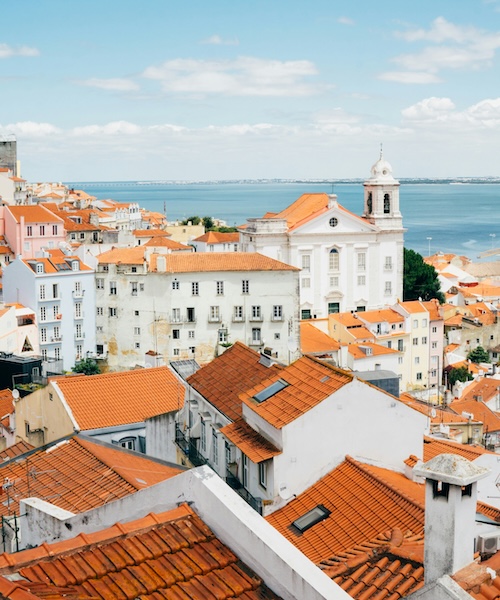
Background: As part of the Education and Social Justice Project, in the summer of 2022 undergraduate student Vikki Hengelbrok (C‘23) conducted semi-structured interviews with members and partners of Fundação Gonçalo de Silveira (FGS). In this interview Laura Dewitte, a prominent educator who has worked with FGS for several years, describes her relationship with the organization and provides insights into non-profit work in Portugal.
Perfect. Okay, so, first off, can you tell me a little bit about yourself and your background?
So, I'm not Portuguese, I'm French by origin. I'm living here from, I don't remember, 27 years, I think, half of my life, and I'm working in education field, I would say, from the very beginning of my professional life. I was a former teacher before living in Portugal, living three years in Paris, in the language, in Spanish language, and I decided to stop during one year to make a break and to reflect, too, because I was 25, so I was really not sure, to be a teacher, I was a very satisfied to be a teacher. So, I decided to make a break during one year and to do a voluntary service, to do voluntary work somewhere in Europe, and I arrived to Portugal, so, it was, normally, my initial idea was to stay one year, and I stay 27 years.
So, when I arrived in Portugal, I discovered what we call the non-formal education, so, all the education that we can do also outside of school, and it was a big shock. I realized that it was what I wanted to do, and so, I decided to stay. It was, I think it was the...I don't know how to explain, but it was like I met to the right people at the right moment in my life. Yes, so, it was by change and, at the same time, I think I was opened to take this opportunity, so, I started to work on this, not—what we call the non-formal education field, or popular education, depending the countries. Yes, and I start to specialize myself by doing first, so, I worked a lot on the fields, and, slowly, I also start to receive some trainings, mostly by the Council of Europe's international level, and, slowly, I became an international trainer also in the Council of Europe. Twenty-five hours after, I came back, also in the former field.
So, again I'm a teacher now, not full-time, because I think I couldn't be a teacher as full-time. I'm working as a teacher for a vocational course. It's for the young people who have some problems to finish schools, so, sometimes, they are older, or they have families problems, a lot of reasons, so that they don't have a very wide path in their life. I mean, yeah, so, the system in Portugal decided that, the governments, 10 years ago, decided to create what they call the vocational courses with a big thematic. So, they have one parts, they have the normal curriculum, like math or Portuguese, geography, and the other part is more practical. The valuation evaluation system is different, so we have much more possibility to keep them motivated and inside of the formal system. So, it's a course of three years and, in my case, I'm teaching all the practical activities for the future youth workers. So, people who [will] work with children or young people in social community work.
So, yeah, I just have one class, six hours per week, and so, it's part of my, my time, is that the teacher in part of my time is non-formal education trainer, or what I'm called myself, human rights educator, because more and more so, I start as a non-formal educator and I've, slowly, I started to focus a little bit on, what I call, human rights education, that the FGS would maybe call, the “development education” or “citizenship education.” In my case, more focusing on the human rights part, but we are doing almost the same. I mean, there's the terminology, yeah, so I have a lot of hats: as a teacher, as an educator; I'm still what I call youth worker, so I'm still working at the street level, directly with young people in the field, Roma young people, for example, some hours per week, and yeah, so, I have feet in education and with grassroots level, directly activity with people.
Okay, is that the organization Mandacaru?
Mandacaru, yes.
It's a name of a cactus from Brazil, and it's because it's a plant that grows in places where there is no water, and then, and it's giving a flower per year, just one night, and it's so can give food to the animals and to the people, if there is nothing to eat. This was the symbol little bit of our work, yeah.
What does it, what does Mandacaru do? What are like, the...
So, mostly, so, the priority are what we called the “invisible people,” so the Roma, the homeless, yeah, people that are invisible in the society, so they are, of course, they're human, they're living there, but they don't have the voices. So, the starting point of our work was these kind of people, and the idea is to work with them in the long-term perspective, so they can be what I called in Portuguese and Portuguese expressions is to be “owner of their nose.” So, it's working on the human rights and, like, to be aware that you have human rights, so to work on your dignity, and to tell your story, and to participate in your life as much as you can. It is, more or less, the big hats. The tools we use is mostly arts, theater-of-the-oppressed art. But also, international and mobility, love to travel, for example, or writing. It depends what they want to do.
Okay. How did you become involved or connected to FGS?
So, I was a volunteer. I'm still a volunteer. I was a volunteer in the organization that is working with people with high HIV, homeless people with HIV and also ex-prisoners or ex-prostitutes that don't have a place; they have HIV, they need to be treated in a normal place to live. So, I was a volunteer there, and I was using theater-of-the-oppressed with the group of people, and one day, the director of the organization told me we receive a call from Lisbon, an organization, that they are looking to do research, and they are looking for practices that work on social transformation. So, we put the theater there, we apply, and we put the theater there, so, very good, okay. So, they select, I think that received, so, it a project of FGS, it was, Alternativas is the project, as an activist, and then receive 150 application forms, and they just selected five or four. We were part of this five or four project, so during one year, we were, people from FGS were working with us to discuss and to understand how we were working on social transformation through the theater, and, not only, so, it was very interesting because it was the voice of the people in the theater we were reflecting together. We were producing concepts and knowledge together, so it was very strong for the group also to be not just consultings, have observed, but also, we are the specialists who know we are doing social transformation, and we understand.
Through the alternativas, I was invited to join Singergias, another project, maybe you know, that is producing a mix between the academy, the university and the NGO sectors. We meet, and we discuss concepts and knowledge together to produce knowledge together, so, I was invited to the Sinergias, and through the Sinergias, we decided to do the EDexperimentar.
Okay.
So, through my voluntary work, I arrived to the work of FGS.
Yeah you mentioned the EDexperimentar. Could you just talk to me a little bit about what that project is?
So, that EDexperimentar, it's a pilot project between four organizations, but mostly four territories, I would say, four communities. The Lisboa, Ourém, or a maybe you know Casa Velha, it’s a project north of Lisbon FGS is working a lot, Covilhã; we've also got a collabora that is working a lot with FGS and Faro with Mandacaru. The idea was to have, because we are finishing now, was to support the work of schools to implement the strategy of the citizenship education, the national strategy made by the government and the civil sectors to implement citizenship in the school. It's not new, it's I think five or maybe seven years, and the idea was to support the teachers in implementing their, this strategy, because now, the school now is obliged to have citizenship plan in that school each year. We were contacted by the school and offering our support, so, we had, very interesting, because we had, I will say, complete freedom, in a way, to organize the work, how we wanted to organize, so each territory. Cora, Orém Lisboa, and Faro, we had completely different paths within this project; we have the same objectives, you have the same mission, we had the same basic, some fast comments, tasks, but at the end, our focus is on our work. It was very interesting.
Then, with all the projects, they work with FGS. How would you describe the relationship that you have, the strategies you use?
With FGS, it's amazing because I like a lot to have freedom to work. So, I really enjoy to work with them because it's a mix of freedom and responsibility, so it's very nice, they trust a lot, and they are also very exigent. But it's good because we succeed to work well, when you have, they’re exigent regarding the quality of the work, not regarding the bureaucracy or whatever. I mean, it's not a question of oblige, it's like, really a commitment, like moral commitment, ethical commitment, with them, and they succeed, to have found that lowers to work with this freedom-responsibility balance and then, for me, it's amazing, it's, yes. It's very, very interesting in this way.
The second point: I would say, they're very ethical, very coherent between what they are saying and what they are doing, very coherent. The second part, I really enjoyed it, all the parts they worked on, what we call the systematization of learning, so all this, the breaks, we can, we do to reflect on our practices, and it's really part of the, of the process, is part of the project. Sometime, we need to stop during this travel, stop, and to reflect and to discuss, so, and it's, it is rare, because normally, we are always working in an urgent time. So, we are working a lot in the projects of FGS, but they have, they're aware that sometimes, we need to stop it, to reflect, and this is very good. It also, it's not so often that we can have this possibility, I think.
Would you say they have a unique approach?
Yes, I think, yes. I think it's unique approach. I found this approaching in other places, but not so much. I mean, or you are in, normally, or you are always in the emergency in the field, so, working work on the field always urgent, or you are in the academy, thinking, thinking, thinking. And this mix of the part that we need to reflect and think together and also to act together. That, for me, is the real sense of popular education, or non-formal education, or whatever it, is mix of the older, the richness of the practice, so this mix with practice, always this dialogue between the two, and sometimes conflict between the two. It's a project of FGS, is very clear, is there; it is not there by chance, it's, no, it's a way, it's conscience, it's a practice, no, this is good.
Are you..Have you heard the phrase, amor a camisola?
Yes.
Do you think you could maybe talk to me about it a little bit?
Amor a camisola…it's a tricky expression because, how to explain. In Portugal, when you work in the social fields or education field, in civil society in general, people have a lot the amor a camisola. They worked much more [than] they should work from nine to five on Monday to Friday. There is this activist part, I would say that it's important in our work. In a way, I think it essential because if you don't have these activist part, you are just a technician of education, or human rights, or citizenship. I think if you work on citizenship education or formal educational developer, the question you under, just the technician, you need to be going in with your values and a human being, then you need, I mean, is difficult to stop your work between nine to five. You should go to a dinner with your friends and your family, and that is a racist person hope. I think these are called amor a camisola ... it is important in our work, because this is the human being dimension, I would say. At the same time, and regarding worker rights means that we are not very well paid in this, in this sector, and in name of the amor a camisola, we worked much more for less money. So, and it’s also why we lose people because people are tired; people want a better life, they need to buy a house, they have families. So, yeah, so it's tricky in a way. Yeah, it's a good thing and a bad thing now.
The balance of the two, do you see that being a problem often?
I think it's possible, I think, when we become a little bit older. We succeed, maybe, to balance and devoted to, and also to realize, you know, not to feel always guilty, because I didn't do this or feel guilty, because without me the organization would not work, is not true, then. We think with experiences; we realized that we can do less and maybe this less is more. But this amor a camisola thing is really tricky because sometimes, for example, when we have these, the [COVID-19] pandemic, or the financial crisis, some years ago, a lot of sectors in Portugal, and they were still working because of amor a camisola, they were not paying. They were continuing to work, and at the same time, is give power to the people, but it's not easy.
In the organizations you work with, how do you try and get that balance of the amor a camisola but still taking care of yourself?
Yes, now yes. Because I'm 51, and I don't want anymore, but I had crazy years with a lot of amor a camisola, I mean, you know.
I assume that it’s the only way sometimes.
I also learned lots because, when you do, for example, I was a volunteer in this organization, we were working lot, I also was volunteer. Through my voluntary work, I arrived to FGS, so, it also opens new doors, though, but some people in FGS, not only in FGS, they are sacrificing themself in a way, in their professional life, and they, also, because they have also with this link with the religion, so with the faith, know the belief that I don't have. I'm not religious at all, but I work with them very well. I think I'm very tolerant, and they are very tolerant too, so, it was, is never be a problem, but sometimes, I think that this religious background can also propagated a little bit the sacrifice of the personal life.
In some people, some people, maybe they are more strict than my life, in my life. Some people, they don't succeed because, also, they feel good in this. I mean, it's dependent, the person, yeah.
Yeah, that is interesting, the religious aspect.
I think, and in Portuguese society, in general, there is a religious aspect. It's officially, it's a secular country but still very religious. I think I'm telling things because I'm French, and in fact, in France, we're completely secular where we assume that separation of church and state, but in reality is not this is so obvious, but it's much more obvious that here, in Portugal, by tradition, by history, and here, in Portugal, things are more mixed, the religion. Part of the culture around a lot of people, in my Portuguese family, a lot of people are not practicing the religion at all, but you are part of the community, so you go to some religious events because it's more that religion is, that's part of the dynamic of the city or the dynamic of the community, no?
So, it's the same with me: I'm not religious, but I'm going to see some religious events in the city because all of the city is in the streets. So, all my friends and my family, they are in the street, so I'm part of the community, so I'm going there. So, yes, it's a little bit different, yeah, than in France, for example. In France, the things are much more technicians. Also, the people, they are more, they are stronger with their workers’ rights. They are not so afraid of power; they have more stability. I work in labor, but here, so, here, it's more poor, it’s not so stable; at the work market is not so stable. So, people here are giving much, much more, also have their time because, also, it's the only way that some services can be provided. The state is not so strong than in France, for example, so a lot of things that, in France, it's organized by the states. Here, it's organized by the community, by the civil society, so, if you don't give this time, it would not work anymore.
So, it's at the institutional level?
Exactly, so a lot of things are organized by the civil society and by the people, so if you don't do, it's stopped, you know. It's why this amor a camisola, it's not a choice.
The fact that they have a phrase for it, itself. Do they have something like that in French?
No, no, we, no. We will say "activist," but activist much more the fighters and so on. We don't have this will, this expression that we switch. Yes, part of your body, right, it's your skin. I mean, no, we don't have this expression. I think, yeah, it's not coming to my mind, just like, continuously. But there is this notion of, it's a bit of sacrifice, yes, yeah, we need to do it because if we don't do it, it won’t work. There is no another way, no, it's like this, it's like, "Okay," and the Portuguese, they are very good in this when they assume, “I'm doing it okay.” Sometimes, when I'm speaking friends, they sometimes, in France, they tell that, “Ah but the Portuguese, they are oppressed, that they are not, they don't claim, they don't fight, they don't go to the street to shout, to break the police cars and to shout in the street,” like all the tradition, so the vision in France is that here, they are oppressed. They don't fight against the state and so on and so on, and sometimes, the Portuguese, also, they say, they compare themselves with all the countries that there was here: “We are not fighters, we don't fight, we don't claim, we don't accept, I don’t have a vision,” because I think that in my perspective, all human is fighting in his, her or his way; I mean there is no good fight and bad fighting.
They are fights for their rights, for the dignity and, for me, my perspective in all the world, people are fighting today. They need, in their way, regarding where they are on the time they can have, and also the, the priorities. It's much more easier to fight in Portugal because here, if you fight, you can lose your job, and it's much more complicated after. So, if you have a family, maybe you are using other strategy to fight, to keep your work, and your children at school, and so on, and so on. I think they have their own strategy to fight, like in a lot of countries, so it's much more invisible, all the people in the world, so, but it's much more visible in much better, based on “The state is not doing, we doing that,” why they, in a way, all these for example, we could see in the pandemic.
That, also I could see, the difference between friends, how quick the Portuguese society was organized for the [COVID-19] pandemic. For Portugal, the pandemic was very hard, but people never put the lockdown in question. Even for them, it was much more complicated than in France, for example, people, they receive a lot of money to stay at home, and so on. Here, no, we didn't receive a lot of money to stay out. The people, they put in question the lockdown. The community is organized very quickly, for themselves, for the food for the poor works, and so on, it was that networks were already there working. So, it was much more amor a camisola in the pandemic than before, but it worked very well, very quickly.
In France, I was shocked, in a way, because, for example, for the students, and suddenly the people in France, they were shocked, because students in France couldn't eat anymore, because they didn't have the support of their parents. So, here, in Portugal: “How young people who cannot have support from their parents to eat, what's possible? They don't have families? They don’t have friends? How are students going to the streets doing a queue, for having bags of foods?" And here, it couldn't be possible… I mean, students, they have the family, they have their friends, and the food are really for the poorest people, the people who don't have nobody. So, it was interesting how the two societies organize themselves for the pandemic, and here, it was much more calmer, organized, and conscience, very quickly, and France, no, it was a big mess; people, they were completely lost in France. So, it's strange, know, it's, yeah. I don't know many reasons, I don't know, but yeah.
It's interesting how that materializes in different ways.
But I think the link with the religion is important in a way, is there, sometimes, it's not obvious. In the case of FGS, there is a clear link, but me, for example, I learned. I never worked with a religious organization, when I was in France. Then, when I arrived in Portugal, I couldn't escape because they are everywhere. Sometimes, they are unique, one in some villages, for example, they're unique one to work on a grassroots level, no? So, I couldn't escape to work with them, I mean it is part of the life. Now, it's like this, and I think they are still very influenced in a way. Maybe, less and less, you have more civil organization that don't have link with religion, but they are still important at social level, that they are very important.
So, wrapping up: Going forward, like, in the future, your work with development, education and FGS, what is coming in the future?
So, now, we are finishing the EDexperimentar. We applied for another fund to continue, or not, we will see if it's accepted or not, and I will continue with Sinergias because I also think it's a privilege, in a way, to have some moment in the year when you can meet people from the academy and from the civil society and to have this break. For me, it's food for my thought, for my work, I mean I always came back from them, the meeting with Sinergias, full of much more questions than when I arrived, but it's nice to continue to reflect, and to change, and to adapt the work we are doing, so, the Sinergias, for sure, I would like to continue the EDexperimentar. I think in three years, and two years, with pandemic now, a lot of the doors are starting to be open, so we are really starting to work, now, let me say, so, I would like to have more, two or three years, to work with the school.
It's taking time, everything is taking time, and I really realized. I knew it, but I think in this project, many, much more than the other one, I realize how trust is important to collaborate. Even with institutions, I mean, and trust, to have trust so you can work at the horizontal level, so you really trust each other, as institution, as a team, as persons, and you need time, you need one or two years. We have trust now, me, and FGS, and the schools, and this project, and I think, now, the work is much more efficient because we trust each other so early on. I think it's more important to be stupid, but it's really nice, through its relationship, one of the key, I mean, I can see with, with my interviews, I can be very formal in the way of teaching. I can using very formal way of teaching and classroom, yeah, if we have trust, no problem. You go very far. If you don’t have the trust, you can use wonderful methodology, or have a wonderful project, and so, if you don’t have trust, you will stay in this phase, I would say. It is the basis, trust and respect, of course, for the dignity of all you know.