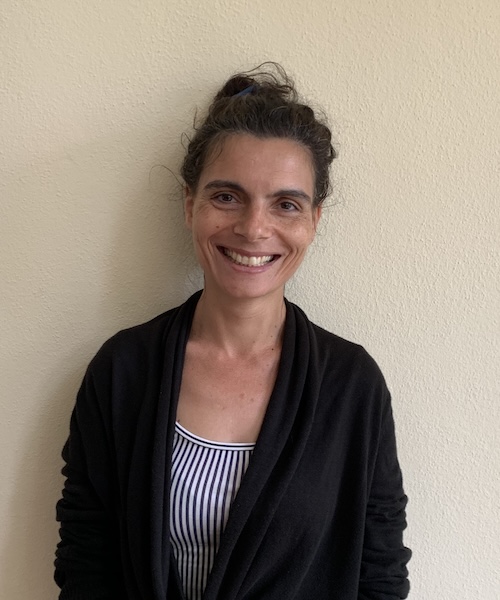
Background: As part of the Education and Social Justice Project, in the summer of 2022 undergraduate student Vikki Hengelbrok (C‘23) conducted semi-structured interviews with members and partners of Fundação Gonçalo de Silveira (FGS). In this interview Sandra Fernandes, one of the project managers at FGS, discusses her experience working there and her insights into global citizenship education.
First question, can you tell me a little bit about yourself, your background and everything?
Well, not here in FGS, but my background before FGS? Okay. So, I am an archeologist, and since I remember, I have a passion about local development and all that stuff. And, when I finish my graduation, I thought it would be really interesting to get together the development area and the historical area, and how could our history help this development, local development. So, I did a master's degree in development, local development. It's a really big hit in this area. And then, I went to Angola, and I work with a community. And it was there where I got a critical view about development, international development, about what we do as Europeans, and what it is, and not a good thing to do with other countries, other people. And how bad could we be, even if we don't notice it? It's, I think, it's before FGS. The most important because it is really important for me to have the critical view that I have nowadays about development. So, it was really important, and it was like a process.
And what brought you to FGS then?
Well, I had this critical view, but I really needed to get in an NGO. I really wanted to do that and to work in the field. I think I was not so critical as I was, and I thought it would be really interesting, and it would fulfill me to work in an NGO. And well, [name of NGO], that was the other NGO that put me on in Angola. And on this project, it works just here [points]. So we are really, really near. So, I knew the place here. And so I tried my luck here.
What year did you start at FGS?
2012. Ten years ago. Yeah. It's easy for 10 years.
And what's your role now at FGS?
Well, I'm in a transition phase because I'm a project manager, as all my colleagues, but now we have a person that is leaving. So, I am overseeing the coordination of the team here. So, I'm in a strange phase now.
What does that mean? Like, this transition? What kind of things are changing for you?
I didn't have to worry about to see all the picture because I knew that was, we have, we had someone that, someone who would do that. And now, I have to be concerned about the whole picture and not just with my projects. Well, we always have this concern, this caring concern about one another. But, in this position, I think it is really important to have the big picture. Well, designing in my head. So, I think that's the main concern with that big picture and the people that make that picture.
Mmhmm. So, how do you balance the big picture and then also working on your projects?
Oh, I'm discovering [laughs]. I know. Yeah, I'm trying to do both.
Yeah, I can imagine it's challenging.
I'm just trying. First step. So, let's see.
Okay, so what is global citizenship? How would you describe it to someone who had no idea what it is?
Well, I would add "education" to that term, not just "global citizenship," but "global citizen citizenship education." Because, for me, global citizenship, it is a part of a learning process that we can do all over our lives. But it is a learning process. So, the term "education" for me is really important to be connected with global citizenship. I have some problem with the term because it seems that, well, because of the many discussions that we had, because of global citizenship or development, education that we use to, our global education, that there other countries used to. So, there are really diverse ways to say the same thing. And global citizenship, it seems to be associated with citizenship. It is a nationality, and it could be dangerous to fix that to global citizenship. So, I would join the idea of global education, education for social transformation, development, education to this global citizenship thing.
And with this altogether. What it is, for me, is a way of seeing our society, our own lives with a critical perspective, with a concern of linking the local level and the global level and being able to see how things are interconnected, and how my actions, not just individually, but as a society, have consequences in other places.
And the same here. And it is, it has an ethical base of social justice, of equity, of when bem vivir, of all that important values; it has a political dimension that, it is the thing that, global citizenship have, in my perspective, has to have the intent to transform things, to change things to another thing that would be better. And for that, it is political because it's impossible to have these changes without a structural change. So, it is political, too, and it is the most difficult thing to work with the political because some people confuse the term with partisan. And so, it is not the same thing and it is something in our vision that is collaborative. As we think that it is impossible, it is impossible to change things as a person just by yourself and to be a hero and to save the world by yourself. We don't believe in that.
We see things as a collective that is really important to be done together as a society, as a community. It is our wish, and it is, as I told you before, for us, it is a learning process. So, it has a pedagogical dimension that is really important. Well, these are the four dimensions that we usually used to do. Probably, you will hear all the same from other people, too. But this is how I would describe this global citizenship, this link with local and global, and the critical sense that it is really important.
And what do you think is most needed in the community for global citizenship?
The community we train because we have schools, we have universities, we have other places where NGOs do their work here in Lisbon, in other places in the country. And we work with all that.
Yeah. What about maybe the ones that you work on the most?
And what would be the most important thing? Well, I told you before, but it will be that it's important to say again, the most difficult thing to get when we do work with global citizenship, is the critical view of this political dimension, because it is really easy for us to see global citizenship as a way to change our habits. The things that we do on a daily routine, it's easier to change that. I decide not to buy bananas from Costa Rica, and I buy bananas from Madeira, and then, I change my daily routine on that, and I can do other things.
But that's the easy part. I do not believe that that is enough for doing changes, real changes. All the interventions with no social justice where will be the same. So, it's not the individual way of doing things that will change things. It will be the structural level that will change things. So, that is really political because it has to be; it is related to the governments, the enterprises, the multinationals. It is not the individual level here. So, that is the most difficult thing to work with people, because for things to change, it is important that people get together and, and, it is, I forget the words, “I want that!” demand that people demand for things to change. So, it is not individual, but it is needed that individuals get together and demand things to government and most. Big on the big picture.
Yeah. So, and that's a difficult thing to do, for example, with schools.
Well, because it's abstract. What we do it with, we do well in a really practical way. What we do is try to put the political level, for example, on a local and really practical level, so they can see what we mean when we say we need to change a structure. For example, we started to do some diagnosis with students, for example, trying to get them to think of their power. Just seeing what is not good in their own schools, for example, and being able to raise their voices and to tell the direction of the school, "Look: this is not right." This is not a thing that we do a lot in Portugal. This is political, too, because we see, if we get to the structure of a school, for example, we are doing a political thing in that school. This is a way to compare what we can do in our school, in our city, in our country, and in our world. So, we try to do this scalability to try to demonstrate, how can we get on the political area and do some transformations here. It’s an example. I don't know.
So, it’s locally, and then, you work with the universities, and then, also politically?
Yes. Well, when we say political, for example, in my home I have two children. When my children try to change things at home, they are doing a political thing with me.
And this is the idea we tried to pass to the students, for example: if you try to change things on your school, on your home town, even if you're not talking with politicians. With the direction of the school, you are doing politics there.
Yes.
We had this level, that's one level, and we have another level because we have some projects that we are really interested with politicians, and to try to build together, and to give, and to discuss some recommendations to political actors on a national level. On the local level, we are trying to do this link. And all our projects have this political component, too. For example, one that was finished last year, we talked with more or less 20 political actors at the local and national level. And we are now trying with two different projects about citizenship, and trying to do some changes on schools on the way that we do the learning processes because citizenship is not so valued as other curricula, other disciplines.
We are trying to do some work here because it's really tough to work on the citizenship area if people don’t value it. Yeah. So, we are to trying to do, to give some recommendations on this area, and the schools are now passing through these changes that we have this citizenship area, and it is in this area that we have the opportunity to work in global citizenship areas. So, we have formally one area that is called citizenship and development in which we can work global citizenship. It is a space to do that.
Oh, ok.
Yes. And we are trying to leave some recommendations. Yeah. Let's see what we can do; for example, in the next month we are going to meet the Ministry of Education.
And then, within FGS itself, you talk about collaboration being a big part of it. How do you, at FGS, try to foster that collaboration?
Okay. First of all, it is important to define what is collaboration. For example, when we talk about collaboration, people say, "Oh, yeah, we do that all the time." Yeah, but when we talk about collaboration its not to put, for example, two people together working, and one person does one thing, and other person does another thing—they divide work; they don’t collaborate, as we see it. So, what? What we mean: collaboration is to build together and to do things together. It is something that it is really hard because we usually don't see the world exactly the same. Fortunately, because we are not all equal, we don't have the same vision of the world. And that's good, but because of that, it is really, really hard to work together and to build together things. Even in schools, for example, we were talking with little students of 12 years old, and they don't like to do, for example, group work. They don't like it because they have to work together, and discuss, and get and, an unique vision. And for getting unique vision, you have to discuss a lot. It is not an easy thing to do. So, what we try to do is foster this thing of collaboration.
First of all, we try to do it at FGS. Because most of our projects, we work on in duplas, by pairs. We don't have a someone responsible for the project. We have two people on FGS that are responsible for the projects. And this is a way of dealing with this collaboration area: starting with ourselves. It is really good for us to deepen the thoughts about all the areas that we are working. Besides that, we try to, in all our projects, to put different organizations or different people, people from different parts or areas of society together. For example, we have Sinergias. It puts people from universities and people from NGOs working together. That's not really usual, and challenging them to have concrete works that they can do together and to see results of that concretely.
It could be an article, it could be a workshop, really, anything that people want. We do things like this, challenging people to do little things together from different areas. Well, we have, then, people from universities and people from an NGO, we put together two people from NGOs from development and people from fields, from the sustainability in that area. We had put together NGOs from the urban area of Lisbon and the rural area of the, near Coimbra. There are really different ways of seeing the world because it is a really different problematic rule that the urban people have, and we tried to put teachers together from different parts of the country, but we have different examples of what we have done, trying to get people to collaborate and do things together, and to link this area of knowledge with construction and skill building.
It is really important to put these people together and value the other person, and see that the other person contributes to this knowledge construction, not just me, that I am from a university. This is really important for us: to value that people value one another. This is really important. And the thing about the relationship, it is central here. It's one of the things that we work on a lot because it seems like a really irrelevant thing, but it is central in our society. It's one of the big things that we have seen with years of work, is that relationship are central for everything. It's really interesting.
That relationship aspect is really interesting. How do you, at FGS, how do you try and focus on those relationships? What do you do?
For example, in all our activities, we have informal spaces for people to meet, to talk, and to be together. This is part of our learning processes. It's not just a part that must be there because people are there. You know, we intentionally put these spaces on one of our programs. It's central for people to meet, to talk, and to get together because it is one step that we can get here, that people can do things on future, even if we are not on that process. People get together and do things on the future together. We have seen lots of cases of that, it is really interesting. So, the informal spaces, like lunch, are really important as non-formal methodologies; we use methodologies that are not expositive but are participatory.
Yeah.
Yes. And all that methodologies are really important for people to feel comfortable with one another.
Like in that workshop we went to last week that I saw, were those [informal spaces]?
Yes, exactly. For example, the lunch was not part of the program, but we invite people to get together at lunch. It is really important. And when we have the opportunity, we use simulations to to put people on a more relaxed position. It is one of the ways to put the people comfortable with one another.
Like, how?
We will do it tomorrow. Wednesday. In global citizenship, every year, we have some simulations of non-formal methodologies we can use to get to an idea that is not easy to express verbally. And if we do some activity, I say, "simulation," it is an activity. It's easier to get to it. The idea that we are trying to pass, okay, it's easier to pass through the idea. Then someone tells me the idea that, no, it's different to pass through, even with a simulation.
Yeah. That's like the collaborative aspect. I wanted to ask you about the phrase that was in the assembly on Friday, the amor a camisola. Could you explain to me or describe that phrase to me that we know?
And you want me to describe that phrase in FGS in a Portuguese sense?
Maybe, first, what does the phrase mean in Portuguese and then, maybe, at FGS?
Mhm. Tricky. Mhm. [pauses] amor a camisola. Well, it means that you really value what you are doing. You really believe that what you are doing is essential to change things. It's really the core of all that you do. And because of that, you do everything you are. You are not just what you do, but everything you are to that purpose.
But sometimes, it can be tricky to talk about if we don't do the difference between our professional life and ourselves.
Yeah.
Because it can get you on an exhaustion point that it is really hard, but it is something really strong and beautiful at the same time. But it's tricky to balance.
Well, but when we are in a healthy…if we have...if we are in a healthy phase with ourselves, it can be really important to us to get the mission of your, for example, your institution to feel that you do an important contribution to the world.
Mhm. Yeah. How do we stop people from getting tired?
I think it is that balance, the thing of amor a camisola is really the basis of changing things. But it's a really wise balance of all that stuff, not just for me, individually, each person from the institutions.
To an institutional level. How does that work?
For example here, in FGS, Jorge. One of the things that he used to do was keeping the balance of the team together. And this is what I think made us a really different NGO from others. That exists because of the relationship thing, the care for ourselves, the balance with all those things, it's really important.
And we really got there.
How?
Because of this thing of caring of others. And having this concern with really practical things. You saw our work distribution went on the wall the other day. We tried to do this balance in a regular way because it is really important to keep the team balanced in the work that they are doing. If they are right, if they are feeling good, if there's something that should change, having an informal space, too, in our own meetings, with our own teams, I think it is really essential for that.
This is so interesting and that everyone has said it, the way FGS works. Collaboration. It's right at the center... And then, if there's anything else you want to share on the matter.
Just to know, there is one thing that I think it would be important to say.
It is important that we are a Jesuit institution, organization. And we have some key documents that some Jesuits in international level have put together in that they are central to our way of doing things, our FGS way of things. You know, the origin of just the Jesuits, the Company of Jesus?
St. Ignacio. He had the vision about education as a central way to change the world. And that's why we have Jesuit schools and all that stuff, because he thought that the education was a central way to change things and the way that compania jesus should feel to get to this. By majority of this, I would say that he would thought of bem vivir too. It is really interesting because he had this idea of collaboration, of not an individual way of doing things, of getting at the well-being of all people, and that education is central on our learning processes. And what we did is nothing really new but is going to this central ideas of company de jesus, and to put it in the practice.
Mhm.
And it seems easy, but it is really hard. I've seen lots of people trying to do this. It is really hard. And I'm really proud that we have done this path. And internationally, we have some Jesuits thinking of this. For example, we have something called eco-Jesuits and social justice area, all that things together. And these areas, if gave us some thoughts to what we think, it could be part of FGS. And it is really interesting to see that things are interconnected. I think this part is not the same. Sometimes, I think we are more Jesuit as we think.
So, because we really try to see what is the good part of these ideas that are not new and trying to put it into, on the institution, on the project, on our relationship to another organizations, and people.
And within?
And within. Yes. And try to be coherent with that. And sometimes, it's not easy, but as a team, I think we really managed to do that.
Okay. I think that's a good point to end on.