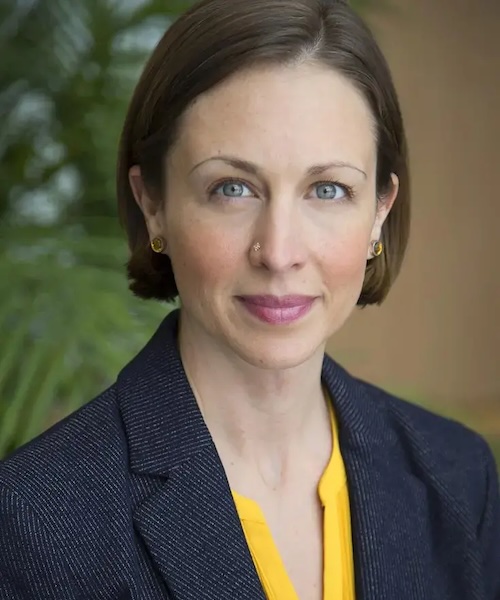
Ara first came to death studies through a project on end-of-life (EOL) doulas, independent practitioners hired to give dying people and their loved ones practical, social, and emotional support. She had taken three different courses in EOL doula care and observed that most of the teachers and participants were, like her, middle-class, college-educated white women. This led her to wonder about the relationship of end-of-life care to systems of race, class, and gender. What she learned is that much of what practitioners in end-of-life care take for granted about the challenges of dying and how to fix them reflects the particular interests and experiences of white people living in North America, England, and Australia. Understanding how and why these limited bodies of knowledge came to be seen as universal truths has required a decolonial lens, in this case an examination of how global histories of oppression manifest themselves in contemporary philosophies of care.
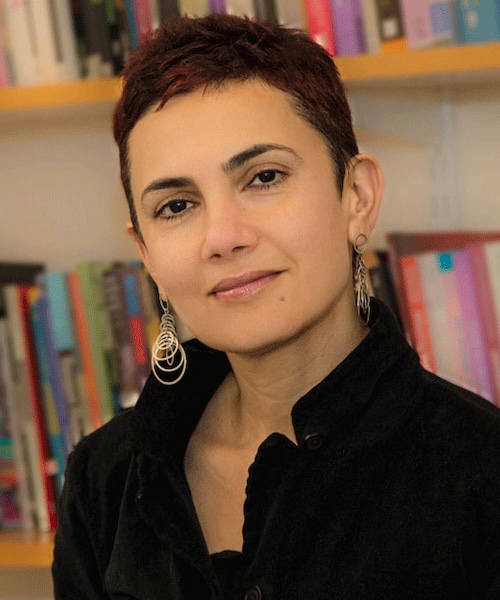
Jyoti’s interest in death studies was sparked by a historical photograph of South Asian migrants performing a funeral in North America. Over time, this interest grew into a comprehensive project examining how South Asian immigrants handle death in the United States and Canada. As she researched the past, starting around the early twentieth century, she found evidence that the ability to perform Sikh cremations was not always assured due to opposition from local officials and white settler communities, and that, more recently, Muslims have faced struggles to secure Islamic cemeteries in numerous cases across the U.S. and Canada. These findings emphasized the importance of religious and racial differences in how South Asian immigrants conduct funerals. Building on and contributing to the critical scholarship on death and mourning, the findings revealed that grief is often a shared experience among immigrant groups whose funeral and mourning practices differ from mainstream practices. Among Muslim and Sikh groups, funeral rites are a shared responsibility, one that has shaped migrant worlds aimed at honoring and caring for the dead with dignity. Consequently, issues of grief and mourning are deeply connected to racial and religious differences within Brown non-Christian migrant communities, even as their deeply rooted religious beliefs and practices serve as foundations for forging funerary worlds in the diaspora.
Only recently have death studies scholars started to think collectively from a decolonial perspective. Inspired by a 2021 article that Jyoti had written about the foundational contributions of Harriet Martineau, Émile Durkheim, Ida B. Wells, and W.E.B. Du Bois to the sociology of death and dying, Ara contacted Jyoti to explore possibilities for collaboration. The two of us quickly expanded our conversations to include the following five sociologists and historians, each of whom seeks to disrupt the Eurocentrism of death studies in different ways: Freeden Blume Oeur, Kami Fletcher, Becky Yang Hsu, Jane McCarthy, and Deborah Streahle. Several from our group contributed to a special issue that Jyoti edited for the journal of Critical Sociology. Most also participated in a “critical sociology of death” mini-conference that we organized for the annual meetings of the Eastern Sociological Society. These collaborations have widened our circles and generated the potential for a vibrant intellectual community.
We continue this work together for two main reasons. First, we find common ground in the need to expand the sociology of death to focus on issues like colonial legacies, genocide, immigration, race, gender, class, and other aspects of social inequality in discussions of death, grief, and mourning. Second, we want to broaden the stories told about loss and grief by highlighting the perspectives of historically marginalized groups. In other words, our goal is to decolonize the study of death, and this mission goes beyond the efforts of just one or two scholars. In a way, we are grieving together—if to grieve or mourn is to do something about loss, then we are doing that work collectively. Viewing our scholarly work through this lens helps us identify who and what we are mourning, not only certain groups and communities but also the limitations within our disciplines. These realizations and awareness enable us to imagine different possibilities and envision alternative futures.