In all corners of the globe, Catholic sisters are on the frontlines of their communities, ministering to the most vulnerable people. Whether running schools and hospitals, tending to victims of violence and abuse, running programs that empower women, raising awareness of issues such as gender-based violence or child labor, or advocating on behalf of marginalized groups, sisters put Catholic social teaching into action in their everyday lives. Yet the work and witness that so many Catholic sisters do is too often overlooked or misunderstood. A recent WFDD report addressed significant gaps in the scholarly literature by highlighting sisters’ contributions to peacebuilding and development work. There is also a need for platforms and spaces where sisters can share their stories in their own words, shedding light on their vocations, the challenges and joys of religious life, and the work they do for the common good. This is especially true in regions where the number of sisters is rising and people’s needs are large and compelling. Sisters constitute a remarkable community of development actors. They deserve far more appreciation and support, as they offer invaluable insights that can and should shape policy and program approaches at the international, national, and community levels.
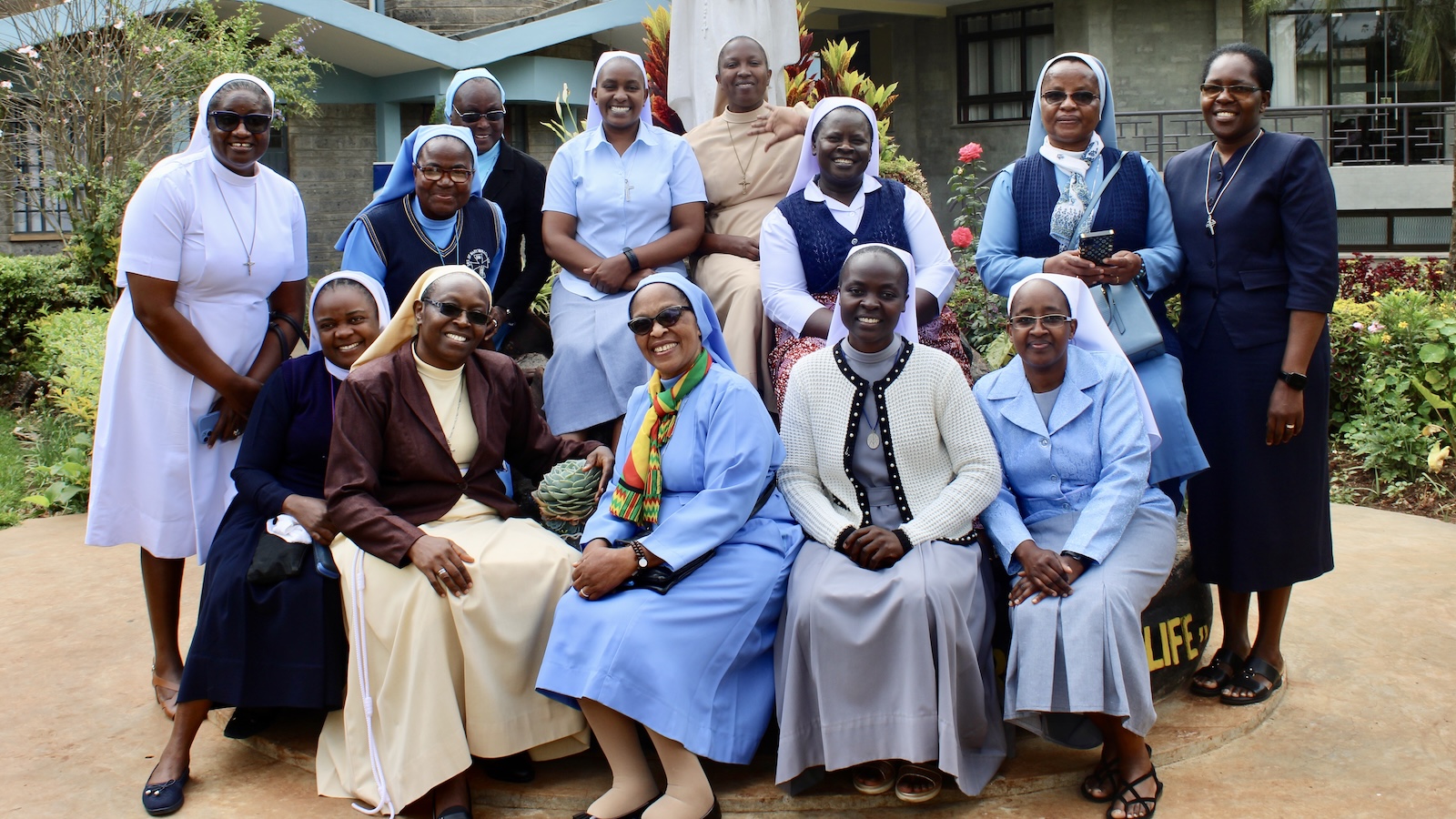
The Women Faith Leaders Fellowship (WFLF), a 10-month fellowship, focuses on developing the leadership and advocacy skills of Catholic sisters from sub-Saharan Africa. Launched in May 2023, it is hosted by the Berkley Center and supported by the Gates Foundation and the Conrad N. Hilton Foundation. To complement the WFLF’s mission to amplify the visibility of Catholic sisters, Katherine Marshall and Luisa Banchoff interviewed the eighteen fellows of the 2024-2025 WFLF cohort, including five sisters based in Ghana and thirteen in Kenya. The fascinating conversations covered the sisters’ journeys to the sisterhood, their educational and professional background, and their work on issues spanning health, education, advocacy, and women’s and girls’ empowerment. We highlight here the key themes that emerged across these conversations.
Religious Backgrounds and Vocational Journeys
All of the interviewed sisters were baptized and raised Catholic, with many actively participating in Church life from a young age: in their parishes, at Catholic schools, or as members of Catholic youth movements. Many sisters credited their spiritual development to parents or siblings who were active in Church life, as catechists, lay leaders, and participants in Christian charity work. Two interviewees had older sisters who joined religious life before them. Several sisters cited religious diversity in their families and communities: they come from mixed-denominations families or grew up alongside members of other faiths, particularly Muslims. Several sisters attended Protestant services in addition to Catholic Mass with family members, suggesting that Christian identity can be porous and crossing denominational lines is not uncommon. (Both Ghana and Kenya are Christian-majority countries, but Catholics comprise just 14% of the population in Ghana and 21% in Kenya; Muslims are a sizeable minority in both countries, comprising 20% of the population in Ghana and 11% in Kenya).
Many of the fellows recalled meeting and interacting with Catholic sisters during childhood and adolescence, which shaped their own sense of vocation. Many of these first encounters were with European missionary sisters serving as catechists, nurses, midwives, and teachers in the local community. Many of the interviewed sisters were initially attracted to these sisters’ friendly manner, their acts of service to the vulnerable, and the “holy” appearance of their habits.
Many families expressed opposition to the sisters’ vocations, and many sought to dissuade them from entering religious life. This resistance often grew out of economic concerns: “losing” a daughter to the convent meant missing out on the economic benefits of a salary and/or bridewealth from marriage. Opposition also stemmed out of a perceived loss of social status: not having children is widely regarded as undesirable across sub-Saharan Africa, which could negatively impact a family’s reputation. Some parents feared their daughter would change her mind after a few years in the convent, which could also cause embarrassment and shame for the family. However, some families were supportive of the sisters’ calling, and many of those who initially opposed the decision changed their minds, accepting and blessing the decision later on.
Thirteen of the eighteen sisters are members of congregations established in Africa in the twentieth century. These Indigenous congregations were founded by bishops for local woman with vocations, as most missionary congregations did not permit African women to join at the time. These congregations became important players in the global transition to more locally led church structures that occurred from the 1950s onward, as the number of foreign missionaries waned and more local women joined religious life. At first, their charisms focused on Christian formation, but they subsequently expanded to education, healthcare, social and pastoral work, and supporting local parishes.
Education, Career, and “Many Hats”
All of the interviewed sisters have university degrees: nearly all have earned a master’s degree and over a third have earned (or are currently pursuing) a Ph.D. A third of the sisters have completed some or all of their education outside of Africa, including at universities in Europe or North America. Their expertise covers a broad range of academic and professional disciplines, including health, law, business, religious studies and theology, development, and leadership and management.
The fellows’ professional backgrounds are equally diverse: the cohort includes academics, schoolteachers and headmistresses, social workers, lawyers, journalists, administrators, and leaders of civil society organizations. Sisters wear many hats in their day-to-day work, taking on multiple roles and responsibilities in their workplaces, congregations, parishes, and advocacy organizations and networks. They are involved in various projects at a given time and deploy a wide range of skills across their duties. In addition to their professional work (in education, law, healthcare, social work, etc.), sisters support their parishes and congregations, whether by serving in leadership, providing catechism classes and marriage counseling, running seminars on Catholic spirituality, or mentoring novices.
Empowering and Educating Girls and Women
A recurring theme across the interviews was the sisters’ shared passion for helping women and girls. The sisters spoke forcefully about the many challenges facing women in sub-Saharan Africa: many lack quality education, face gender-based violence, and have fewer legal rights than men, while cultural norms pressure women to stay out of public life and submit to men’s decisions. Catholic sisters are widely respected and trusted, and many women and girls go to them for help. This puts sisters in a strategic position to understand the challenges facing women and girls in their communities, advocate on their behalf, and help them meet their needs.
Many of the interviewed sisters run projects focused on educating and empowering vulnerable women and girls – particularly those living at the farthest margins of society. The focus and objectives of these projects are multifaceted and overlapping; they include economic empowerment and financial independence through vocational skills training, savings and internal lending communities, and other cooperative funding mechanisms; psychosocial support and counseling for women and girls, especially young mothers, who have experience gender-based violence, trafficking, and other forms of trauma; educating women and girls about their legal rights and giving them tools to vouch for themselves; and raising awareness and advocating on behalf of women and children harmed by gender-based violence, human trafficking, and child labor by raising awareness at the local level and calling for better legal protections and concrete government action. The Women Faith Leaders Fellowship has provided the fellows with training and support to strengthen and expand ongoing projects as well as launch new projects.
The sisters discussed facing sexism and gender-based discrimination in their own work: many have been dismissed by men, including male subordinates in the workplace. Some sisters also spoke of gender-based restrictions within their dioceses and the Catholic church in Africa more broadly, where a culture of clericalism too often keeps women religious from leadership and decision-making positions.
The Joys and Challenges of Religious Life
The interviews provided a space for sisters to reflect upon their experience in religious life: the joys and the challenges, the skills gained, and the lessons learned. The sisters emphasized skills they had gained over their decades of experience, including collaboration and teamwork in implementing inclusive, long-lasting, and impactful change in communities, as well as and communication, empathy and cultural sensitivity in living and working with people from diverse cultural, linguistic, religious, and political backgrounds. Sisters also shared key lessons about leadership, including the importance of building trust with those they are leading, courage and conviction in decision-making, and adaptability and resilience in order to take on new roles and responsibilities at a moment’s notice.
An immediate and common issue facing most sisters concerns the financial sustainability of their projects, especially those that rely on external donors. Funding cuts for international development and donor fatigue means long-term project funding is unpredictable. In light of this, some sisters have taken steps to diversify their funding sources, training in alternative fundraising and resource mobilization strategies so as to lessen dependency on outside funders and prioritize local solutions. Another challenge is a lack of public trust in institutions, including in religious organizations, due to poor leadership and accountability and rampant corruption; yet sisters enjoy high levels of trust and are perceived as moral authorities among ordinary people, not least of all because their work contributes to the well-being of communities in tangible ways.
Another common theme was the centrality of the sisterhood to their lives. Most members of the cohort live and work in community with fellow women religious, and shared spiritual practices are at the center of everyday life. Beyond the value of living in spiritual community, sisters from different congregations also network with each other, building relationships, sharing best practices, and increasing opportunities for collaboration. Several sisters work for organizations or support projects focused on nurturing fellow sisters’ professional development, leadership training, and community-based projects.
Looking Ahead
In the final months of their fellowship, the sisters led capstone projects, bringing their knowledge and experience to some of the most pressing challenges facing women and girls in their communities: poverty, education, human trafficking, and more. These projects seek to empower the sisters, amplify their voice, expand their impact, plant seeds for future collaborations, and embolden like-minded women and men to join in their efforts.
At a time when women’s contributions and leadership in the Catholic Church are growing in size and visibility, the witness of these sisters, shaped by deep religious conviction and compassion for the most vulnerable, demonstrates how much can be achieved when women are equipped with the skills and platforms to put their vision, vitality, and vocation into action.
The WFLF program has welcomed its third annual cohort of seventeen sisters from seven countries (Burkina Faso, Ghana, Kenya, Liberia, Nigeria, Tanzania, Zambia).
The individual interviews with the fellows of the 2024-2025 cohort can be accessed at the links below:
Regina Ignatia Aflah
Immaculate Apuri
Scholastica Faustine Mawuse Awotsitsi-Yabotsi
Alice Anzoyo C. Dralu
Rose Nancy Ghati
Teresa Kiragu
Cecelia Clare Kudexa
Juliana Ndunge Muli
Teresia Kathure Murungi
Ann Kamene Musyoka
Teresiah Muthoni
Bridgita Samba Mwawasi
Pasilisa Namikoye
Maureen Ogunde
Lydia Okang’a
Anthonia Orji
Georgette Sidbewendin Sawadogo
MaryPauline Waititu