


God Sees Where People Are: Thais Carter and Byron Martin
First Recorded
May 3, 2019
Cities
Read Other Conversations About
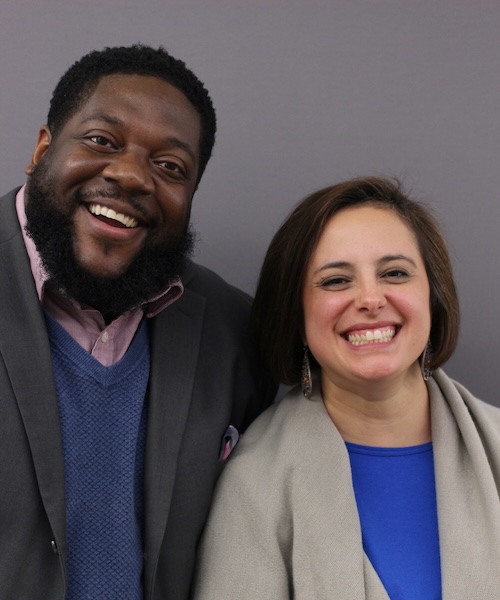
Thais Carter speaks with Byron Martin about the evolution of his faith and the role it can play in the ongoing struggle for justice for Black Americans.
This story was produced by David Dault with Kristen Balzer at Sandburg Media, LLC.
Cities
Read Other Conversations About
Transcript
Byron R. Martin: I grew up in the Churches of Christ, which is part of the restoration movement. We very strongly believe in acapella worship styles that men are supposed to be in leadership, baptism is essential for salvation…It was very clear, cut and dry, which gave me a lot to push back against. So my dad and I, even to this day, golly, we have these conversations about church and about life, but also my grandfather who was at another church, same type of church, but another church there in Dallas and he was so wise. And so whenever I'd go hang out, there were five grandkids. Typically the other four would go with my grandmother and they'd be running around the streets eating McDonald's, having a good time. I'd be hanging out with my grandfather at his church office and he would give me these books that I would just dive into as a early teen, preteen, trying to figure out, okay, what is this thing we're talking about?
I think there's definitely been an evolution of my understanding of what it means to be my faith. It's when, okay, mom, dad's not here. You're in spaces where you're on your own. You're having not only to practice your own character, but you're having to practice what you believe in and how is your faith going to shape the love that you give? And I think that has been a continuous evolution.
Thais Carter: That makes sense. How, in thinking about both the denominational tradition that you're coming out of, the kind of this broader history and culture within the Black church tradition that is also so tied in with faith, how has that been part of your story and how you understand your work?
Byron R. Martin: The God that I think is coming out of the tradition of people that have been historically oppressed, especially in this country, is a God that sees where people are and lives through the tradition of bringing people through that pain, bringing them through that oppression in some substantial and sustaining way. And I think that's where I'm existing now. I think being Black in America kind of forces you to have to know God. You have to know God, whatever you call him, but you have to know, believe in the concept of a fallen world because this couldn't have been the way that any God that believes in love puts something in process, right?
Thais Carter: With kind of the more contemporary struggle for Black civil rights in this country, how does faith help that? And are you sympathetic to the people who are like, "No, faith is making it okay to not demand justice now?"
Byron R. Martin: That's the crux, right? There's some faith or at least termed faith action that God call that out. What God is that? Who are you serving with that? I think the truth of the matter is there are some faith communities that are doing some harm because they have turned faith into that hallelujah, by and by. You'll see it on the other side versus saying, no, the call of Christ is to reconcile people now. Christ didn't die and then later on, hey, there's some salvation. He died in the now. That means there's some things that we need to be doing right now to reconcile our communities.
Other Conversations About Faith Put to the Test




0:00/0:00