


Faith Spoken Through Art: Elizabeth “Liz” Wuerffel and Richard “Dick” Brauer
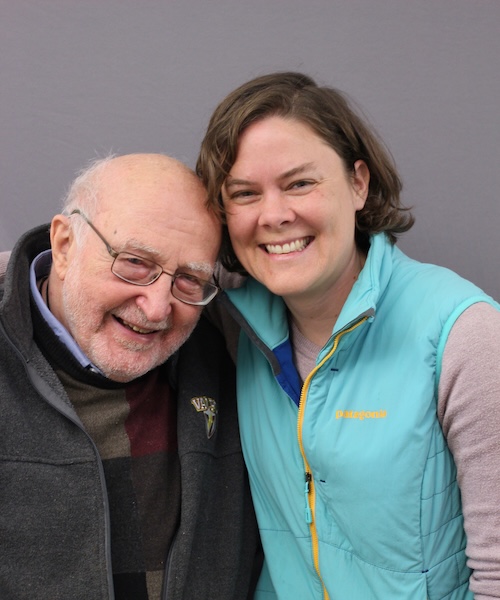
Elizabeth “Liz” Wuerffel interviews her friend and colleague, Richard “Dick” Brauer, about his photography, collage, and multimedia art that focuses on religious themes, as well as the inspirations and personal fulfillment he finds through his art practice.
This story was produced by David Dault with Kristen Balzer at Sandburg Media, LLC.
Topics
Transcript
Richard “Dick” Brauer: I was struggling to make my faith an adult faith. And reading C.S. Lewis and Screwtape Letters I thought was fantastic.
Elizabeth “Liz” Wuerffel: What did your professors at the Institute for Design think about your appreciation and want to work with religious art?
Richard “Dick” Brauer: There wasn't any sympathy for it, but I didn't care. I liked the foundation course and I liked that there wasn't much of a distinction between high art and low art. And they had projects that were... They had social concerns and larger possibilities of expressing important things. And I thought, oh, this is interesting. And I thought, I'll do this with photographs. And I was kind of crazy, but I wanted to do it. What I mean is, how is this going to get me a job? I didn't think about that.
I decided I would photograph street recreation since we were right downtown. There was a public school and there was a Cabrini-Green two-story high thing just a couple blocks away. Young veterans of all diversity, Chinese, Black, White, they lived there together. The streets were full of kids. And so I went around, decided I would photograph in black and white. I just went out and let things happen. I didn't even have an advisor. I just went ahead and did it. And they passed me anyway.
And then I got the job at Family Weekly, but I thought, I think I'd like to teach and I'll go get a master's degree in art education. So I did it there. And then what should I do? Now, I had grown up in this very conservative Lutheran environment. Family and friends were all Lutheran. And we went to church and it was all revival art, not anything modern. And what I was learning was modern. And why couldn't the faith be spoken in modern? For me, that's what I thought I would try because I just felt that showing old people in robes isn't the way life is. And there is the power of abstract forms that isn't used. And why can't photographs be used? And why can't words be used? And I thought: mass communication about faith is where graphic design is, because I felt that ideas of collage and of multimedia were the ideal.
Herbert Bayer was my ideal artist. And Alfred North Whitehead said, "The art of progress is to preserve order amid change and change amid order." And he did it abstractly, and it was perfect. And I thought, oh, shouldn't change be part of our faith? This whole business of redemptive salvation is a way to get to the ultimate goal of creation. And I don't know any more than that, but it's the hope. And I'm thinking, what I've done already in art is not going to make me any money, but there are parts of it that are very satisfying to me.
Other Conversations About Valparaiso, Indiana



0:00/0:00