


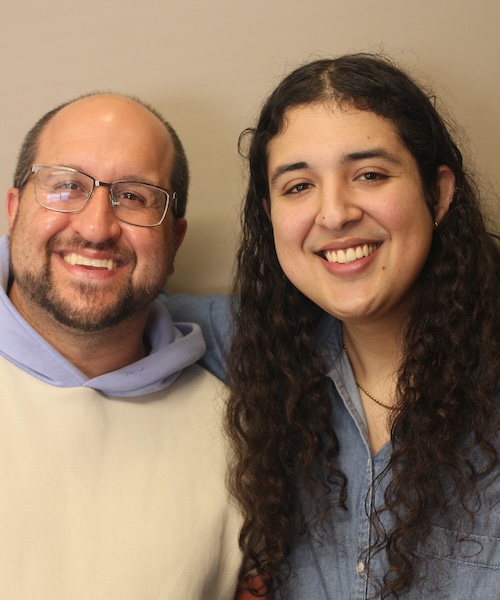
God Loves Us in Our Incompleteness: Ashe Frances-Martinez and Paul Schutz
First Recorded
November 2, 2022
Read Other Conversations About
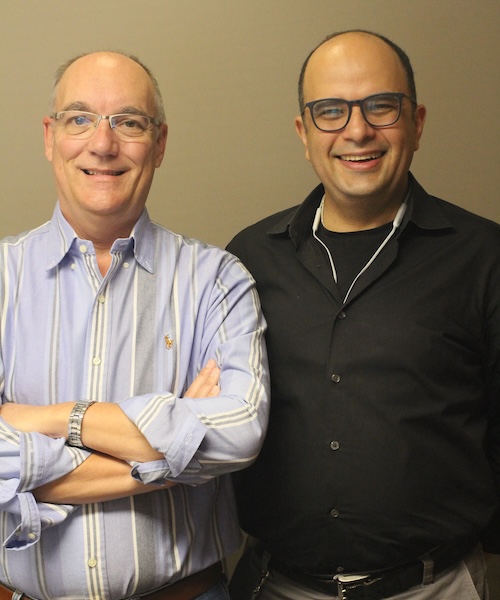
Ashe Frances-Martinez talks to Paul Schutz about her relationship to God and how her identities as a Catholic and a trans woman affirm one another.
This story was produced by David Dault at Sandburg Media, LLC.
Read Other Conversations About
Transcript
Paul Schutz: What I've found is that when I go to God as a woman, I hear Him so much more clearly. I really love scripture and I particularly love the Old Testament, actually. And Isaiah 54, God says ... Like God, right?
Ashe Frances-Martinez: Yeah.
Paul Schutz: This is God talking, so it's a big deal. God says, and I'm paraphrasing, but, "Barren women, do not weep. You will have children by the multitudes and they will be greater than the children of the women that could bear." And I can't have children, right?
Ashe Frances-Martinez: Right.
Paul Schutz: I can't have children unless I go off HRT. But it was like I was like, "Hey, this is for you," because I opened to that page.
Ashe Frances-Martinez: Huh.
Paul Schutz: But it does simultaneously feel like resistance and obedience, right?
Ashe Frances-Martinez: Yeah.
Paul Schutz: Because I want to be obedient to God. I think He's good. I think He loves me and I think that He only has the best in mind for me. But to be obedient to that, I do think sometimes means being disobedient to the earthly church.
Ashe Frances-Martinez: Absolutely. My own understanding of myself is incomplete. You know, we're all kind of going through this together, but the one non-negotiable, I think, for being a Christian is that God loves us in our incompleteness. God loves us in our brokenness. God loves us in the sort of incompleteness of our understanding.
Paul Schutz: You mentioned referring to God as "She" and other things like that. And I do find that really interesting because I do get asked that a lot as a trans woman, as you might imagine. Because people are like, "Oh, you think about gender a lot. You think about God a lot. What do you think about God and gender?" And for me, God's identity obviously goes beyond any gender that we can have. It's totalizing in a way that we can never see.
For me, what I get out of calling God, the Father, "He," Jesus Christ, "He," I do call the Holy Spirit, "They" sometimes, but what I get out of it is this fact that this idea that's personal to me, God wouldn't misgender me, so I will use the words that He used to talk about Himself and-
Ashe Frances-Martinez: So it's like a faithfulness to revelation, to scripture in that.
Paul Schutz: Yeah, yeah. Because I don't think that I necessarily ... I mean, He's a God of women, you know?
Ashe Frances-Martinez: Mm-hmm.
Paul Schutz: He is so totalizing and loving that even if I call Him, "Him," I think He loves She.
Ashe Frances-Martinez: Early on when you were talking about coming to understand yourself as a trans woman, you didn't say, "This is who I am." You said, "This is who I'm supposed to be." And I think that distinction is so important, "This is not who I am, but this is who I'm supposed to be," because "supposed to be" implies a call, a growth, a movement toward you understanding yourself in relationship with God.
When you look into the future, what do you hope for?
Paul Schutz: I hope to meet a lot of trans women that are doing things that they love and bring them joy. I hope to have a Catholic community that I can talk to about Jesus. I hope to never lose that faith. I kind of hope to have a family, you know?
Ashe Frances-Martinez: Yeah.
Paul Schutz: I would like to be a mom if that's in God's plan for me. But fundamentally, what I hope for the most is that He's walking with me, you know?
Ashe Frances-Martinez: Yeah.
Paul Schutz: I don't know where I'm going, but He does. And if He's there, then I'll get there.
Ashe Frances-Martinez: Yeah, yeah.
Other Conversations About Santa Clara, California

0:00/0:00