


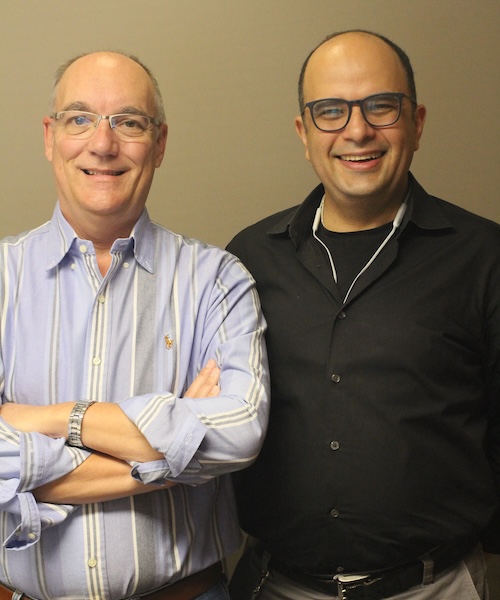
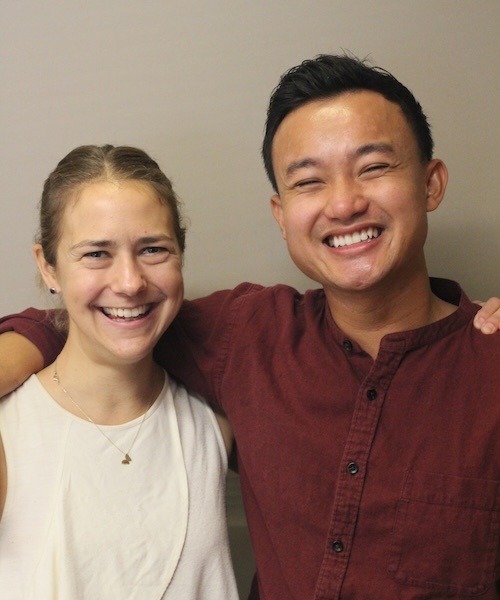
The Limits of Human Knowledge: Alex Zecevic and Ahmed Amer
First Recorded
November 2, 2022
Topics
Friends and colleagues Alex Zecevic and Ahmed Amer reflect on the questions that science can't answer and the role of creativity in scientific discovery.
This story was produced by David Dault at Sandburg Media, LLC.
Topics
Transcript
Alex Zecevic: I'd say that about 70% of my students come in believing that science and technology can potentially answer any questions, just a matter of time.
In principle, it could be done. And my entire first half of the course is to show them that science and math itself say that that's not possible. They establish certain hard limits to what can be known about the physical world.
So understanding that is really a humbling moment, but it's also an opening because if you realize that there are limits to human knowledge, then whatever is outside can be legitimately called a mystery.
Ahmed Amer: So the idea of an unknowable is very appealing to me as a Muslim because the nature of God as being inconceivable is a really big deal for me conceptually.
But this idea of an unknowable or inconceivable, does that dissuade one from pushing forward down a path of deeper spirituality or a path of deeper science?
Because if it's unknowable, why should I keep going if I'm never going to get to a destination is a question people might wonder.
Alex Zecevic: Well, let me give you the theological spin at any rate. The essence of God is unknowable, but there's also an imminent piece that you can recognize.
If you look at how the universe is structured, if you look at that incredible complexity and the fact that if the mass of a proton and an electron differed at the 30th decimal point, we wouldn't be here talking, you have to ask yourself why are things set up that way? Because it's conceivable that universes could function differently. They wouldn't have the same constants. This wouldn't have to happen.
So it's a question that begs an answer even if you are a scientist. But only the really great ones ask that because the other ones get bogged down in the details, and they don't look at the bigger pictures.
We have done a good job with science, but science alone just gives you the raw material for these questions. It doesn't answer them.
Ahmed Amer: No, because no great discovery happens without first conjecture, a leap to another idea.
Alex Zecevic: Right. But where those come from is the real mystery because we don't have a clue because creativity resides in the unconscious mind, not in conscious processes.
Einstein famously said that all his ideas came from the unconscious mind, that his talent was to retrieve them before they sink down below the surface again. I really believe that, and we don't control that.
Other Conversations About Santa Clara, California
0:00/0:00